

How to Tell AI Astroturfing From Genuine Public Opinion
You can no longer tell AI astroturfing from genuine public opinion by reading the text. Generative AI writes as fluently…
-
binomedia
- October 2, 2026

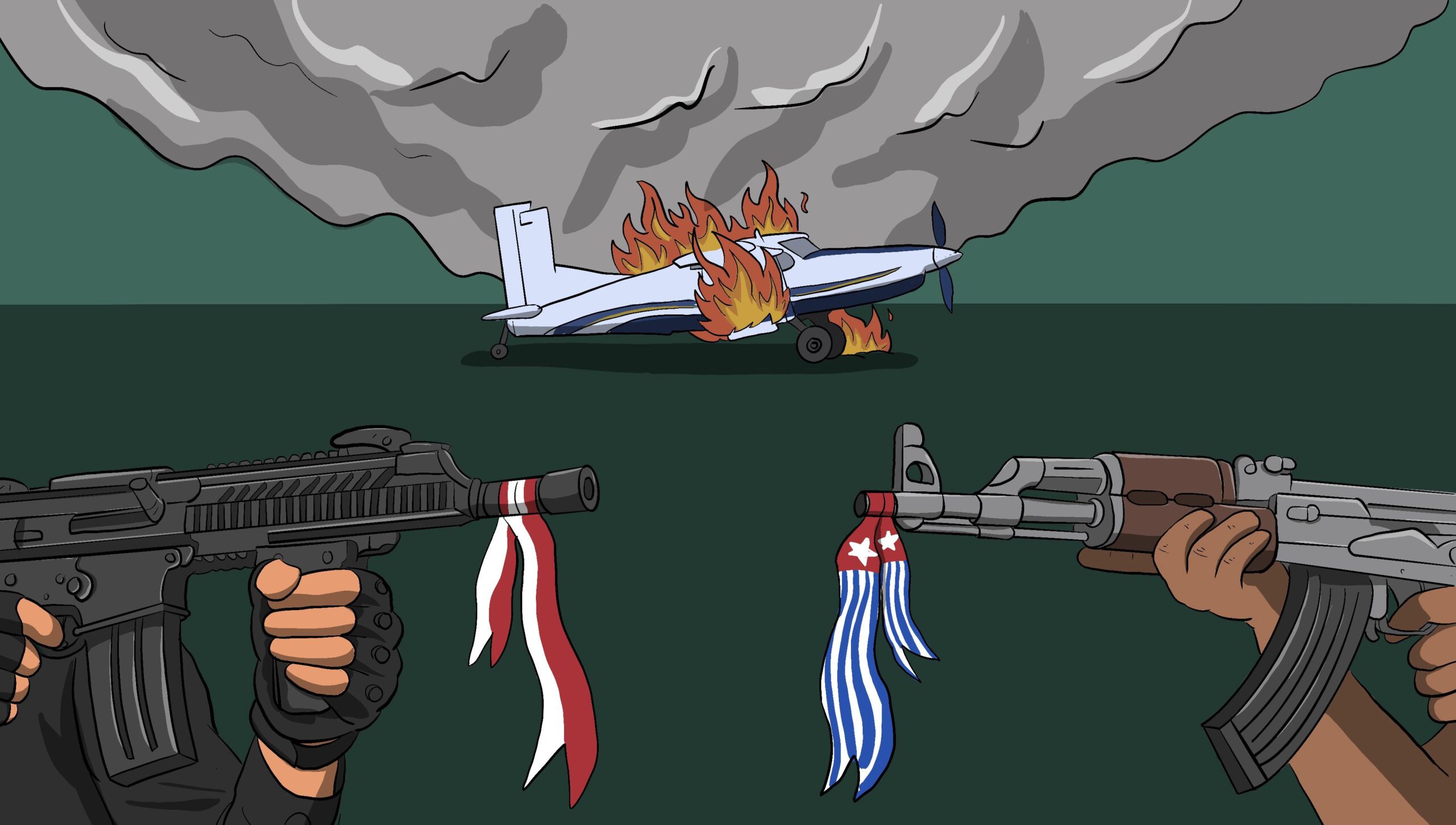
A Susi Air Pilatus Porter burst into flames on the Paro airstrip, Nduga Regency, on 7 February 2023. Within hours the West Papua National Liberation Army (TPNPB-OPM) claimed to have taken the New Zealand pilot, Philip Mark Mehrtens, hostage. What first looked like “just” an aviation incident instantly morphed into a cross-border diplomatic crisis—while opening a new chapter in the long-running information war over Papua.
For more than 20 months the foreign pilot became the most valuable bargaining chip in the Papua conflict. Negotiation ebbed and flowed with gunfire; the public swung between promises of release and threats of execution-until 24 September 2024, when TPNPB-OPM finally freed Philip, ending one of the region’s most dramatic human-interest sagas.
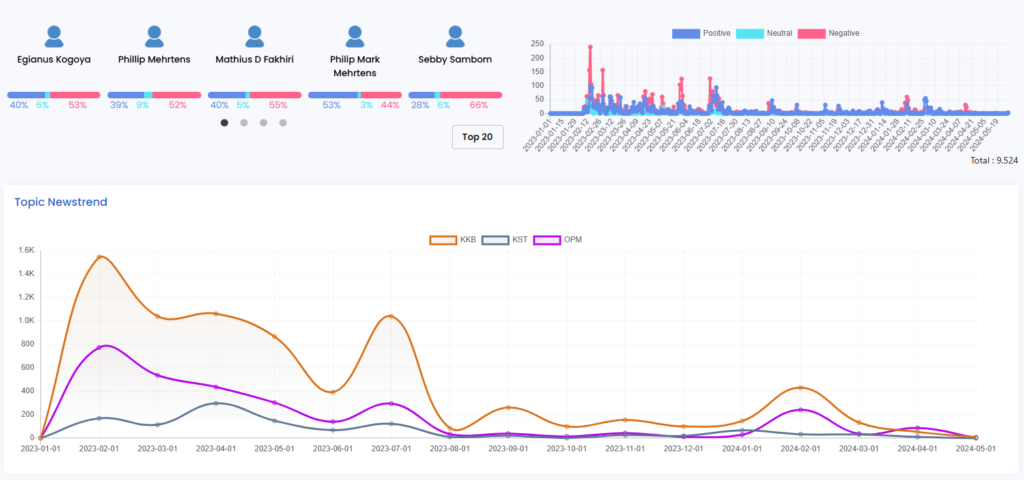
Newstensity’s monitoring captured precisely how the name “Philip Mark Mehrtens” topped press attention.
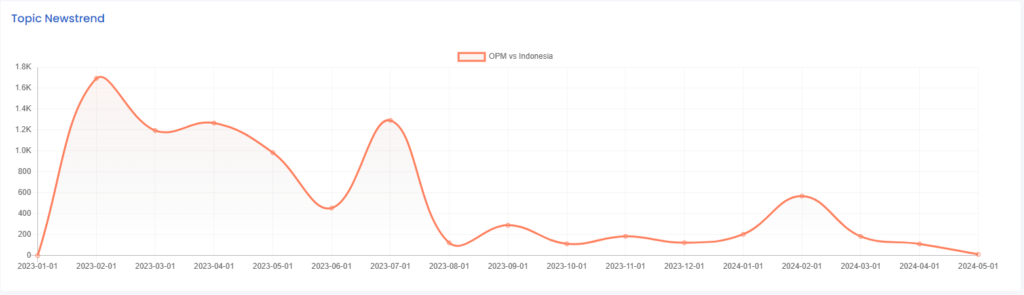
Coverage Peaks
• February 2023: the abduction photos of the hand-cuffed pilot go viral.
• July 2023: TPNPB-OPM escalates threats; government launches “Cartenz” joint operation.*
Thousands of articles show that Philip Mark Mehrtens became more than a victim; he turned into a battleground of narratives between the state and pro-independence forces.
Mainstream media never treated Mehrtens’ abduction as a political maneuver but as pure criminality rupturing sovereignty. The frame draws on statements from task-force chiefs, military commanders and the Coordinating Minister for Political, Legal and Security Affairs. Using Robert Entman’s four-part framing model, and backed by Newstensity data, the anatomy is:
| Dimension | State Narrative |
|---|---|
| Problem Definition | The Paro incident is terrorism against civilians and the nation: the torching of the plane, a foreign hostage, armed attacks on troops and villagers. Political motives are stripped from public debate. |
| Diagnosed Causes | Perpetrators consistently labeled KKB (Armed Criminal Group) or KST (Separatist Terrorist Group). The tag delegitimizes political goals by boxing them into penal crime. Avoiding “TPNPB-OPM” casts the enemy as mere criminals to be hunted, not peers for negotiation. |
| Moral Judgment | The government portrays itself as protector of citizens and rule of law— the antithesis of “terror.” Leaders such as TNI Commander Yudo Margono, Police Chief Listyo Sigit, and Coordinating Minister Mahfud MD repeat that military force is legitimate yet “persuasive,” cementing a heroic self-image. |
| Suggested Remedy | A single prescription: TNI–Police security operations. Armed law-enforcement is “valid,” while political dialogue is rejected as legitimizing crime. International mediation or self-determination talks vanish from policy tables. |
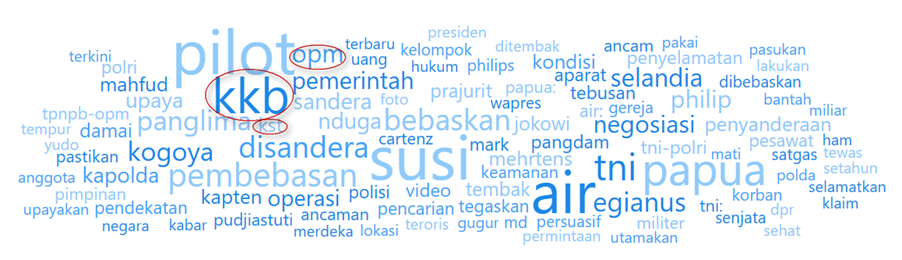
TPNPB-OPM speaks through spokesperson Sebby Sambom and field commander Egianus Kogoya. To them, holding Mehrtens is not crime but a forced-diplomacy stage to make the world look at Papua.
| Dimension | Resistance Narrative |
|---|---|
| Problem Definition | The hostage-taking is a calculated political act exposing “Jakarta’s colonialism.” After decades of conflict, violence is “the last language.” |
| Diagnosed Causes | They call themselves TPNPB-OPM (West Papua National Liberation Army – Free Papua Organization) and reject KKB/KST. Using the formal name legitimizes them as a lawful political-military entity pursuing independence. |
| Moral Judgment | Indonesia is cast as a “colonial” power forcing Papuans to submit via economic exploitation and military operations. OPM becomes heroic victims defending collective dignity. Images of Philip flanked by armed rebels reinforce “liberation forces” rather than “criminals.” |
| Suggested Remedy | Because the problem is political, the solution is political: equal-status dialogue mediated by a neutral actor such as the UN, paving a path toward self-determination. |
The difference between KKB and TPNPB is no mere vocabulary. Naming is a political act defining reality, legitimizing violence and steering public opinion. Sociologist Ariel Heryanto notes that naming shapes legitimacy: branding as criminals shrinks separatist motives; accepting “TPNPB” opens doors to dialogue. Newstensity shows most media employ KKB, followed by “OPM,” then “KST”—evidence of state-framing dominance.
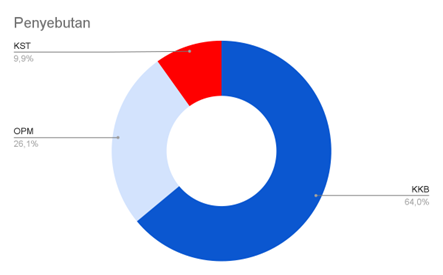
Newstensity identifies actors and agendas during the Susi Air hostage period:
| Spectrum | Key Actors | Main Agenda | Dominant Channels |
|---|---|---|---|
| State | Yudo Margono, Listyo Sigit, Cartenz task force | Law-enforcement, military ops | Press conferences, Polhukam releases |
| Resistance | Sebby Sambom, Egianus Kogoya | Internationalize Papua issue, demand referendum | Satellite-phone videos, independent channels |
| Humanitarian | Susi Air, Church & customary leaders | Hostage safety, peaceful path | Open letters, on-site mediation |
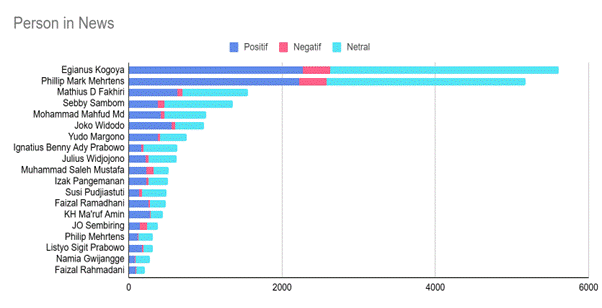
Actor frequency and channel distribution (Newstensity).
| Date | Milestone |
|---|---|
| 7 Feb 2023 | Susi Air plane burned at Paro; pilot abducted. |
| Feb–Mar 2023 | OPM’s first threat video; government tightens operations. |
| Jul 2023 | Escalation; OPM claims readiness to shoot down military aircraft. |
| Aug 2024 | Egianus Kogoya signals willingness to free pilot; task force doubts it. |
| 24 Sep 2024 | Philip Mark Mehrtens released, handed to TNI–Police medical team. |
Each critical point sparked a publication spike captured by Newstensity’s algorithm, underscoring the bond between armed conflict and media-monitoring dashboards.
Early on, TPNPB-OPM weathered the storm by debunking the TNI Commander’s initial claim—backed by photos showing the pilot in captivity. Over time, however, the state commanded information flow through exclusive mainstream access, evidenced by the far higher frequency of KKB/KST than “OPM” in daily reports. Still, the eventual release shows that humanitarian dialogue, not force, unlocked success—often drowned out between violent and political narratives.
Freeing Philip Mark Mehrtens closes one drama but raises how far Indonesia and the world will heed Papuans’ voices behind the guns. As long as “criminal” and “separatist” labels stab each other, peace will idle. The Nduga experience suggests that a human-centered approach plus sharp media monitoring is the most rational mix. Newstensity, for instance, shows how data expose bias patterns and warn when public tension boils. Ultimately, this conflict is not just a jungle war; it is also a fight of words, headlines and frames that decide whether Mehrtens rekindles hope or stokes an old blaze.
Writer: Fajar Yudha Susilo, Ilustrator: Aan K. Riyadi

You can no longer tell AI astroturfing from genuine public opinion by reading the text. Generative AI writes as fluently…

binomedia

Who controls money in the blockchain era? When Bitcoin launched in 2008, the answer sounded simple: no single party, because…
binomedia

The debate over whether AI development should slow down is no longer theoretical. In September 2026, the CEOs of the…
binomedia

AI brand visibility is how often, how accurately, and in what context your brand appears in answers from AI-powered search…
binomedia
The DTSEN social assistance decile controversy in 2026 is not merely about inaccurate data. Media monitoring and digital conversation analysis…
binomedia
Indonesia’s gross domestic product (GDP) grew by 5.29 percent in the second quarter of 2026. This figure exceeded the median…
binomedia
Artificial intelligence (AI) is transforming education faster than most education systems can respond. Machines can now search for information, summarize…
binomedia
One Event, Two Market Moves On Monday, August 10, 2026, Indonesia’s rupiah closed 0.79% higher at IDR 17,755 per US…
binomedia
On Thursday, July 30, 2026, Indonesian President Prabowo Subianto announced a “cleanest city” competition. The top five cities would win…
binomedia
Before dawn on Friday, 24 July 2026, a mob in Bali beat a man to death. He is identified only…
binomedia