

How to Tell AI Astroturfing From Genuine Public Opinion
You can no longer tell AI astroturfing from genuine public opinion by reading the text. Generative AI writes as fluently…
-
binomedia
- October 2, 2026

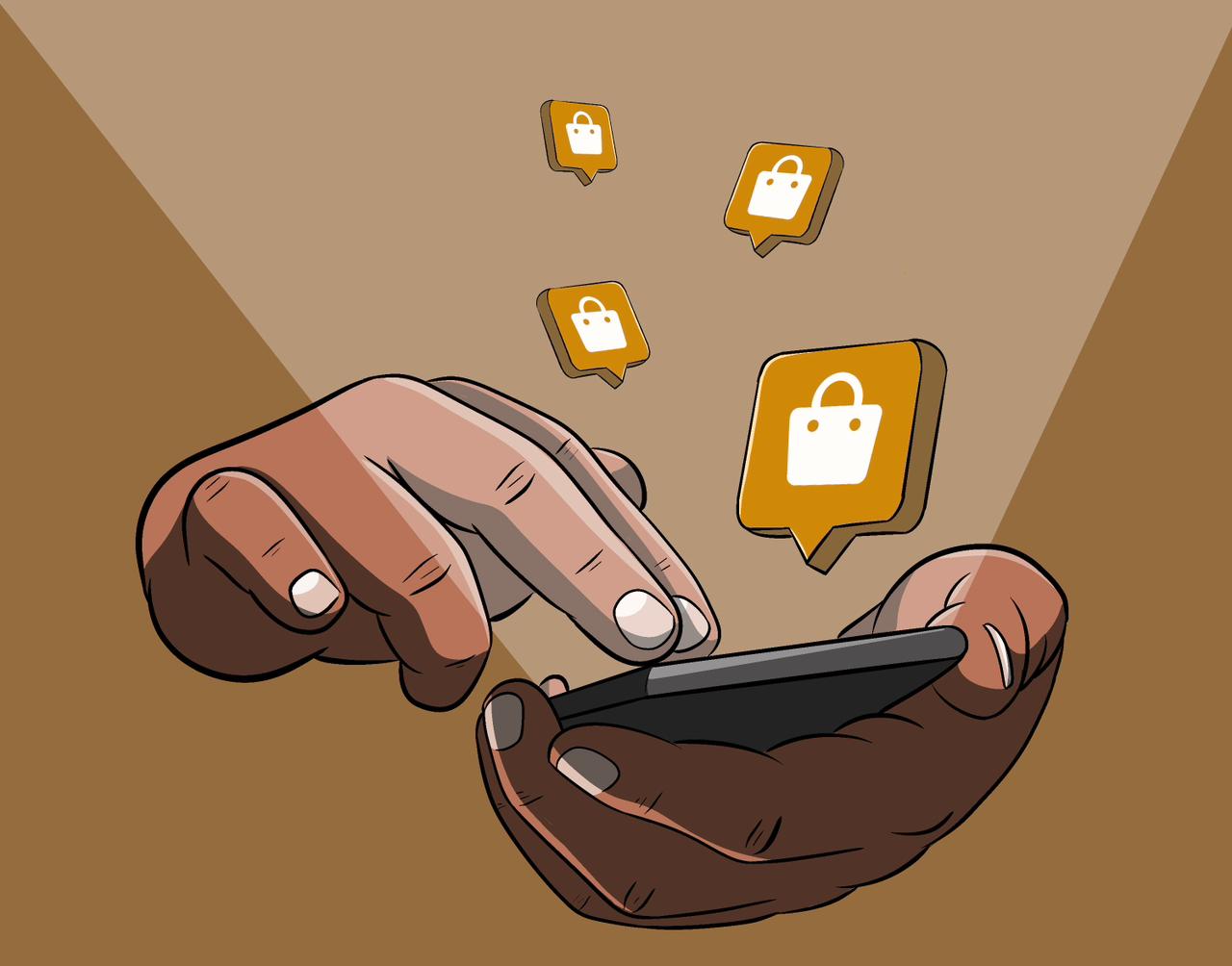
In many marketing meetings, one question still comes up: is advertising no longer effective? That question is flawed from the start. The issue is not that advertising has suddenly died, but that its position is no longer as strong as it used to be, when brands could control almost every information channel received by consumers.
In the era of platforms such as TikTok, YouTube, and Instagram, audiences do not open apps to be greeted by ads. They come for entertainment, opinions, references, communities, and other people’s experiences. In that space, purchase decisions often begin with content first, followed later by the brand. This is where the debate over content vs advertising becomes important: it is not merely about format, but about who now controls the distribution of trust.
For years, advertising operated under the logic of control. Brands crafted messages, bought media space, managed frequency, and expected consumers to accept that narrative as the main representation of the product. This model has not disappeared completely, but its authority has weakened because consumers now live within a flow of information that is far denser and far more horizontal.
This is where content vs advertising becomes a more structural reading. Content works not because it is always more accurate, but because it feels closer. Reviews, unboxings, daily-use experiences, comparison videos, or spontaneous comments from creators make consumers feel they are seeing something more human than promotional material that looks too polished. Nielsen has even noted that recommendations from people consumers know remain the most trusted channel, with 88 percent of global respondents placing the highest level of trust in this form of recommendation.
This shift explains why content vs advertising is no longer a small debate within creative teams. It has become a matter of business strategy. When Google notes that internet users are 98 percent more likely to trust creator recommendations on YouTube than recommendations on other social platforms, and TikTok says 71 percent of viewers say the authentic quality of creators encourages them to buy a product or brand, it is clear that consumer trust is being shaped on a different battlefield from classic advertising.
There are three main reasons.
First, content provides context. Advertising usually highlights claims, while content shows usage. In the logic of digital consumption, demonstration is often stronger than declaration. People do not only want to hear that a product is good. They want to see how the product is used, how it fails, how it compares, or how it is tested.
Second, content creates emotional closeness. Consumers do not relate to a “brand voice” as intimately as they relate to figures they follow regularly. This relationship is built through repetition, viewing habits, and the perception of consistency. That is why content vs advertising is also a battle between institutions and individuals. In many cases, audiences find it easier to trust a voice that feels personal, even when that voice is not always neutral.
Third, content blends into platform behavior. TikTok, YouTube, and Reels are not designed to give special attention to ads that feel like ads. Platforms reward material that feels native, relevant, and does not interrupt the user experience. Deloitte notes that the most effective brands on social media are increasingly emphasizing three things: community, content, and conversion. The same research also shows that respondents’ social media budgets rose by an average of 9 percent from 2023 to 2024, a sign that this shift is no longer seen as experimental.
At this point, an important correction is needed. The narrative that “content wins, advertising loses” sounds dramatic, but it is too simplistic. Advertising remains important for reaching audiences at scale, maintaining share of voice, and strengthening brand memory. However, in the battle between content vs advertising, advertising now more often functions as an amplifier, not as the only engine for building trust.
Many brands are beginning to realize this. IAB reports that advertising spending in the creator economy in the United States is projected to reach US$37 billion in 2025, up 26 percent year-on-year and growing around four times faster than the overall media industry. That figure would not appear if creators were still treated merely as an additional channel. It signals that brands are starting to shift investment toward formats considered closer to real consumption behavior.
In other words, content vs advertising does not end with one side defeating the other. What has changed is the hierarchy. In the past, advertising sat at the center, while content played a supporting role. Now, in many categories, content has become the main entry point, while advertising works to expand, repeat, and convert the attention that content has already built.
This is the most important implication that is often realized too late. In a user’s feed, a brand’s main competitor is not always another brand. More often, its direct opponent is every other piece of content that is more entertaining, more useful, or more human. In this ecosystem, content vs advertising also means that it is not enough for a brand to be right. A brand must be worth watching.
That is why format matters greatly. A message that is too perfect often loses to a simple video that feels honest. A narrative that sells too hard often loses to a small observation that feels relatable. Even major brands have started moving in this direction. Unilever, for example, in its marketing strategy update in March 2026, explained the importance of relevance through social-first marketing and creator-led content. On the same page, Unilever also presented examples of campaigns attached to Gen Z culture, such as Knorr entering conversations around dating culture and Sunsilk being pushed through a social approach closer to the language of platforms.
The meaning is clear. In the debate over content vs advertising, what is being contested is not only awareness, but the right to enter everyday cultural conversations.
But this shift is not automatically healthy. When promotion appears in the form of content, the boundaries between opinion, experience, entertainment, and commercial interest become increasingly blurred. This is where content vs advertising brings a new layer of problems: precisely because content feels authentic, it can also be used more easily to wrap commercial persuasion without clear distance.
BBB National Programs presents a rather sharp picture. In its annual report, it stated that only 5 percent of consumers fully trust influencer advertising, and 80 percent said their main source of distrust appears when influencers do not seem genuine, honest, or transparent. This finding matters because it shows one thing: content may sit closer to trust, but that closeness is fragile when it is not accompanied by openness.
That is why the answer to content vs advertising cannot stop at the suggestion that “brands need to act more like creators.” That can be dangerous if interpreted superficially. Imitating a creator’s style without maintaining transparency only shifts the problem from advertising that is not trusted to content that feels manipulative.
First, stop seeing content as a new wrapper for old advertising. This is the most common mistake. Many brands feel they have adapted simply because they shorten video duration, use trending music, or imitate a creator’s angle. But the essence is not there. Effective content is born from an understanding of audience behavior, not from cosmetic changes in format.
Second, build evidence, not just claims. In the landscape of content vs advertising, one-sided claims are becoming weaker. Brands need to create space for demonstrations, testimonials, reviews, trials, and even reasonable comparisons. The wider the gap between what is promised and what can be seen, the higher the cost of distrust that must be paid.
Third, treat creators as partners in distributing trust, not as walking billboards. Creators are effective not because they have followers, but because they have context, community, and a delivery style their audience trusts. When all of that is forced to submit completely to the brand message, the result loses the very quality that made it valuable in the first place.
Fourth, do not sacrifice disclosure. In the short term, disguised promotion may feel smoother. In the long term, it damages the credibility of both the brand and the creator. Consumer trust today is not built from perfection, but from clarity of relationship.
Edelman in 2025 showed that global respondents trust “brands I use” more than media, government, NGOs, and business institutions in general, and that trust in brands has surpassed trust in institutions since 2022. However, this finding does not mean all advertising is automatically trusted. Quite the opposite: brands have gained a larger mandate of trust, but the way to maintain that trust has become far more difficult.
That is why content vs advertising should not be read as a war between two communication formats. It is a sign that the distribution of trust has moved. In the past, brands could buy attention and then shape perception. Now, brands must enter an ecosystem already occupied by creators, communities, algorithms, reviews, and conversations between users.
Within that system, advertising still has a function. But content is increasingly becoming the main gateway. And when consumers feel more trust toward shared experiences than announced messages, brands can no longer rely only on sounding convincing. Brands must be able to show up in ways that feel relevant, open, and real.

You can no longer tell AI astroturfing from genuine public opinion by reading the text. Generative AI writes as fluently…

binomedia

Who controls money in the blockchain era? When Bitcoin launched in 2008, the answer sounded simple: no single party, because…
binomedia

The debate over whether AI development should slow down is no longer theoretical. In September 2026, the CEOs of the…
binomedia
AI brand visibility is how often, how accurately, and in what context your brand appears in answers from AI-powered search…
binomedia

The DTSEN social assistance decile controversy in 2026 is not merely about inaccurate data. Media monitoring and digital conversation analysis…
binomedia

Indonesia’s gross domestic product (GDP) grew by 5.29 percent in the second quarter of 2026. This figure exceeded the median…
binomedia

Artificial intelligence (AI) is transforming education faster than most education systems can respond. Machines can now search for information, summarize…
binomedia

One Event, Two Market Moves On Monday, August 10, 2026, Indonesia’s rupiah closed 0.79% higher at IDR 17,755 per US…
binomedia

On Thursday, July 30, 2026, Indonesian President Prabowo Subianto announced a “cleanest city” competition. The top five cities would win…
binomedia

Before dawn on Friday, 24 July 2026, a mob in Bali beat a man to death. He is identified only…
binomedia