

Downgrade Lifestyle: Indonesia’s Real Economic Signal
What Is “Downgrade Lifestyle” and Why Is It Trending on Threads? Since early September 2026, the term “downgrade lifestyle” has…
-
binomedia
- October 9, 2026

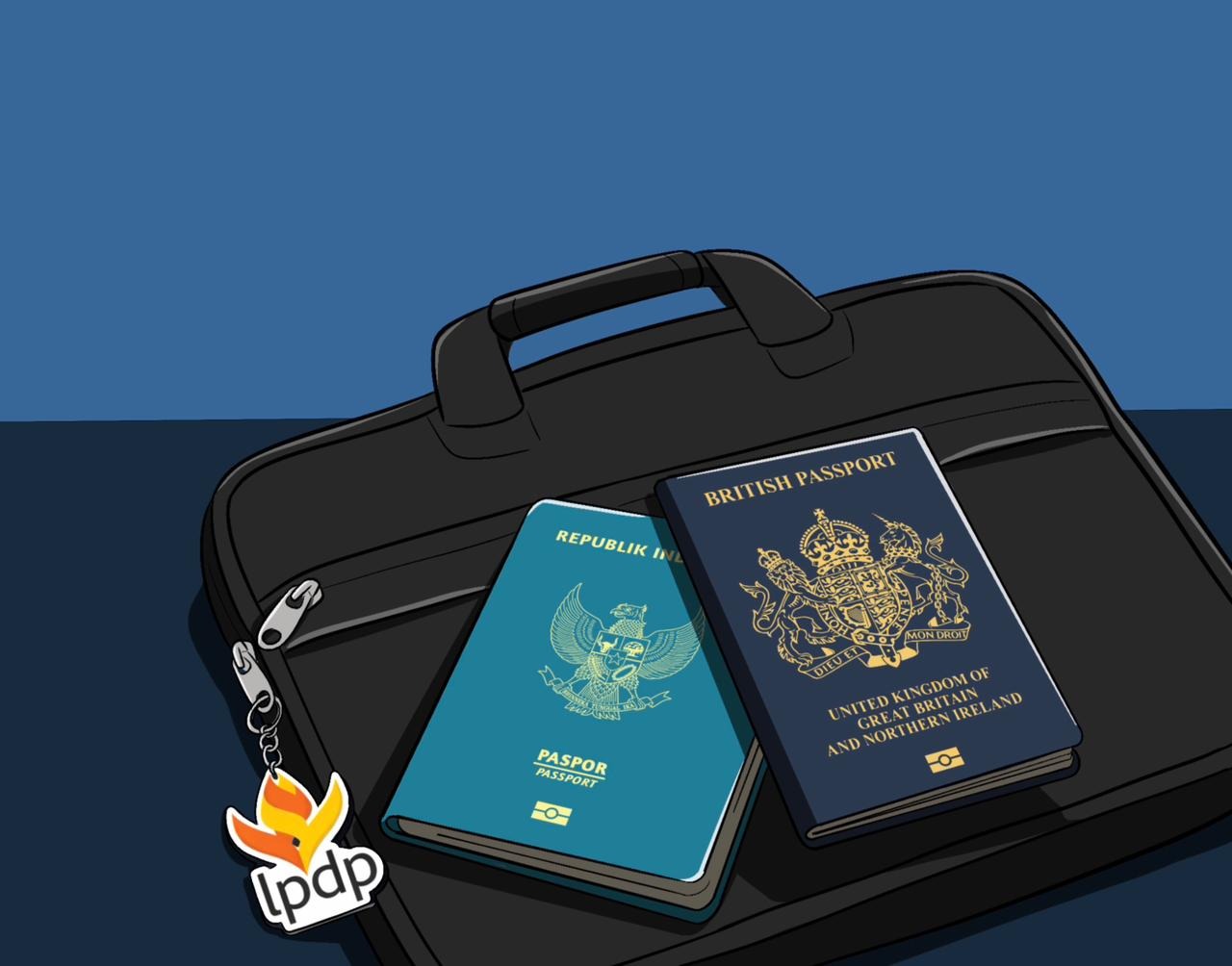
A topic went viral on February 21, involving alumni of Indonesia’s Education Endowment Fund (LPDP). Dwi Sasetyaningtyas and her husband, Arya Iwantoro, became the focus of online discussion. Dwi is known as an LPDP awardee who is/was pursuing a doctoral (PhD) program overseas together with her husband, funded through a state-financed scholarship scheme.
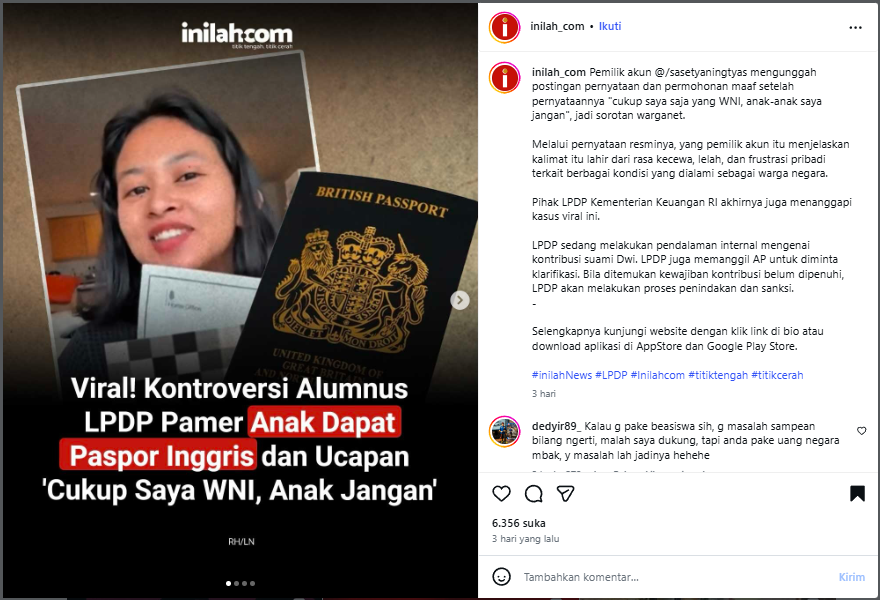
The controversy began with a viral social media post by Dwi Sasetyaningtyas showing her child’s British passport, accompanied by a provocative caption along the lines of: “Let me be the only Indonesian citizen—my children shouldn’t be.” Many internet users interpreted the message as belittling Indonesian national identity. The post spread quickly and drew widespread criticism, especially because she is an LPDP scholarship alum funded by public money.
The government’s response was swift and firm. Finance Minister Purbaya Yudhi Sadewa expressed regret over the statement and mentioned a plan to blacklist Dwi and her husband from government institutions, emphasizing that scholarship recipients must maintain a strong commitment to the country.
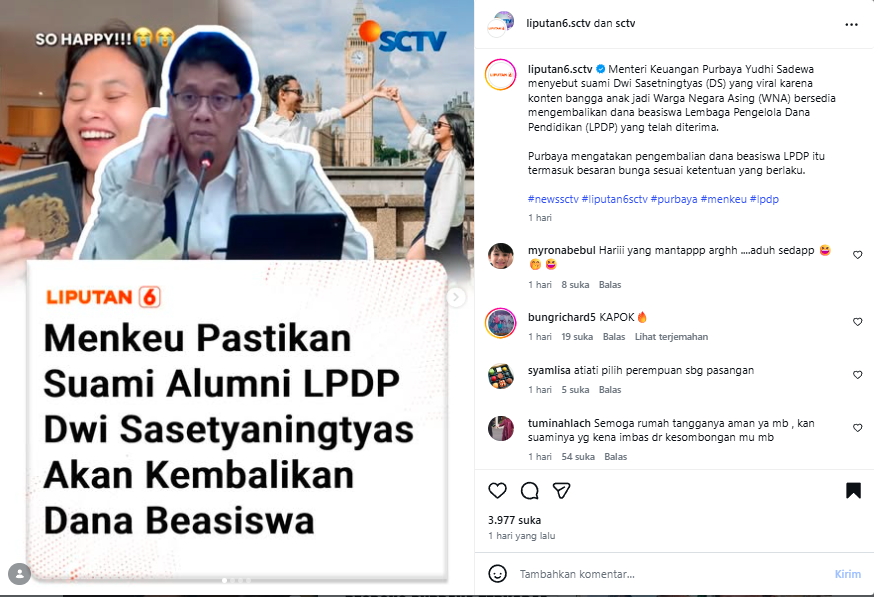
Her husband, Arya Iwantoro—also an LPDP recipient—was reportedly willing to repay the scholarship funds plus interest, as he had not yet fulfilled the post-study service obligation required by LPDP rules.
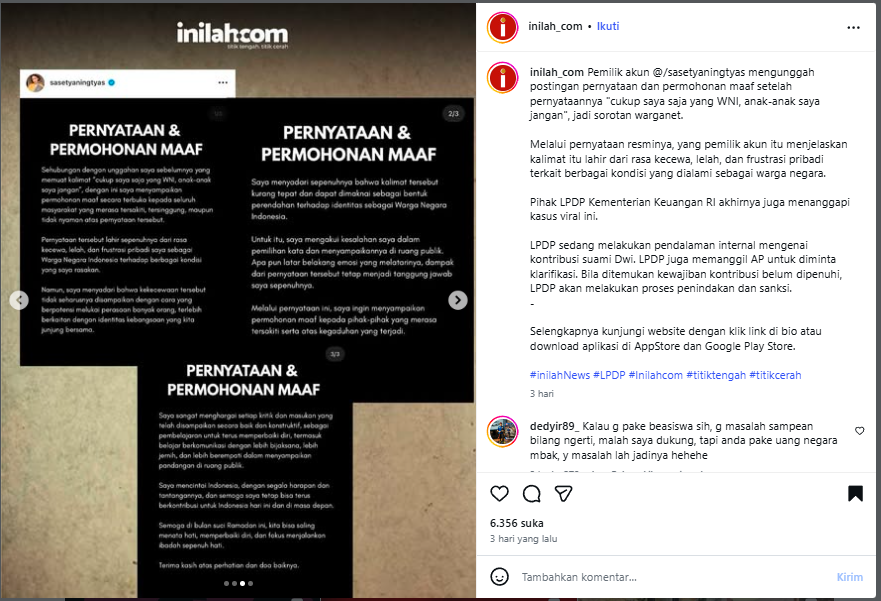
The case expanded into a broader social media debate about the duties, integrity, and accountability expected from beneficiaries of state-funded scholarships. Many users criticized what they saw as a lack of respect toward Indonesian citizenship, while Dwi later issued a public apology after the intense backlash.
LPDP is an institution under Indonesia’s Ministry of Finance that manages the national education endowment fund to finance master’s and doctoral scholarships, both domestically and abroad. Established in 2012, LPDP is considered one of Indonesia’s most prestigious scholarship programs because it provides comprehensive support, including tuition and living expenses.
In general, LPDP alumni are expected to become high-quality human capital that contributes tangibly to Indonesia, in line with the scholarship contract. They are expected not only to complete their studies on time and meet administrative requirements, but also to return and contribute across strategic sectors—government, private industry, academia, research, and entrepreneurship—while maintaining integrity, professionalism, and the program’s reputation.
Based on monitoring via Socindex across X/Twitter, Facebook, Instagram, YouTube, Threads, and TikTok, the “child citizenship” issue involving LPDP alumnus Dwi Sasetyaningtyas generated 78,609 conversations. The monitoring period was February 21–24, 2026, using keywords and hashtags such as LPDP, Dwi Sasetyaningtyas, British passport, Arya Iwantoro, and government blacklist.

Most netizens reacted negatively, arguing the statement was not patriotic and demeaned Indonesian citizenship. Many also viewed it as disrespectful to the state budget (APBN) that finances LPDP scholarships, and ethically inappropriate for a government scholarship recipient. The controversy was seen as potentially damaging LPDP’s image and other awardees who uphold the program’s integrity. As a result, many users urged the government to impose firm sanctions, including blacklisting and repayment. Overall, public conversation was dominated by disappointment and criticism.
In circulating comment sections, celebrity account Inul Daratista (@inul.d)—with 20.5 million followers—wrote a line interpreted as a moral critique, framing the incident less as a technical administrative issue and more as a question of attitude and ethics in public space.
On the other hand, positive sentiment also appeared toward the government, particularly toward Minister Purbaya. Many netizens appreciated what they perceived as a quick and decisive response, supporting evaluation and sanctions to protect LPDP’s integrity and public fund governance.
One example mentioned was an account @arief_programmer (20,900 followers) posting a supportive comment, interpreted as approval of the government’s rational and measured handling of the controversy.
This case shows the public holds LPDP alumni to a high standard because they are funded by public money. Alumni are expected not only to meet administrative obligations, but also to maintain conduct, integrity, and national commitment—since LPDP ultimately draws from public resources.
It also highlights the power of social media: a personal post can quickly go viral, shape public opinion, and even trigger official government action. Social media is not only a space for expression, but also a space of public accountability—where perception, reputation, and policy can be influenced by a single fast-spreading narrative.

What Is “Downgrade Lifestyle” and Why Is It Trending on Threads? Since early September 2026, the term “downgrade lifestyle” has…

binomedia

You can no longer tell AI astroturfing from genuine public opinion by reading the text. Generative AI writes as fluently…
binomedia

Who controls money in the blockchain era? When Bitcoin launched in 2008, the answer sounded simple: no single party, because…
binomedia

The debate over whether AI development should slow down is no longer theoretical. In September 2026, the CEOs of the…
binomedia

AI brand visibility is how often, how accurately, and in what context your brand appears in answers from AI-powered search…
binomedia

The DTSEN social assistance decile controversy in 2026 is not merely about inaccurate data. Media monitoring and digital conversation analysis…
binomedia

Indonesia’s gross domestic product (GDP) grew by 5.29 percent in the second quarter of 2026. This figure exceeded the median…
binomedia

Artificial intelligence (AI) is transforming education faster than most education systems can respond. Machines can now search for information, summarize…
binomedia

One Event, Two Market Moves On Monday, August 10, 2026, Indonesia’s rupiah closed 0.79% higher at IDR 17,755 per US…
binomedia

On Thursday, July 30, 2026, Indonesian President Prabowo Subianto announced a “cleanest city” competition. The top five cities would win…
binomedia