

Downgrade Lifestyle: Indonesia’s Real Economic Signal
What Is “Downgrade Lifestyle” and Why Is It Trending on Threads? Since early September 2026, the term “downgrade lifestyle” has…
-
binomedia
- October 9, 2026

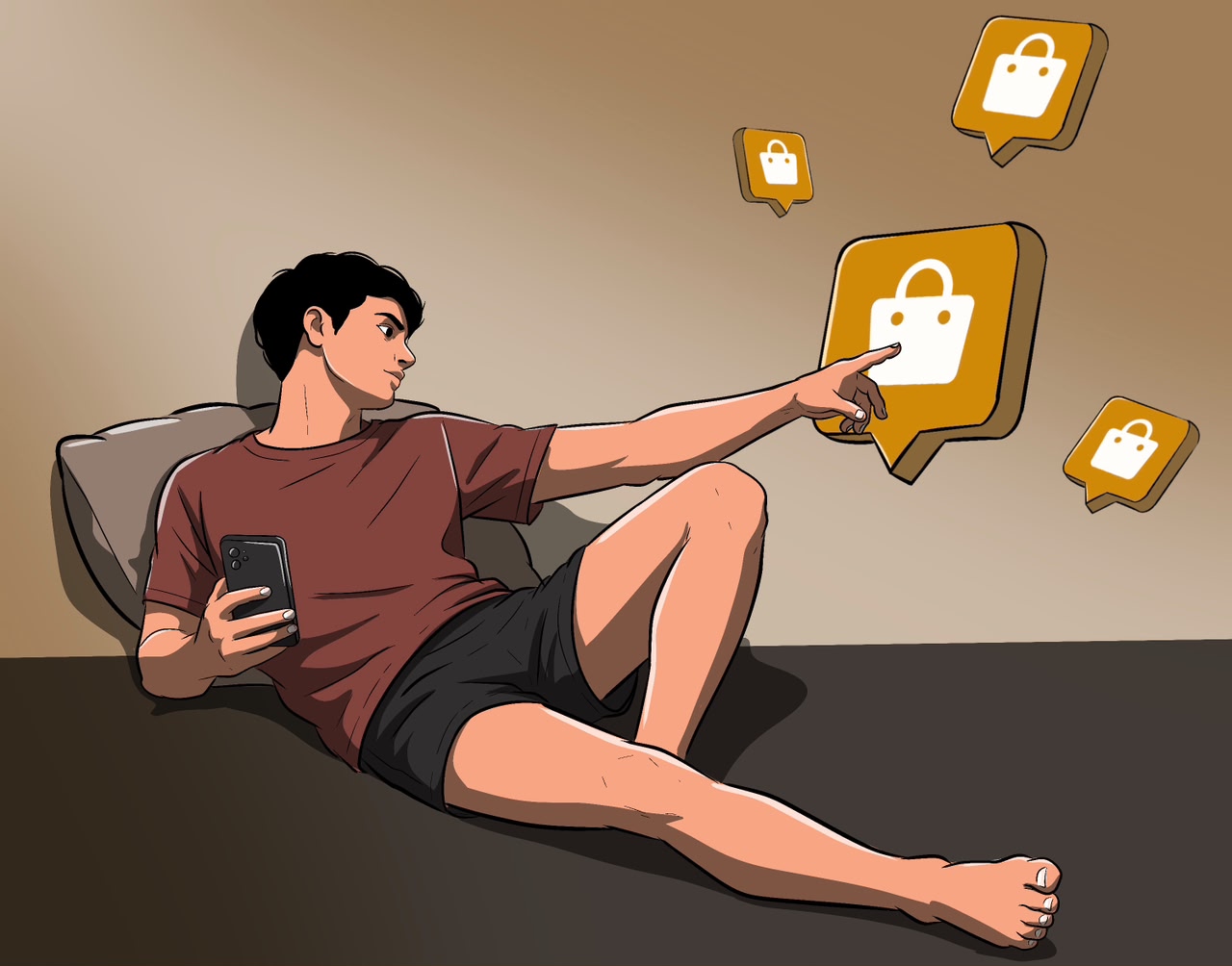
Amid economic uncertainty, one phenomenon has been widely discussed on social media and has attracted the attention of many financial and psychological observers: doom spending. This term refers to impulsive spending habits carried out as a way to escape stress, anxiety, or fear about the future.
This phenomenon is increasingly visible among younger generations, especially Gen Z and millennials. Many people feel that housing prices are becoming increasingly unaffordable, the cost of living keeps rising, jobs are becoming more competitive, and social pressure in digital media is growing stronger. As a result, some people choose to enjoy life now rather than keep thinking about a future that feels uncertain.
In recent weeks, economic issues such as the weakening rupiah, potential layoffs, and rising living costs have once again become public concerns. These conditions influence how people manage money and make consumer behavior more intense.
Simply put, doom spending is the behavior of spending money impulsively because someone feels pessimistic about the future. The mindset often sounds like this:
If the future is still going to be difficult, I might as well enjoy my money now.
This habit can appear in many forms, such as:
Doom spending has become one of the lifestyle and financial issues widely discussed recently, especially among younger generations. The term describes the habit of spending money impulsively as an escape from stress, anxiety, or uncertainty about the future.
Amid changing economic conditions, rising living costs, tougher job competition, and social pressure from digital media, many people find it difficult to achieve financial stability. As a result, some choose to enjoy life in the present instead of thinking too much about an uncertain future.
This phenomenon is even more visible in the digital era, where social media has become a major part of everyday life. Every day, users are exposed to content about luxury lifestyles, aesthetic cafes, vacations, the latest fashion trends, new gadgets, and the idea of self-reward that is constantly promoted.
Without realizing it, this exposure creates new social standards. Many people feel they must always appear happy, successful, productive, and up to date with trends. This creates the urge to buy something not because it is truly needed, but because they want social validation or fear being left behind by their environment.
Among young people, this phenomenon is often considered normal because it has become part of modern digital culture. Many now see shopping as entertainment and the fastest way to gain temporary happiness. After being tired from work, academic pressure, or life stress, some people look for escape by buying new items, hanging out, taking short trips, or checking out items online.
These activities are seen as a way to gain emotional relief, even if only temporarily. In the short term, happiness may appear. But if this pattern continues without control, it can turn into a dangerous consumer habit.
Doom spending does not emerge out of nowhere. Global and national economic conditions are among the main factors shaping public behavior. In recent years, the world has faced many challenges, including inflation, rising prices of basic needs, global economic instability, geopolitical conflict, and recession threats in several countries.
In Indonesia, issues such as waves of layoffs, weakening purchasing power, and the difficulty of finding stable jobs often become public concerns. Many young people begin to feel that working hard is not always enough to achieve a stable life. Housing prices continue to rise, education costs keep increasing, while income often does not grow significantly.
This condition makes some people feel pessimistic about their financial future. Saving a large amount of money or pursuing long-term financial goals feels increasingly difficult. From here, the mindset emerges: “It is better to enjoy life now because the future may not turn out as expected.”
This mindset is one of the main roots of doom spending. Many people eventually choose to spend money on short-term pleasure instead of saving it for a future they consider uncertain.
Social media also plays a major role in strengthening consumer behavior. Digital algorithms continuously show content based on users’ interests, making people repeatedly see certain products, trends, or lifestyles. When people see others buying new items, going on vacation, or living a life that looks enjoyable, psychological pressure appears to do the same.
This phenomenon is known as fear of missing out, or FOMO. Without realizing it, FOMO makes people more likely to make impulsive spending decisions.
The ease of technology and digital financial services also accelerates this phenomenon. Today, people can buy almost anything through their phones. Promotions, big discounts, free shipping, and paylater services make shopping extremely easy and fast.
Many people end up buying things without carefully considering their financial condition. At first, it feels light because payment can be made in installments. But in the long term, this habit can create serious financial problems, such as consumer debt and difficulty managing monthly expenses.
Psychologically, doom spending is closely related to a person’s emotional condition. When someone buys something they want, the brain releases dopamine, creating a temporary feeling of happiness and satisfaction. This is why many people feel calmer after shopping or checking out items online.
However, this happiness usually does not last long. Afterward, guilt may appear because money has been spent, savings have decreased, or bills have increased. This cycle can repeat itself and slowly become a difficult habit to stop.
If left uncontrolled, doom spending can have a significant impact on both financial condition and mental health. Many people find it hard to save because their spending continues to increase for things that are not truly important. Emergency funds become difficult to build, while income runs out before the end of the month.
In some cases, people can even become trapped in consumer debt due to excessive use of credit cards or digital installment services. Ironically, the shopping habit that initially aims to reduce stress can trigger new anxiety because of heavier financial pressure.
Beyond personal finance, this phenomenon also reflects a shift in modern lifestyles. Many people now focus more on instant satisfaction than on building long-term stability. A fast-paced culture makes people accustomed to getting everything instantly, including entertainment and emotional satisfaction.
In reality, financial stability requires a long process, consistency, and self-control.
Therefore, it is important for society, especially younger generations, to become more aware of financial management and the influence of social media on consumption behavior. Enjoying life and rewarding oneself are not wrong. However, it is important to understand the difference between needs, wants, and emotional escape.
Simple steps such as tracking expenses, creating a monthly budget, limiting paylater use, and reducing consumption of content that triggers FOMO can help maintain healthy financial conditions.
In today’s economic pressure and intense digital environment, maintaining financial health is just as important as maintaining mental health. Doom spending is a reminder that true happiness does not always come from purchased items or lifestyles displayed on social media.
A sense of security, the ability to manage money well, and stability in facing the future are far more important things to have in the modern era.
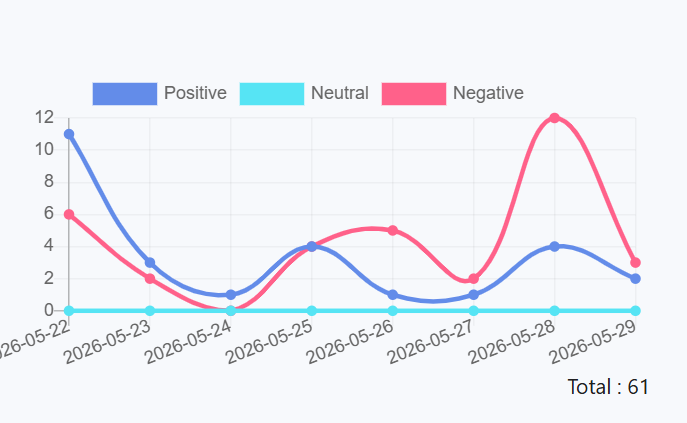
Newstensity’s public conversation data monitored during the period of May 22–29, 2026 shows that the issue of doom spending gained attention in digital spaces. The sentiment chart shows that positive, neutral, and negative conversations moved dynamically, following developments in economic issues and public lifestyle patterns.
At the beginning of the period, positive sentiment dominated, reaching the highest figure of 11 conversations on May 22, 2026. This indicates that some people still held optimistic views toward easy access to digital financial services and modern lifestyles, which were seen as providing comfort and flexibility in meeting daily needs.
However, in the following days, negative sentiment began to rise as concerns grew about the impact of consumer behavior on people’s financial condition. The peak of negative sentiment occurred on May 28, 2026, reaching 12 conversations, the highest number among all sentiment categories during the monitoring period.
This increase shows that more people began highlighting the negative side of impulsive shopping habits, paylater use, and rising economic pressure that makes young people’s finances more vulnerable.
Meanwhile, neutral sentiment remained relatively stable during the observation period. This indicates that part of the public still discussed the issue in an informative and educational context without a strong opinion tendency.
The total recorded conversations reached 61 discussions, showing that doom spending is no longer just an ordinary social media trend. It has developed into a social and economic issue that attracts significant attention from digital communities.
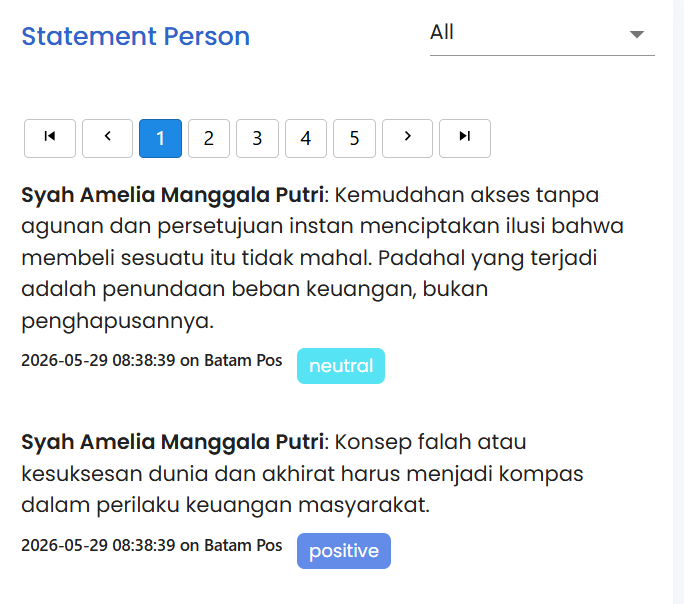
In addition to public sentiment data, Newstensity’s conversation monitoring also shows the emergence of views from various figures and observers regarding this phenomenon. One statement that drew attention came from Syah Amelia Manggala Putri, who highlighted the impact of easy access to digital financial services on public consumption behavior.
In her statement, she said that easy access without collateral and instant approval creates the illusion that buying something does not feel expensive. In reality, what happens is not the elimination of financial burden, but the postponement of payment to the future.
This statement illustrates how modern financial services such as paylater and digital installments make people feel lighter when shopping, making them more impulsive in making financial decisions.
This phenomenon becomes increasingly relevant amid the rise of consumer culture in digital society. Today, many people no longer carefully consider their financial ability before buying goods or following certain trends.
Digital transactions make shopping feel faster, more practical, and as if it carries little risk. Yet if done continuously without control, this habit can trigger financial pressure, rising consumer debt, and difficulty building long-term economic stability.
In another statement, Syah Amelia Manggala Putri also emphasized that the concept of falah, or success in this world and the hereafter, should serve as a compass in people’s financial behavior.
This view shows that financial management is not only about fulfilling short-term desires. It is also related to responsibility, life balance, and the sustainability of financial conditions in the future.
Amid a social media culture that often presents luxury lifestyles as a measure of success, this view becomes a reminder that true success is not always measured by how many things someone owns or how well they can follow viral trends.
The statement also shows that doom spending is not only an economic issue, but also one related to mindset and modern lifestyle. Many people feel they must constantly follow digital social standards to appear successful and relevant in their environment.
As a result, financial decisions are often made based on social pressure and emotional impulses, not actual needs. This condition makes many young people vulnerable to financial problems, even if they are actively working and earning a steady income.
The growing public discussion about doom spending shows that people are becoming more aware of the importance of financial literacy and controlling consumer lifestyles. This awareness is crucial amid the rapid development of financial technology and social media, both of which continue to influence public consumption behavior every day.
The doom spending phenomenon shows that current economic conditions affect not only people’s finances, but also their mental health and everyday lifestyle.
In the digital era, social pressure and economic uncertainty push many people to seek instant happiness through consumption. However, if uncontrolled, this habit can cause long-term harm.
Enjoying life is important. But building financial stability is also essential so that a person does not merely survive today, but is also ready to face the future.

What Is “Downgrade Lifestyle” and Why Is It Trending on Threads? Since early September 2026, the term “downgrade lifestyle” has…

binomedia

You can no longer tell AI astroturfing from genuine public opinion by reading the text. Generative AI writes as fluently…
binomedia

Who controls money in the blockchain era? When Bitcoin launched in 2008, the answer sounded simple: no single party, because…
binomedia

The debate over whether AI development should slow down is no longer theoretical. In September 2026, the CEOs of the…
binomedia
AI brand visibility is how often, how accurately, and in what context your brand appears in answers from AI-powered search…
binomedia

The DTSEN social assistance decile controversy in 2026 is not merely about inaccurate data. Media monitoring and digital conversation analysis…
binomedia
Indonesia’s gross domestic product (GDP) grew by 5.29 percent in the second quarter of 2026. This figure exceeded the median…
binomedia

Artificial intelligence (AI) is transforming education faster than most education systems can respond. Machines can now search for information, summarize…
binomedia
One Event, Two Market Moves On Monday, August 10, 2026, Indonesia’s rupiah closed 0.79% higher at IDR 17,755 per US…
binomedia

On Thursday, July 30, 2026, Indonesian President Prabowo Subianto announced a “cleanest city” competition. The top five cities would win…
binomedia