

AI Brand Visibility: Who’s Telling Your Brand’s Story?
AI brand visibility is how often, how accurately, and in what context your brand appears in answers from AI-powered search…
-
binomedia
- September 11, 2026

Gen Z is increasingly tuning out advertisements that look overly polished and perfect. Instead, they tend to trust recommendations from micro-influencers or content creators with between 10,000 and 100,000 followers because their content feels more honest and relatable. Research published in 2025 found that Gen Z consumers were 3.2 times more likely to trust product recommendations from micro-influencers, at 69%, than recommendations from celebrities, at only 22%. This shift has encouraged many brands to move away from relying on one major public figure. Instead, they are collaborating with dozens of smaller content creators at the same time. However, choosing the right micro-influencer for a brand is not as simple as checking follower numbers. The wrong selection can make a collaboration feel forced and prevent the brand from building the trust that made micro-influencers attractive in the first place.
Micro-influencers stand out because of their authenticity rather than visual perfection. Large advertising campaigns usually rely on carefully prepared scripts, professional lighting, and polished production. As a result, the content may feel like a rigid marketing strategy. Micro-influencers, by contrast, may review a product from their bedroom without excessive editing or elaborate production. Their audiences are therefore more likely to interpret the review as advice from a close friend rather than as a paid advertisement.
This sense of closeness is supported by high interaction rates. Unlike macro-influencers and celebrities who receive thousands of comments every day, micro-influencers can often reply to comments and answer their followers’ questions individually. These two-way interactions gradually create an emotional connection. Once audiences feel heard, their trust in the creator’s product recommendations also increases.
Micro-influencers also tend to focus on highly specific topics, ranging from environmentally friendly beauty products and book reviews to hidden culinary destinations. People interested in these subjects often regard the creator as a credible fellow enthusiast.(see also: Gen Z trusts UGC more than polished ads). Their recommendations therefore feel more reliable than general promotions from public figures who endorse different products every week. This focus on a specific niche is why the criteria for selecting a micro-influencer must go beyond popularity alone.
The following six criteria are based on practices used by brands that have worked with micro-influencers in Indonesia, from emerging skincare companies to local culinary businesses. Audience relevance comes first because the remaining criteria will have limited value when a creator’s followers do not represent the brand’s target market. Brands do not need to assess every candidate in an overly rigid sequence. However, these criteria should serve as a minimum checklist before signing any collaboration agreement.
Check whether most of the creator’s followers genuinely represent your target market rather than merely having similar demographic characteristics. For example, a skincare creator who specifically discusses acne-prone skin will have a much more targeted audience than a general beauty creator. When a product targets young mothers in a particular city, make sure most of the creator’s followers actually come from that segment. They should not mainly consist of teenagers from other cities who happen to follow the account. Follower demographic data can usually be requested directly from the creator. Brands can also review it through an influencer marketplace platform before entering the negotiation stage.
A large follower base does not guarantee healthy audience interaction. Compare the number of likes and comments with the creator’s total followers. This ratio indicates how actively the audience responds to the content. A creator with 20,000 followers and a lively comment section filled with personal responses may generate more conversions than a creator with 80,000 followers but very little interaction. The creator’s response time is also worth reviewing. Creators who regularly reply to comments usually have a stronger and more personal relationship with their audiences.
Review how the creator delivers messages, presents visual content, and interacts with the audience before offering a partnership. The creator’s consistent style, whether focused on education, humor, or storytelling, should align with the brand’s tone. Otherwise, the campaign may feel unnatural or forced. Good production quality can also make a campaign appear professional without eliminating the personal character that gives micro-influencers their strength. Ask for examples of previous sponsored content to assess consistency. Do not rely only on the main social media feed, which has usually been carefully curated. Creators who are willing to discuss content drafts before publication generally produce campaigns that are more closely aligned with the brand’s expectations. This is often more effective than working with creators who simply accept a brief without maintaining two-way communication.
Be cautious when the number of followers does not match the level of real interaction. A large follower base combined with very few likes or comments may indicate purchased followers or bot activity. Generic and repetitive comments should also be treated as warning signs. Review the account’s follower growth pattern. A sudden increase over a short period without a clear explanation may indicate that the growth was not organic.
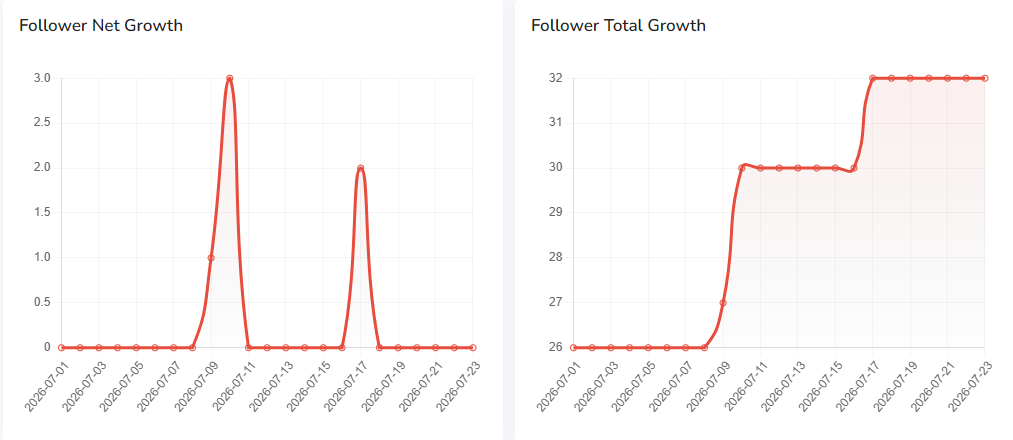
Image: Follower Account Growth Graph on Socindex
Both charts show sudden increases in follower numbers followed by flat periods. This type of pattern can help brands identify unusual account growth that may require further verification. Several free audience-checking tools can support the initial assessment. However, their results should still be confirmed by examining original engagement data through a social listening platform. Brands should also review publishing times and comment patterns. Accounts with bot followers may receive comments within seconds of posting, often from new accounts without profile pictures or a clear activity history.
Determine which influencer tier matches the campaign’s needs. Nano-influencers, micro-influencers, and macro-influencers have different cost structures and potential reach. Brands with limited budgets can begin by offering products to several micro-influencers through barter arrangements. Paid partnerships can be introduced after the initial results have been evaluated. A written agreement should also be considered for collaborations involving larger budgets. This ensures that both parties understand their responsibilities and expectations from the beginning. Discuss the campaign metrics before the collaboration starts. These metrics may include reach, impressions, engagement, or sales conversions. A gradual budgeting strategy can reduce risk. For example, a brand may allocate a smaller amount to test collaborations with three to five creators before assigning a larger budget to creators who have already produced measurable results.
The previous criteria are often checked manually. However, social listening data can make the verification process significantly more accurate. Platforms such as Socindex can automatically assess interaction quality, topic consistency, and audience sentiment in a creator’s comment section. Brands no longer need to examine hundreds of comments individually to evaluate a creator’s credibility. Social listening data can also help identify fake engagement patterns that are difficult to detect through manual observation. Brands using this type of data can usually screen dozens of potential creators more quickly than teams that continue to rely on manual spreadsheets.
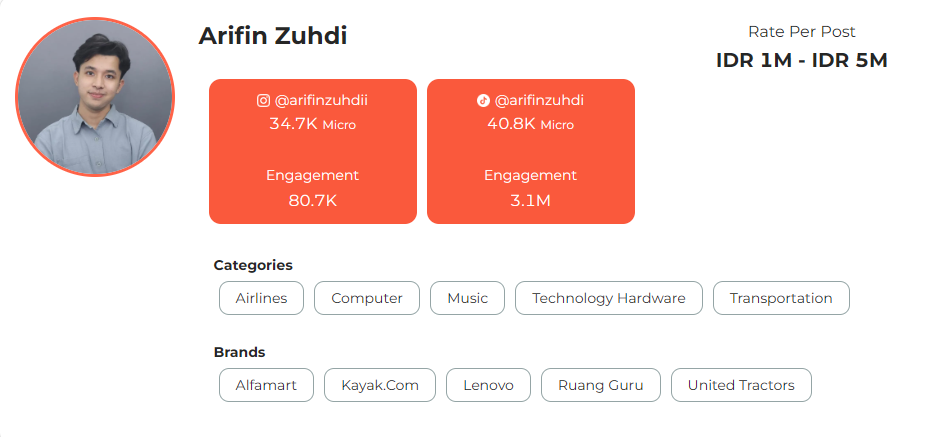
Image: One example of a Micro influencer
One of the most common mistakes occurs when brands select creators simply because they want a campaign to go viral, without checking whether the creator is aligned with the campaign’s objectives. A large follower base and visually attractive content may appear promising. However, these factors do not automatically mean that the audience trusts the creator’s recommendations. Brands that focus too heavily on surface-level numbers may produce campaigns that receive many views but generate very few conversions. The message fails because it does not reach the right audience.
Another mistake is ignoring niche relevance in pursuit of a larger follower count. Creators with many followers outside the product’s category often generate interactions that feel forced because their audiences are not genuinely interested in the promoted product. Brands that consistently select creators within the right niche tend to achieve more measurable long-term results, even when the creators have smaller audiences.
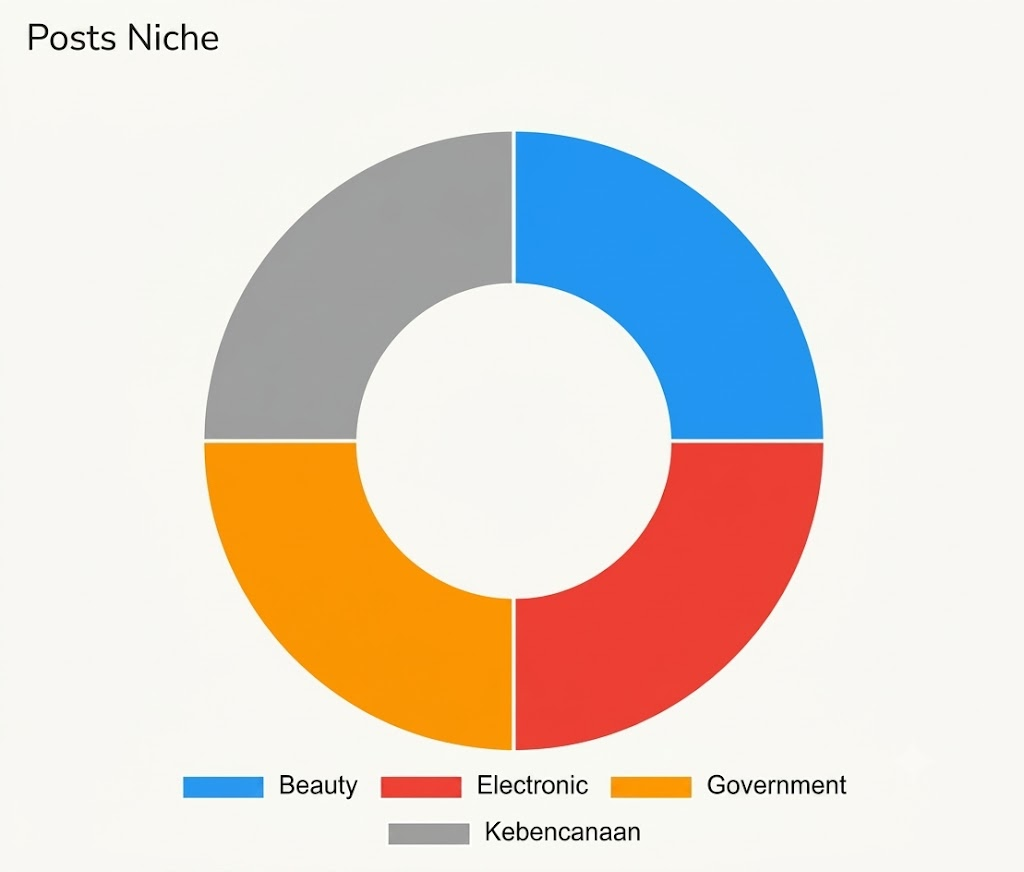
Image: Influencer Niche Distribution Chart
Brands also frequently overlook collaboration documentation because written agreements may seem unnecessary for small partnerships. Without a written understanding covering publishing schedules, revision limits, and content reuse rights, the collaboration can easily result in misunderstandings. The agreement does not need to be complicated. A clear list of terms sent through email or an official message can provide sufficient documentation before the content is published. A common problem occurs when content revisions continue indefinitely because expectations were not written down at the beginning. This may delay publication and cause the campaign to lose momentum.
Managing collaborations with dozens of micro-influencers is far more complicated than working with one major public figure. Each creator’s audience, communication style, and track record must be verified before a partnership begins. Marketing teams that rely entirely on manual research often become overwhelmed when the number of potential creators increases from five to fifty. Social listening data can provide an additional verification layer that accelerates the selection process without sacrificing accuracy.
Socindex helps brands automatically measure interaction quality and audience sentiment from creators’ comment sections rather than relying only on follower numbers. Real-time sentiment monitoring allows brands to observe changes in public opinion while the campaign is running. Corrective measures can therefore be implemented more quickly instead of waiting for a manual report at the end of the month. Share of voice analysis provides another useful perspective. It shows how effectively collaborations with micro-influencers increase the brand’s share of public conversation compared with competitors.
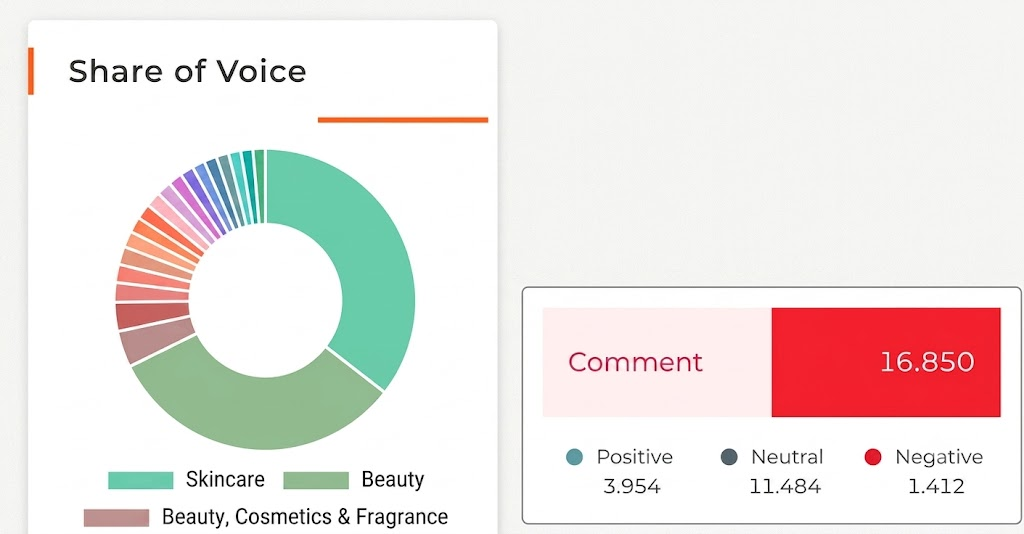
Image: Examples of Share of Voice Tools and Audience Sentiment Tools on Socindex
As an illustration, a campaign involving 15 micro-influencers in the beauty category produced results over a one-month period. Positive sentiment also dominated the conversations being monitored. These are the types of results that brands should use when deciding which creators deserve long-term partnerships, rather than relying on rough estimates based only on an Instagram feed.
Micro-influencers succeed not because of their follower numbers, but because of the closeness and trust they build with their audiences. The six criteria outlined above, from niche relevance to data verification, can help brands identify creators who are genuinely relevant to their next campaign. Manual verification has limitations, particularly when the number of collaborations begins to grow. At that point, social listening data becomes the difference between brands that are simply making assumptions and brands that genuinely understand which creators are worth working with.
The Binokular ecosystem and the Socindex social listening platform can help brands identify suitable creators, monitor conversation sentiment in real time, and accurately measure campaign impact.Contact the Binokular team to begin verifying influencer data before launching your next collaboration.
AI brand visibility is how often, how accurately, and in what context your brand appears in answers from AI-powered search…

binomedia

The DTSEN social assistance decile controversy in 2026 is not merely about inaccurate data. Media monitoring and digital conversation analysis…
binomedia

Indonesia’s gross domestic product (GDP) grew by 5.29 percent in the second quarter of 2026. This figure exceeded the median…
binomedia

Artificial intelligence (AI) is transforming education faster than most education systems can respond. Machines can now search for information, summarize…
binomedia

One Event, Two Market Moves On Monday, August 10, 2026, Indonesia’s rupiah closed 0.79% higher at IDR 17,755 per US…
binomedia

On Thursday, July 30, 2026, Indonesian President Prabowo Subianto announced a “cleanest city” competition. The top five cities would win…
binomedia

Before dawn on Friday, 24 July 2026, a mob in Bali beat a man to death. He is identified only…
binomedia

On June 10, 2026, Indomie brought back its Goreng Cabe Ijo flavor after the product had been difficult to find…
binomedia

Companies today use AI to read customer data, monitor public conversations, measure reputation, map issues, and support strategic decision-making. In…
binomedia

Amid economic uncertainty, one phenomenon has been widely discussed on social media and has attracted the attention of many financial…
binomedia