

How to Tell AI Astroturfing From Genuine Public Opinion
You can no longer tell AI astroturfing from genuine public opinion by reading the text. Generative AI writes as fluently…
-
binomedia
- October 2, 2026


Who controls money in the blockchain era? When Bitcoin launched in 2008, the answer sounded simple: no single party, because money could move directly between users without a bank. Almost two decades later, the direction has reversed. On 21 September 2026, the Eurosystem, the network of euro area central banks led by the European Central Bank (ECB), launched Pontes. The system connects blockchain platforms to central bank money so that trades in financial assets can settle.
Central banks now use blockchain themselves to keep their money as the anchor of a digital financial system. Stablecoins and tokenised deposits still circulate on top. But central banks want to remain the place where transactions finally settle.
Pontes is a bridge between the DLT platforms run by market players and the Eurosystem’s payment infrastructure. DLT, or distributed ledger technology, is the family of technologies that includes blockchain. According to the official Pontes page on the ECB website, Pontes links DLT platforms to TARGET Services, the Eurosystem’s interbank payment system. The cash leg settles in T2, the Eurosystem’s real-time payment system.

Picture a bond that has been tokenised and trades on a DLT network. Ownership moves digitally, but the buyer still has to pay. There are three kinds of money for that: tokenised commercial bank money, stablecoins, or central bank money through Pontes. The first two carry the credit risk of whoever issued them, and large institutions are reluctant to take on that risk.
Market interest showed up on day one. According to the ECB, 13 market participants and 4 DLT operators had completed onboarding and were ready to use Pontes. The banks include Deutsche Bank, Santander and Société Générale. The Deutsche Bundesbank also joined as a market participant.
The first version of Pontes is limited. The Eurosystem will add features and extend operating hours step by step, with full implementation expected by 2028. Access is restricted too: according to the ECB, eligible participants are entities with access to T2.
“Pontes brings the stability and trust of central bank money to the European tokenised finance ecosystem,” said Piero Cipollone, a member of the ECB’s Executive Board. The statement points to a goal bigger than building a central bank version of blockchain. The ECB wants central bank money to stay inside the system as financial infrastructure changes.
Blockchain is now entering the core of financial markets through tokenisation. Shares, bonds and other debt are recorded as digital tokens on programmable networks. The BIS lists three benefits: money and assets become programmable, settlement can happen simultaneously, and operations can run around the clock.
The catch is that turning a bond into a token does not complete a trade. The buyer still has to pay, and that payment needs money every party trusts. In the Eurosystem’s 2024 tests, more than 50 trials involved 64 participants from the public and private sectors. According to an ECB release, participants said access to a risk-free settlement asset was crucial for wider adoption of the technology.
On a blockchain network, there are three candidates for payment. Stablecoins are issued by private companies and pegged to a currency. Tokenised deposits are ordinary bank deposits, issued by commercial banks and recorded on a programmable platform. Central bank money is the reserves banks hold at the central bank, the safest form of money because it carries no issuer credit risk.
Their users differ as well. Banks and financial institutions use central bank money. Bank customers and market players use tokenised deposits, while stablecoins are used mostly by crypto users and decentralised finance apps. Tokenised deposits stay inside a supervised banking system and settle in central bank money. A stablecoin’s value depends on its issuer’s reserves and can drift from its peg in secondary markets.
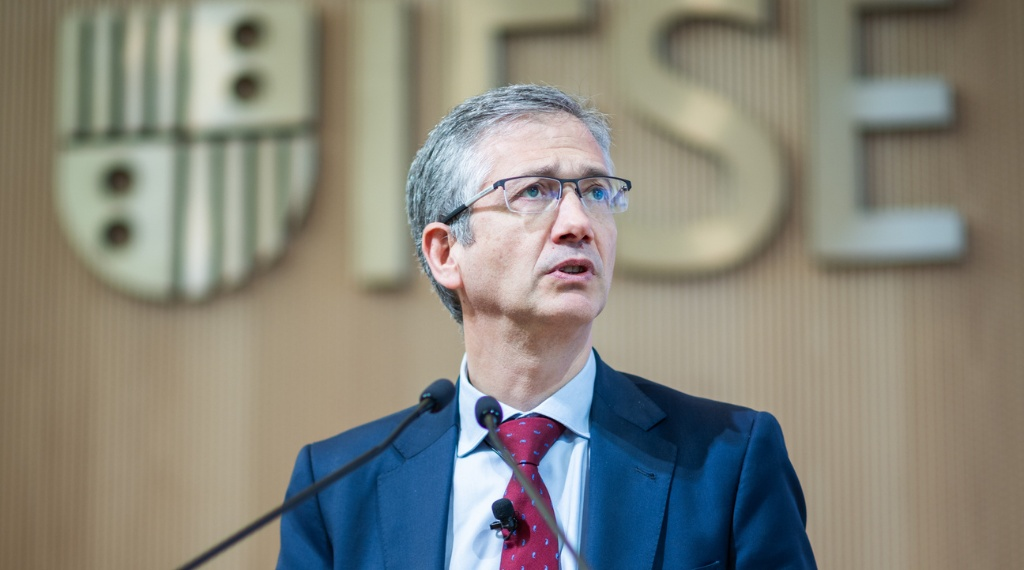
Pablo Hernández de Cos, General Manager of the Bank for International Settlements (BIS), discussed these differences in a speech at Jackson Hole on 28 August 2026. In his view, money works because it is accepted “with no questions asked” as final settlement of an obligation. The modern monetary system protects that quality with two tiers: central bank money as the anchor, and money supplied by supervised private institutions.
Hernández de Cos offered a simple example. Ben holds USDT and wants to send one dollar to Marie, who only accepts USDC. Ben has to sell USDT on a secondary market and buy USDC, and the exchange rate may not be exactly one to one. Tokenised deposits avoid this problem because banks still settle with each other in central bank accounts.
The BIS draws a direct conclusion from this. Tokenised deposits should carry most everyday payments and wholesale settlement, with final settlement in central bank money. Stablecoins get specialised roles, such as decentralised lending pools, under strict rules. Pontes is the concrete form of that position in Europe.
This marks a reversal of blockchain’s original ideals. On 31 October 2008, Satoshi Nakamoto published the Bitcoin whitepaper. It proposed peer-to-peer electronic cash that could be sent directly between parties, without going through a financial institution. For many supporters, Bitcoin promised money that neither banks nor central banks controlled.
That promise soon ran into the law. Silk Road, a darknet black market operating since February 2011, accepted payment only in bitcoin. The FBI shut it down in October 2013 and arrested its founder, Ross Ulbricht. From then on, bitcoin was long branded as untraceable money for criminals.
That label is only half true. Bitcoin transactions are recorded permanently on a public ledger, so they are pseudonymous: wallet addresses are visible, but owners’ identities are not. At Ulbricht’s trial, FBI agent Ilhwan Yum testified that he traced 3,760 transactions between Silk Road’s servers and Ulbricht’s laptop over the 12 months to August 2013. In total, he followed more than 700,000 bitcoins along the blockchain.
Regulators’ concerns later shifted to stablecoins. The BIS now points out that most stablecoin balances sit in self-custodied wallets, which makes anti-money-laundering rules hard to enforce. Regulators responded with rules such as MiCA, the EU’s Markets in Crypto-Assets Regulation, and central banks began building their own blockchain infrastructure. The promise of money without control faded, while the technology was adopted by the very institutions it was meant to bypass.
Pontes works on three levels: financial markets, stablecoins, and the debate over who controls money. The first is already running, while the other two are still being shaped by rules under negotiation.
Banks and market players can now settle tokenised asset trades in the safest form of money. The ECB is also using its own rails. On the day Pontes launched, the ECB said it plans to put a small part of its own funds into tokenised securities. Those trades will settle through Pontes. The first targets are euro-denominated securities issued by central and regional governments, agencies and European supranational institutions.
Pontes is also part of Appia, a long-term Eurosystem initiative announced in March 2026, with a blueprint due by 2028. According to Euronews, Europe is still catching up with the United States. The New York Stock Exchange is building a venue for tokenised shares and funds that trades around the clock, while Pontes still runs within market hours. Iana Dimitrova, CEO of OpenPayd, also argues that Pontes still relies on existing TARGET infrastructure for settlement finality.
For stablecoin issuers, there are two signals. Central banks want to be the anchor, and the rules are getting stricter. Meanwhile the regulated market keeps growing. According to Deloitte, citing Visa Onchain Analytics data, average global stablecoin supply reached $273 billion in December 2025, up 47% from December 2024.
In Europe, MiCA requires stablecoin issuers to hold at least 30% of reserves as bank deposits, rising to 60% for stablecoins classed as significant. On 22 September 2026, the ECB and the EU’s national central banks called for that rule to be scrapped. They worry that a run on stablecoins could drain bank funding within a short time. The ECB also wants the ban on paying interest on stablecoins to be widened.
Fears that cash will disappear deserve a closer look. Pontes serves only wholesale transactions between banks and market infrastructures, so it does not touch cash or people’s wallets. The project aimed at the public is the digital euro. According to the ECB, the digital euro could be issued in 2029 if the regulation is adopted in 2026. A pilot with 36 payment providers is set to start in September 2027.
The ECB says the digital euro is designed to complement cash, and cash remains legal tender. ECB President Christine Lagarde made the same point to Euronews: “Cash will not go away, it will be rejuvenated.” In the same interview, Lagarde rejected the idea that the digital euro is designed to let the central bank monitor payments.
The sharper debate is about control and privacy. The European Parliament approved opening negotiations on the digital euro on 9 July 2026, with 416 votes in favour, 169 against and 22 abstentions. Critics such as economist Daniel Lacalle and the Dutch group Stichting Privacy First see a risk here. They worry that centralised digital money could open the door to surveillance of citizens’ transactions.
The digital rights group epicenter.works also wrote an open letter. It calls for clear privacy thresholds so that everyday payments can be as private as cash.
The idea that money will be more tightly controlled has a basis in this debate, but it is not yet fact. The outcome depends on privacy rules still being negotiated between the European Parliament, the Council and the Commission.
Indonesia is on a similar path. Bank Indonesia (BI), the country’s central bank, is developing a digital rupiah through Project Garuda. Its starting point is also the wholesale segment. On 13 December 2024, BI published a proof-of-concept report titled “Project Garuda: Wholesale Rupiah Digital Cash Ledger”. It tested two DLT platforms for issuance, redemption and transfer.
Under the project, BI has stressed its role as the sole authority issuing the currency, including in digital form. BI has split development into three stages. The first covers the wholesale digital rupiah, and the last fully integrates the wholesale and retail segments.
BI’s direction mirrors Europe’s: the central bank wants its money to stay present in the settlement layer as financial infrastructure changes. Europe already operates Pontes, while the digital rupiah, based on the public documents we reviewed, is still in testing. That makes Europe’s privacy debate worth following for anyone watching Indonesia, because the same questions could arise once the digital rupiah reaches the retail segment.
Blockchain was born with the promise that no one needed to control money. At the level of financial infrastructure, that promise has now reversed. Central banks in Europe, and Bank Indonesia too, use the same technology to keep the money they issue as the anchor. Stablecoins and tokenised deposits still have a place, and the BIS sees them coexisting as long as central bank money serves as the anchor.
Who controls money in the blockchain era comes down to three things: who is trusted as the final place of settlement, how the systems connect to each other, and which rules govern them. For now, central banks hold the first, while the other two are still being contested through regulation. Blockchain may change how assets move, but one question stays the same: when everything goes digital, who makes sure money can still be trusted?
That trust also takes shape in public, through how the media reports on stablecoins, crypto and digital money, and how people talk about them. At Binokular, an Indonesian media intelligence company, we track these narratives across the media: Newstensity for news coverage and Socindex for social media conversation. We help make shifts in public trust visible earlier.

You can no longer tell AI astroturfing from genuine public opinion by reading the text. Generative AI writes as fluently…

binomedia

The debate over whether AI development should slow down is no longer theoretical. In September 2026, the CEOs of the…
binomedia

AI brand visibility is how often, how accurately, and in what context your brand appears in answers from AI-powered search…
binomedia

The DTSEN social assistance decile controversy in 2026 is not merely about inaccurate data. Media monitoring and digital conversation analysis…
binomedia

Indonesia’s gross domestic product (GDP) grew by 5.29 percent in the second quarter of 2026. This figure exceeded the median…
binomedia

Artificial intelligence (AI) is transforming education faster than most education systems can respond. Machines can now search for information, summarize…
binomedia

One Event, Two Market Moves On Monday, August 10, 2026, Indonesia’s rupiah closed 0.79% higher at IDR 17,755 per US…
binomedia

On Thursday, July 30, 2026, Indonesian President Prabowo Subianto announced a “cleanest city” competition. The top five cities would win…
binomedia

Before dawn on Friday, 24 July 2026, a mob in Bali beat a man to death. He is identified only…
binomedia

Gen Z is increasingly tuning out advertisements that look overly polished and perfect. Instead, they tend to trust recommendations from…
binomedia