

How to Tell AI Astroturfing From Genuine Public Opinion
You can no longer tell AI astroturfing from genuine public opinion by reading the text. Generative AI writes as fluently…
-
binomedia
- October 2, 2026


On Thursday, July 30, 2026, Indonesian President Prabowo Subianto announced a “cleanest city” competition. The top five cities would win up to IDR 20 billion each. The total budget: IDR 150 billion. Within hours, major outlets including Kompas, Liputan6, Okezone, JPNN, and Tribunnews ran stories with nearly identical headlines. Each one quoted the same lines from the president’s speech.
This pattern has a name: churnalism. The term describes journalism that recycles press releases and official statements rather than turning them into independent reporting. Media monitoring exists to catch exactly this pattern, systematically, not just to count how many stories ran.
British investigative journalist Nick Davies coined the term in his book Flat Earth News (2008). He based it on research from Cardiff University. The study analyzed roughly 2,000 news stories over two weeks. The findings were striking. 80 percent of stories in major UK outlets were wholly or partly recycled from PR material or wire copy. Only 12 percent were the product of original reporting.
That research is nearly two decades old and UK-specific. But the pattern it describes still shows up anywhere news gets produced at speed, including in the coverage of Indonesia’s cleanest-city policy.
Indonesia has its own record of this. Between January and September 2022, the Press Council (Dewan Pers) received 553 complaints about journalistic code-of-ethics violations from online media outlets. Yadi Hendriana, then head of the Press Council’s complaints commission, pointed to cases where a headline and full story text matched exactly across a dozen or more outlets.
Compare the headlines published within 24 hours of the speech. Kompas.com ran “Prabowo Challenges Regions to Compete for Cleanest City, Prize IDR 20 Billion.” Liputan6.com ran “Prabowo Launches Cleanest City Competition, Prepares IDR 20 Billion Prize.” Okezone.com ran “Prabowo Wants to Create Cleanest City Competition, IDR 20 Billion Prize.” JPNN.com ran “Cleanest City Competition Prepared, President Prabowo Promises IDR 20 Billion Prize for Winners.”
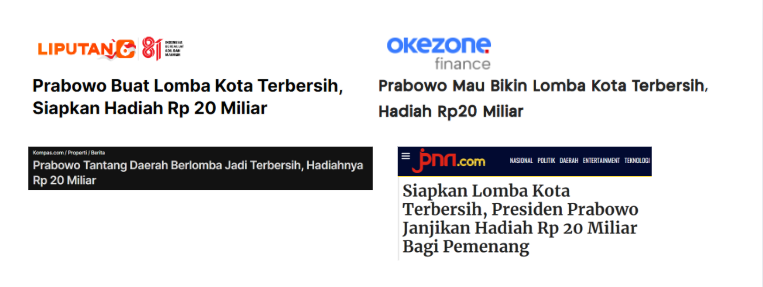
The wording differs slightly. But the information structure is identical. Same subject, same figure, same event context. Even the order of facts matches.
This is not a coincidence. It happens when coverage draws from the same speech transcript or press release. Each newsroom simply rearranges the opening line and headline. Nobody adds context, verification, or a follow-up question. The more outlets that do this at once, the stronger the impression that “everyone is talking about this.” What actually happened is one piece of information, copied repeatedly, with only cosmetic variation.
What’s more interesting than what got reported is what didn’t get asked. Across the dozens of articles about this IDR 20 billion incentive plan, almost none raised the basic questions a budget of this size should invite.
How will “cleanest city” be measured objectively, and who judges it? What oversight mechanism will govern the incentive funds? This matters given recent scrutiny of Indonesia’s education budget. Part of it, the Constitutional Court (Mahkamah Konstitusi, or MK) found, had been redirected to the free-meals program known as MBG. Is the target of a waste-free Indonesia by the end of 2027 realistic, and what projection is it based on? How does this incentive scheme compare with past programs? Has anyone evaluated whether competition-based incentives like this actually work?
The absence of these questions doesn’t mean outlets are deliberately hiding something. It’s more likely a symptom of speed pressure in digital media. Whoever publishes first gets more traffic. Critical questions that require extra research often lose out to publishing speed.
Churnalism isn’t new. This cleanest-city policy is just the latest example of a much broader pattern. Three reasons make it worth paying attention to, rather than accepting as “just how media works now.”
First, when dozens of outlets publish substantively identical coverage, the public loses the chance to see a range of perspectives on one issue. Media pluralism research calls this the “illusion of diversity.” A large number of outlets doesn’t guarantee greater pluralism. Content homogenization actually amplifies the most popular outlet’s framing, which in turn shapes the agenda around an issue. A high outlet count no longer means a range of analysis. It only means a range of logos at the top of the page.
Second, without critical questions asked early, holding a policy promise accountable later becomes harder. Journalism’s watchdog function requires independent newsgathering. Churnalism is concerning precisely because it erodes the press’s capacity to check power. If no outlet asks how the IDR 150 billion will be overseen on day one, the public will struggle to demand transparency once the program is months into rollout.
Third, uniform coverage tends to manufacture an illusion of consensus. A reader who checks five articles on this policy might feel well-informed. In reality, all five trace back to one uncross-checked source. Churnalism research consistently identifies this pattern as a driver of a news landscape that looks diverse on the surface but is homogeneous underneath.
This isn’t purely a matter of individual journalistic laziness. Today’s media industry structure pushes toward churnalism: traffic pressure, a shrinking pool of field reporters, and rising expectations for publishing speed. Small newsrooms with limited resources often have no real alternative. They rely on official releases as their primary raw material.
The fix isn’t blaming any one party. What’s needed is awareness, among both readers and industry practitioners, that a high volume of stories on one topic doesn’t automatically mean that topic has been covered in depth. Coverage quantity and analytical quality are two different things. Telling them apart matters when judging how well a public issue has actually been “covered.”
This is where media monitoring does more than count mentions or track sentiment. It tracks how stories cluster, how similar their narratives are, and how varied their sources are. That combination can answer one key question: is an issue genuinely being debated critically, or just amplified from a single source? Three concrete signals make churnalism measurable.
Media monitoring tools can compare headlines and opening paragraphs across dozens of articles on the same topic. They then score how closely the structure matches. The industry sometimes calls this narrative or topic clustering. The higher the cross-outlet similarity within a short window, the more likely the coverage traces back to one transcript or press release, not independent reporting.
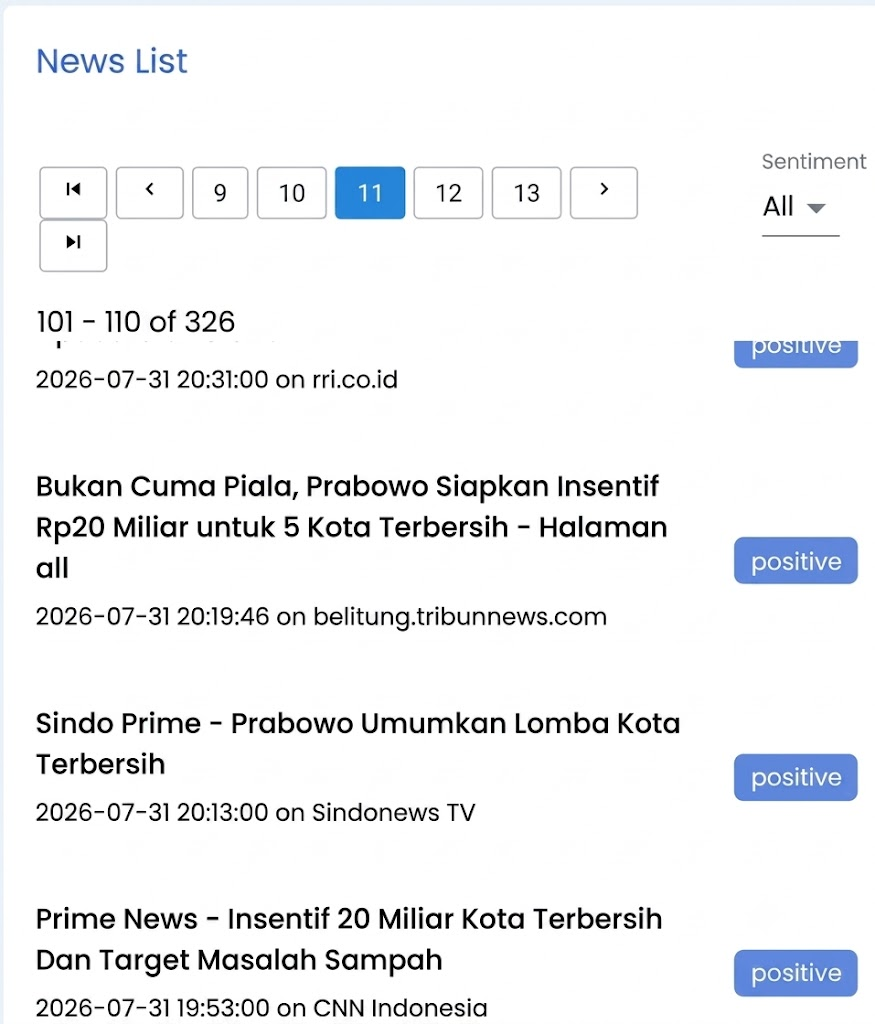
Monitoring tools, including the kind used across the media intelligence industry, can identify which stories mention a given keyword or name. They then map which sources each article actually quotes. If nearly every article quotes only one party, the official who gave the speech, that’s a measurable churnalism signal rather than a hunch. The same mapping also flags who never gets asked for comment. Think of people directly affected by the policy, or independent analysts outside the official’s circle.
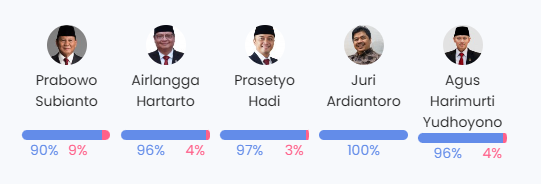
Media monitoring can separate two metrics that often get conflated. One is how many stories ran on an issue. The other is how much genuine variation in framing exists across them.
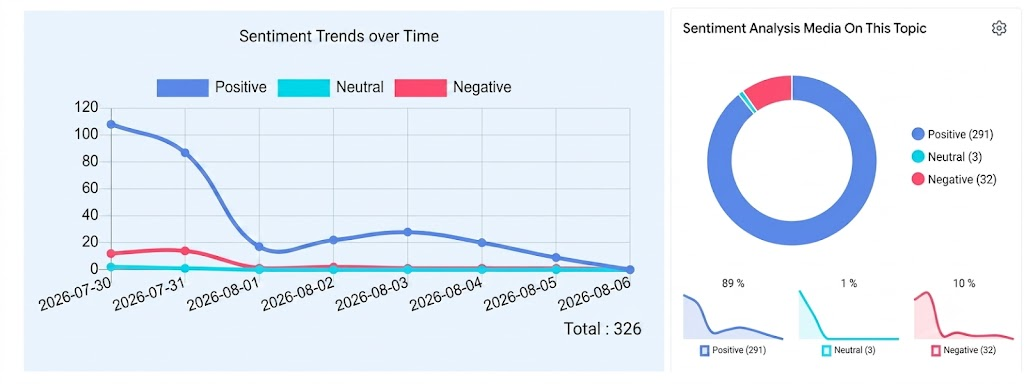
For communications practitioners, researchers, and policymakers, telling these two apart matters. It produces a fuller picture of the quality of public conversation, not just its volume.
The IDR 20 billion cleanest-city incentive is a well-intentioned policy worth supporting. But the way mass media covered it tells a different story. Coverage was nearly uniform, thin on follow-up questions, and closer to press-release distribution than independent reporting. That points to a bigger challenge in today’s media ecosystem.
Information is no longer scarce. The real challenge is telling apart a high volume of coverage from a genuine range of perspectives. When dozens of outlets deliver nearly identical narratives, media monitoring becomes a tool for spotting patterns everyday readers can’t see on their own. It can flag the symptoms of churnalism before they get treated as normal.
For everyday readers, one simple habit helps: check whether a story quotes more than one party. That alone is a useful first step. For media monitoring practitioners, tracking narrative similarity and source diversity can shift how they read the coverage landscape. It moves the focus from raw volume to the actual quality of public conversation.

You can no longer tell AI astroturfing from genuine public opinion by reading the text. Generative AI writes as fluently…

binomedia

Who controls money in the blockchain era? When Bitcoin launched in 2008, the answer sounded simple: no single party, because…
binomedia

The debate over whether AI development should slow down is no longer theoretical. In September 2026, the CEOs of the…
binomedia

AI brand visibility is how often, how accurately, and in what context your brand appears in answers from AI-powered search…
binomedia

The DTSEN social assistance decile controversy in 2026 is not merely about inaccurate data. Media monitoring and digital conversation analysis…
binomedia
Indonesia’s gross domestic product (GDP) grew by 5.29 percent in the second quarter of 2026. This figure exceeded the median…
binomedia

Artificial intelligence (AI) is transforming education faster than most education systems can respond. Machines can now search for information, summarize…
binomedia

One Event, Two Market Moves On Monday, August 10, 2026, Indonesia’s rupiah closed 0.79% higher at IDR 17,755 per US…
binomedia

Before dawn on Friday, 24 July 2026, a mob in Bali beat a man to death. He is identified only…
binomedia

Gen Z is increasingly tuning out advertisements that look overly polished and perfect. Instead, they tend to trust recommendations from…
binomedia