

AI Brand Visibility: Who’s Telling Your Brand’s Story?
AI brand visibility is how often, how accurately, and in what context your brand appears in answers from AI-powered search…
-
binomedia
- September 11, 2026


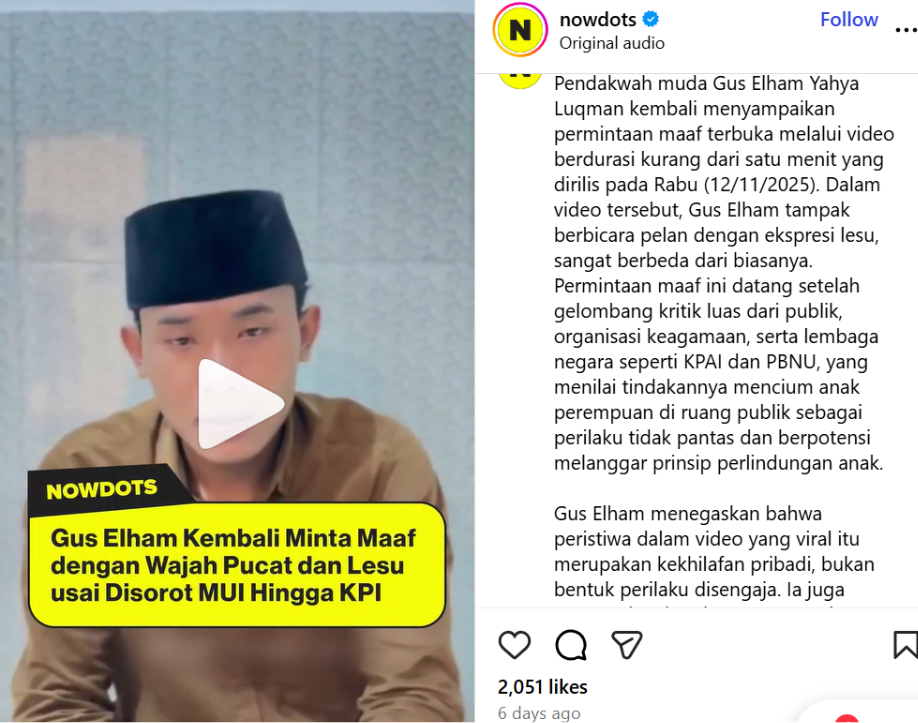
Gus Elham Yahya Luqman, a young preacher from Kediri, East Java, went viral on social media in early November 2025 after an old video resurfaced showing him kissing a child on stage during a religious gathering. The act sparked a wave of public criticism, with many deeming the gesture inappropriate and potentially violating legal and social norms. Across various social media platforms, netizens expressed concern over child grooming and questioned Gus Elham’s ethical conduct as a preacher.
Gus Elham issued a public apology on 11 November 2025 and repeated his apology on 12 November with a visibly somber demeanor, acknowledging his mistake and promising not to repeat it. Despite this, calls for legal action from the public and institutions remained strong.

Based on monitoring conducted using Socindex across Twitter/X, Facebook, Instagram, TikTok, and YouTube, discussions surrounding the case reached a substantial volume—approximately 68,791 conversations. The monitoring period ran from 1 to 19 November 2025 using keywords such as “Gus Elham,” “Gus Ilham,” #GusElham, and #GusIlham.
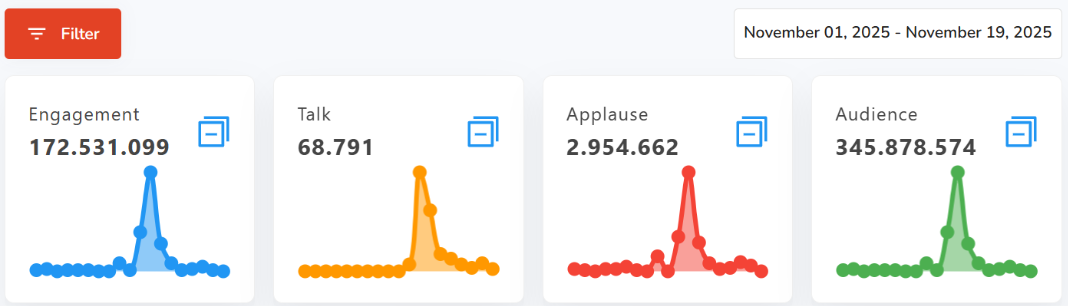
The topic also generated a massive audience reach of 345,878,574 with 172,531,099 total engagements. This data clearly shows that discussions related to Gus Elham became one of the most extensively debated topics of the month.
The resurfaced video shows Gus Elham carrying and kissing young girls in a manner perceived as excessive, particularly because it occurred publicly and in the presence of the children’s parents. The family involved stated they had reprimanded him in the past. Gus Elham claimed his actions stemmed from feelings of affection or being “adorable” toward the children. However, netizens interpreted the behavior as dangerous grooming since minors cannot fully understand consent.

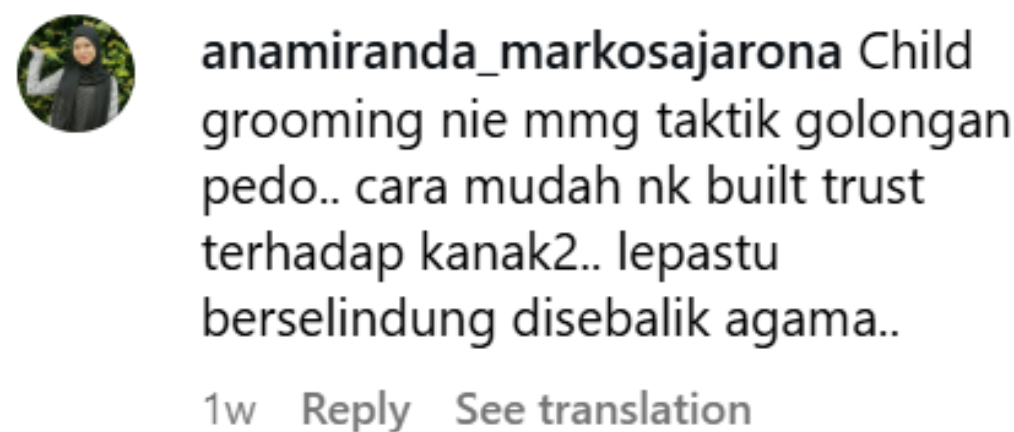
Netizens expressed widespread criticism regarding potential child abuse and the long-term impact on Islam’s public image. Many called for legal action against Gus Elham, labeling his behavior as “pedophilic” and drawing parallels to broader issues of sexual misconduct.
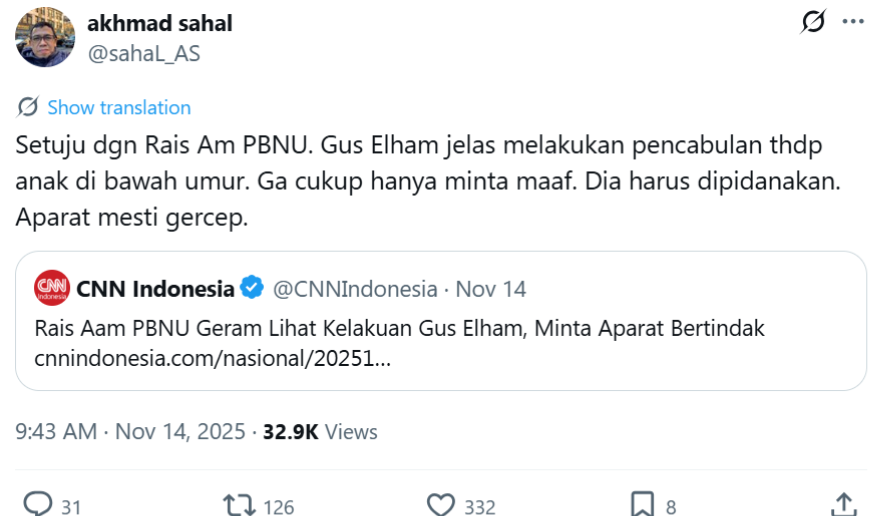
Some criticisms also referenced similar cases involving religious figures in the past.
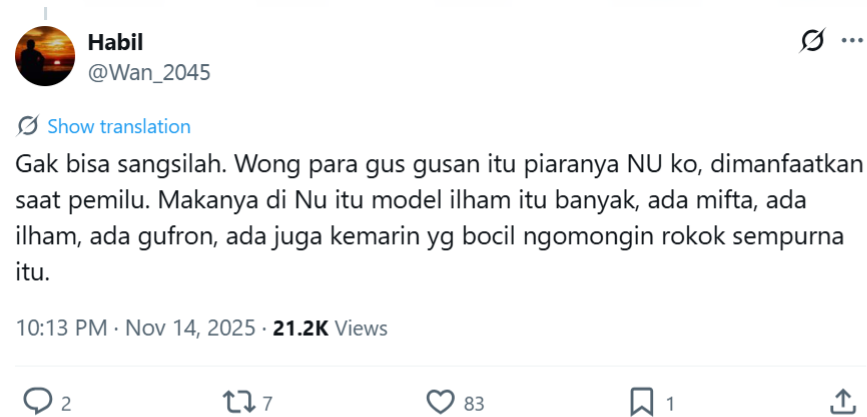
On the other hand, a portion of users defended Gus Elham, citing cultural context—specifically the “ciuman barokah” (blessing kiss) tradition in certain NU pesantrens, where kissing is considered a gesture of spiritual blessing. Others argued that no parents present at the event objected at the time.


Several official bodies and public figures responded firmly to the incident:
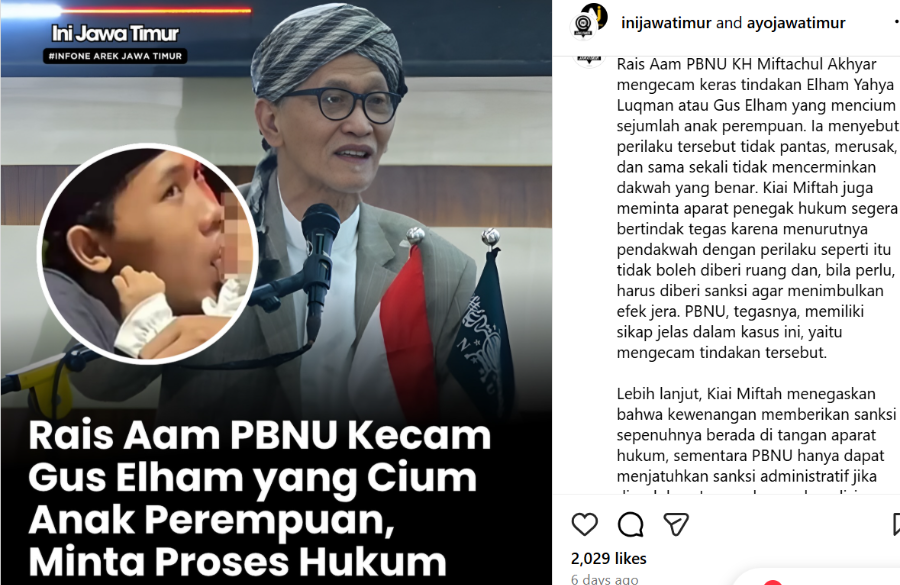
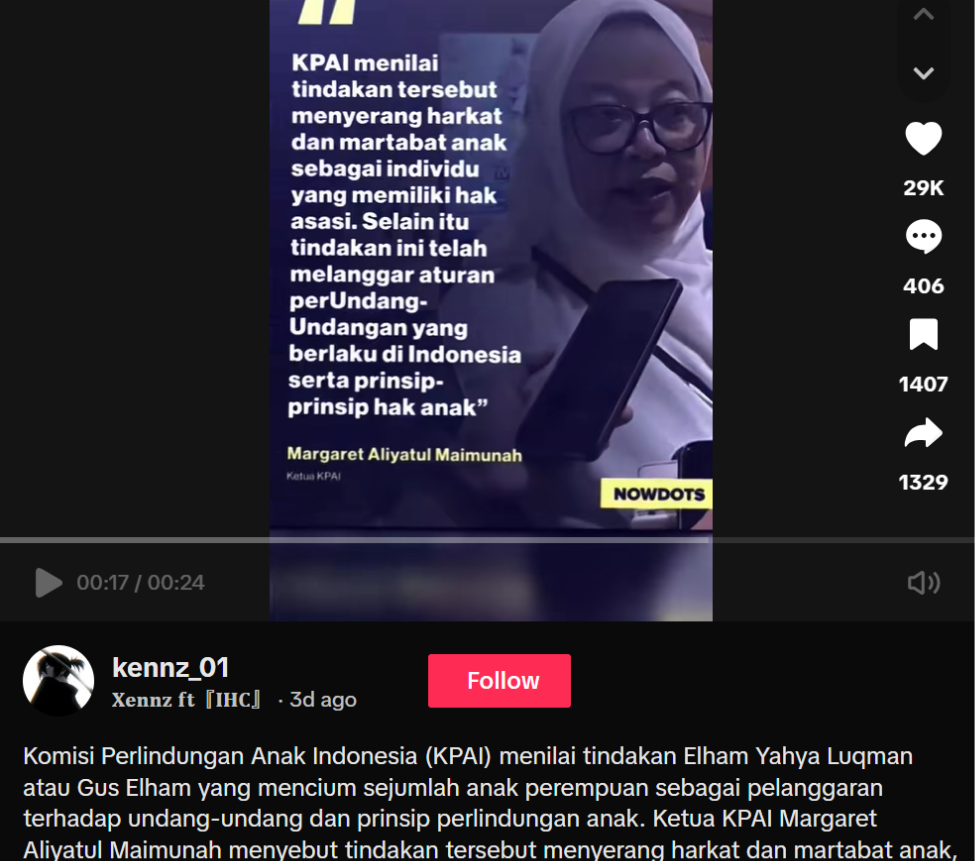

This case serves as an important reminder of the need for strong child protection measures within religious settings. Religious events must ensure a safe environment for children and prevent long-term trauma that could erode public trust in preachers.
One positive outcome is the growing public discourse around ethical standards for religious leaders. The incident has prompted calls for tighter supervision and clearer guidelines to prevent behaviors that could be categorized as sexual misconduct.
Ultimately, the case highlights the importance of safeguarding minors and ensuring that religious spaces prioritize their well-being and dignity.

AI brand visibility is how often, how accurately, and in what context your brand appears in answers from AI-powered search…

binomedia

The DTSEN social assistance decile controversy in 2026 is not merely about inaccurate data. Media monitoring and digital conversation analysis…
binomedia

Indonesia’s gross domestic product (GDP) grew by 5.29 percent in the second quarter of 2026. This figure exceeded the median…
binomedia

Artificial intelligence (AI) is transforming education faster than most education systems can respond. Machines can now search for information, summarize…
binomedia

One Event, Two Market Moves On Monday, August 10, 2026, Indonesia’s rupiah closed 0.79% higher at IDR 17,755 per US…
binomedia

On Thursday, July 30, 2026, Indonesian President Prabowo Subianto announced a “cleanest city” competition. The top five cities would win…
binomedia

Before dawn on Friday, 24 July 2026, a mob in Bali beat a man to death. He is identified only…
binomedia

Gen Z is increasingly tuning out advertisements that look overly polished and perfect. Instead, they tend to trust recommendations from…
binomedia

On June 10, 2026, Indomie brought back its Goreng Cabe Ijo flavor after the product had been difficult to find…
binomedia

Companies today use AI to read customer data, monitor public conversations, measure reputation, map issues, and support strategic decision-making. In…
binomedia