

Two Years of the Prabowo-Gibran Government
Most positive news coverage: Kemenag, Kemenkeu and Kemendagri in the news media, and Kemensos, BGN and Kemenkeu on social media….
-
binomedia
- October 20, 2026


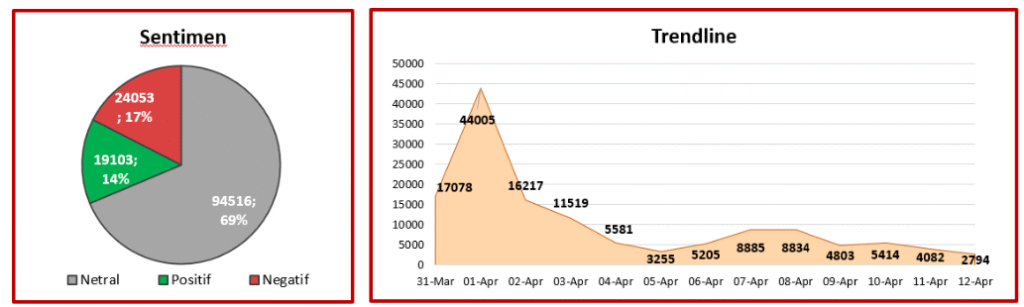
Jakarta — The Work from Home (WFH) policy for Indonesian civil servants (ASN) every Friday has triggered the strongest wave of criticism since the implementation of the 8 (Eight) Points of Work Culture Transformation and Energy Efficiency. However, beyond the uproar on social media, the data shows that the public has not turned against the policy. In fact, 69 percent of netizens are still in an observation phase, gathering information, asking questions, and weighing its impact.
With total engagement exceeding 7.3 million interactions during 31 March–12 April 2026, this discourse is not merely digital noise, but a reflection that the public is still waiting for proof. Using big data analytics tools, PT Binokular Media Utama (“Binokular”) conducted research on social media conversations regarding public attention, argument distribution, and discussions related to the implementation of the 8 Points of Work Culture Transformation and Energy Efficiency.
During the period from 31 March to 12 April 2026, the Socindex social media listening dashboard captured 137,672 netizen conversations across various platforms (X/Twitter, Facebook, Instagram, YouTube, and TikTok), with total engagement reaching 7,360,469.
Based on the same data, public sentiment toward this policy was dominated by a neutral stance at 69 percent, while negative sentiment stood at 17 percent and positive sentiment at 14 percent. In terms of platform distribution, most netizens discussed the policy on TikTok and Instagram, with comments on posts being the most common form of conversation.
Interestingly, although the discussion was highly massive, most netizens were still in the stage of seeking information, asking questions, and making observational statements. However, behind this dominance of neutral sentiment, the issue of Friday Work from Home (WFH) for civil servants emerged as the most controversial topic and the one attracting the greatest public attention.
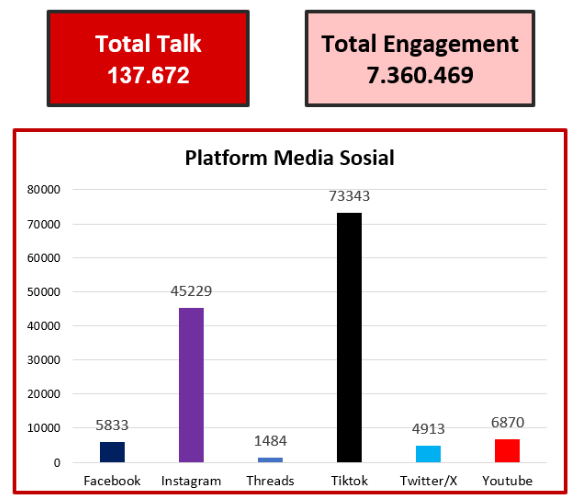
“Conversations surrounding the work culture transformation and energy-efficiency policy surged sharply on 1 April 2026, one day after the government’s official announcement on 31 March. This spike was a direct reaction from netizens to various parts of the policy, especially those related to energy savings. Earlier, at the end of March, social media had already been filled with public concern over the possibility of fuel price increases following tensions in the Middle East,” said Binokular’s Social Media Data Analytics (Socindex) Manager, Danu Setio Wihananto.
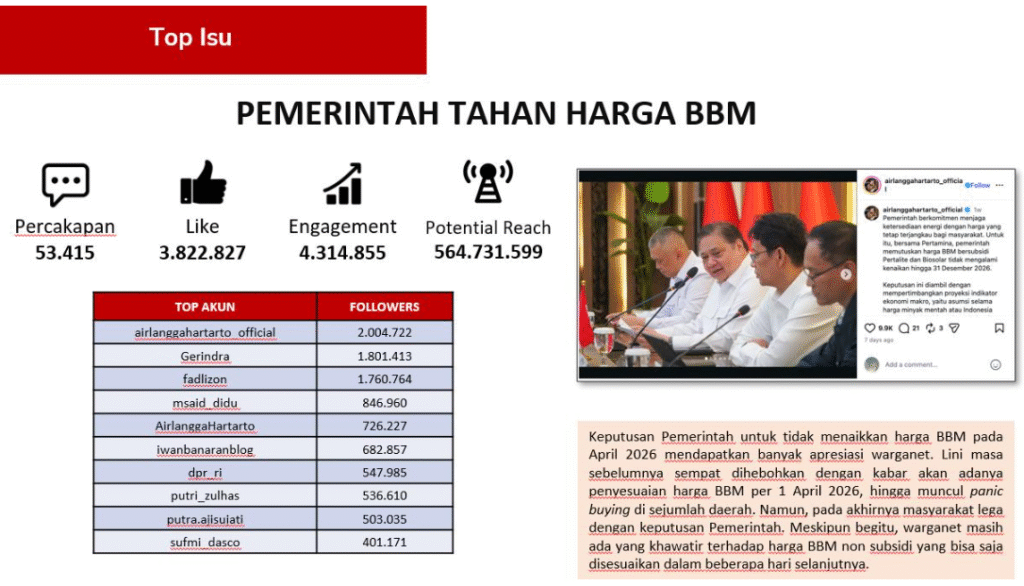
That concern, Danu continued, had briefly triggered panic buying behavior in several regions. However, after the government officially announced that fuel prices would not be raised in April 2026, the public felt relieved. “The decision to keep fuel prices unchanged became one of the points most appreciated by netizens, although a small portion still voiced concerns about possible adjustments to non-subsidized fuel prices in the future,” Danu added.
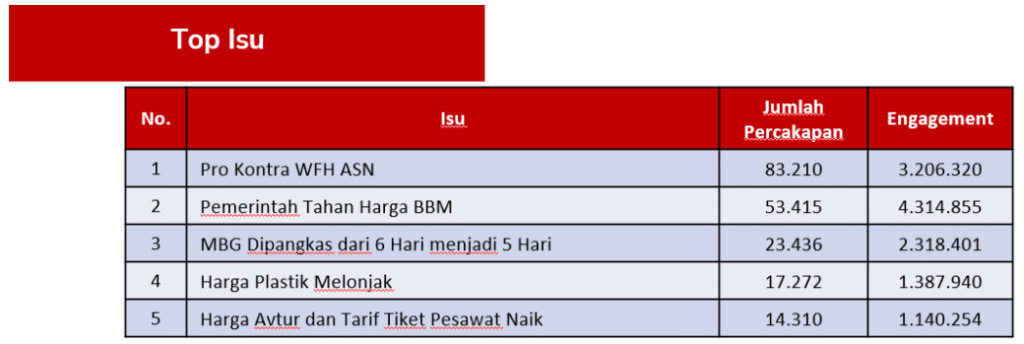
In another section, Danu explained that during the monitoring period, the two most dominant issues discussed by netizens were the Friday WFH policy for civil servants and the optimization of the Free Nutritious Meals (MBG) program.
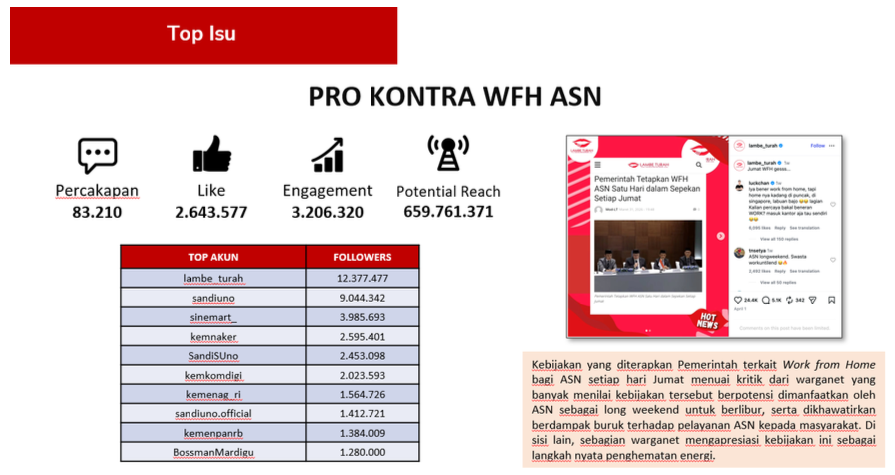
“WFH for civil servants drew the greatest attention. The policy, which was intended to save energy by reducing mobility and fuel consumption in office environments, drew sharp pro and con reactions. Netizens who opposed it criticized the policy as something that could be used by civil servants as a long weekend for leisure, rather than for working productively from home. A deeper concern was the decline in the quality of public services, considering that many people still need administrative and technical services on Fridays,” said Danu.
On the other hand, netizens who supported the policy viewed WFH as a concrete step toward energy savings. By reducing official travel and building operations, electricity and fuel consumption could be lowered. They argued that as long as digital public services run properly and civil servants remain productive, WFH could actually become a more flexible and environmentally friendly model of future work. Even so, these positive voices were still outnumbered by the more dominant negative and neutral sentiment.
Another issue that was no less heated was the reduction of the Free Nutritious Meals (MBG) program from six days to five days per week. Netizens believed that the very large MBG budget should be made more efficient, especially given a number of incidents and controversies that had occurred in the field. Reducing the number of distribution days was seen as insufficient to produce meaningful efficiency gains.
Negative sentiment toward this policy was more dominant than positive sentiment. Many netizens questioned why there was no thorough evaluation of the distribution mechanism and the menu, instead of simply reducing the frequency.
Unlike the controversial WFH issue, the government’s decision not to raise fuel prices in April 2026 received broad appreciation. Binokular’s News Data Analytics (Newstensity) Manager, Nicko Mardiansyah, said that before the announcement, social media had been stirred by news that fuel prices would be adjusted on 1 April.
“This issue caused panic and long queues at a number of gas stations. However, after the government officially announced that certain subsidized and non-subsidized fuel prices would be kept unchanged, netizens expressed relief and gratitude in large numbers,” said Nicko.
Positive sentiment toward this policy was recorded as one of the highest during the monitoring period, even though overall positive sentiment accounted for only 14 percent. Some netizens still felt uneasy, especially about the possibility of non-subsidized fuel price increases in the following weeks. Even so, the government’s move to hold prices steady was seen as a quick response that calmed the public.
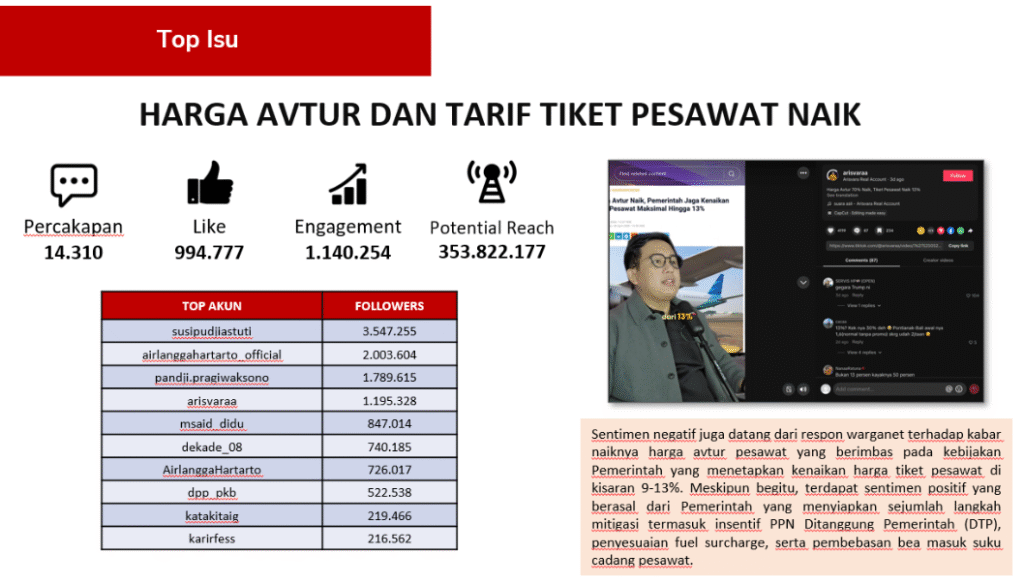
In addition to the three main issues above, netizens also highlighted the indirect economic effects of the energy-efficiency policy. Two derivative issues that emerged were rising plastic prices and rising aviation fuel prices, which affected airline ticket prices. The increase in plastic prices was felt directly by MSMEs, most of which use plastic as packaging for food and beverages. Disruptions in imports of naphtha raw materials due to the global crisis were cited as the main cause, and netizens from MSME circles objected because their operating costs had also increased.
Meanwhile, rising aviation fuel prices forced the government to adjust airline ticket prices in the range of 9 to 13 percent. Negative sentiment also emerged, especially from netizens who frequently use air transportation. However, the government did not stay silent. Various mitigation measures were prepared, including VAT incentives borne by the government (DTP), fuel surcharge adjustments, and exemptions from import duties on aircraft spare parts. These measures succeeded in easing part of the negative sentiment and even generated appreciation from netizens who understood the government’s efforts to maintain stability in the aviation sector.
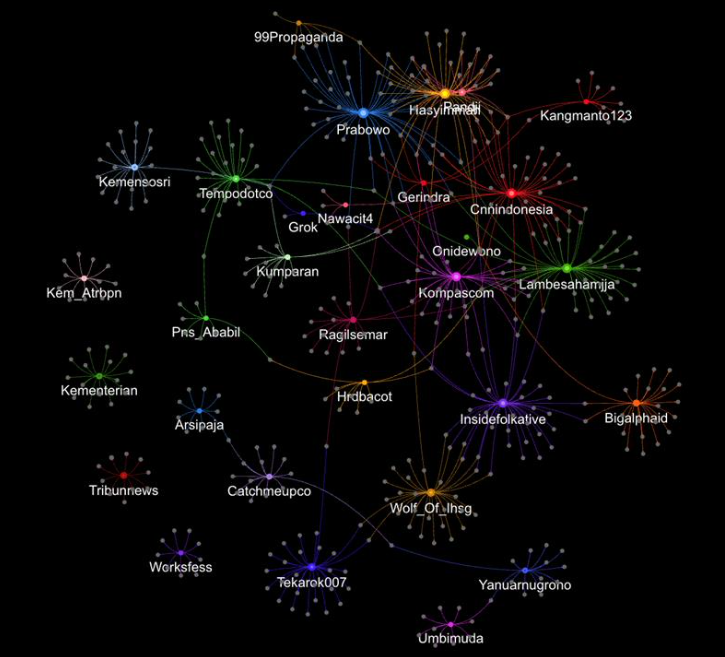
Binokular Big Data Analytics Vice President of Operations Ridho Marpaung said that the Social Network Analysis (SNA) results showed a conversation pattern fragmented into several large clusters, without any single actor truly dominating.
“The main clusters were formed around accounts such as @Prabowo, @Hasyimmah, @pandji, @Gerindra, and several mainstream news media accounts. This structure shows that the public receives information from various sources with different framings, then expands the conversation’s reach into other clusters,” said Ridho.
Interestingly, Ridho added, anonymous accounts such as @lambesahamjja, @99Propaganda, and @RagilSemar had a “star” network pattern with many direct interactions from other users. This proves that the shaping of public opinion does not depend solely on mainstream media, but is also influenced by high-engagement accounts. Meanwhile, accounts such as @Pns_Ababil, @Catchmeupco, @Wolf_Of_Ihsg, and @Yanuarnugroho formed sub-clusters with limited reach, showing that although the issue spread widely, not all conversations succeeded in entering the mainstream and triggering more intense discussion.
Based on the data above, it can be concluded that:
Commenting on the various findings in this research, the Binokular team recommends:
Thank you.

Most positive news coverage: Kemenag, Kemenkeu and Kemendagri in the news media, and Kemensos, BGN and Kemenkeu on social media….

binomedia

Jakarta — Throughout June 2026, Jakarta became the center of a wave of student demonstrations held at several strategic locations,…
binomedia

Jakarta — The roar of supporters has not yet fully echoed through Gelora Bung Karno Main Stadium (SUGBK), but the…
binomedia

Jakarta — The enforcement of three new criminal-law instruments—Indonesia’s National Criminal Code (KUHP) under Law No. 1/2023, the new Criminal…
binomedia

Jakarta — Although Indonesia ultimately conceded to Saudi Arabia 2‑3 in the Group B fourth‑round Asian qualifiers at King Abdullah Sports City Stadium, Jeddah,…
binomedia

Jakarta — In the two weeks from 24 September to 7 October 2025, the Indonesian National Football Team became the nation’s sole focus. Ahead…
binomedia

Jakarta — In the vibrant celebration of Indonesia’s 80th Independence Day, the nation stands at the crossroads of history and…
binomedia