Michael Kusuma Head Of Investor Relations Sampoerna Agro
“Binokular makes it easier for us to obtain up-to-date information and news. Its monitoring reports are comprehensive and customizable, and features like news archive searching are very useful. The range of services allows personnel with high mobility to access the website, newsletters, and SMS alerts.”
Arif Haryanto Corporate Communication Department, PT Angkasa Pura I (Persero)
“Binokular is a smart solution! Monitoring media spread across 13 regions in central to eastern Indonesia, where Angkasa Pura I airports are located, becomes easy and fast with Binokular. The accuracy and relevance of the captured news are commendable. Binokular’s comprehensive and user-friendly web service makes news documentation searches easier. Binokular also helps us respond quickly to any negative news with its SMS alert service. Kudos to all these innovations, Binokular!”
Miranti Hadisusilo Corporate Secretary & Legal Director, PT Matahari Department Store Tbk
“Binokular has been incredibly helpful for our media monitoring, covering news related to our company, industry, and competitors. Up-to-date information is essential for market analysis, allowing us to respond quickly when necessary.”
Eko Harmonsyah Director of Strategic Planning and Public Relations, Bank Indonesia
“Media monitoring has become easier with Binokular. The necessary information can be searched quickly and accurately using its search engine. The interface is also quite user-friendly. But most importantly, the responsive and proactive service from the Binokular team is extremely helpful.”)
Almost exactly one month after the Iran–Israel war erupted, the world has begun to feel one of its consequences: the possibility of a sharp rise in energy prices due to conflict-driven instability in the region. Indonesia’s neighboring countries, such as the Philippines, Thailand, and Vietnam, have started to feel the impact. The Philippines has projected that fuel prices could surge to as high as 100 pesos per liter (around IDR 28,000) and has since implemented an energy emergency policy. Thailand has begun limiting its fuel subsidy budget out of concern over shrinking fiscal space, while Vietnam has relaxed its fuel import policy so the country can diversify its fuel sources and ease price pressure.
In addition to fiscal measures aimed at easing price pressure, several restrictions on fuel use have also been considered to make energy savings easier to achieve. Malaysia, for example, is reviewing a Work From Home (WFH) policy for public sector employees. Thailand has also issued instructions for government employees to switch to remote work and reduce the use of government buildings in order to save energy. Vietnam has urged workers not to use private motor vehicles and instead rely on public transport or bicycles for commuting.
In Indonesia, the idea of implementing Work From Home one day per week for civil servants has become a topic of attention in both public discussions and mass media. The policy has been proposed as part of the government’s effort to reduce fuel consumption caused by daily mobility, as well as electricity use in office environments. From an energy policy perspective, this approach is in line with the concept of demand-side management often promoted by the International Energy Agency (IEA), namely controlling energy consumption by changing user activity patterns.
Timeline & Volume of Discussion
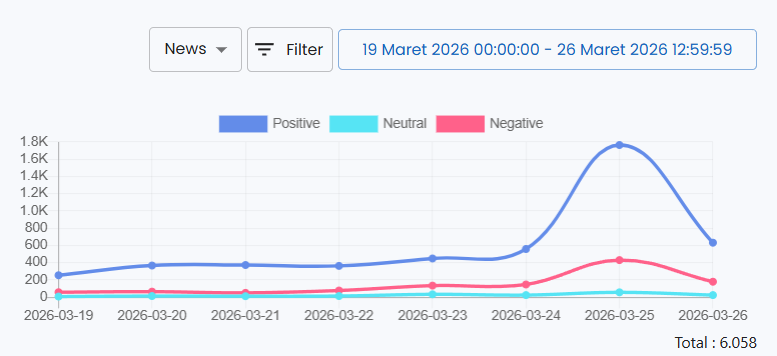
Based on media monitoring captured through PT Nestara Teknologi Teradata’s Newstensity tools, mass media coverage of this issue was quite high during the period from March 19 to March 26, 2026, reaching a total of 6,058 articles. Coverage was dominated by positive sentiment at 78%, followed by negative sentiment at 19%. Neutral sentiment accounted for the smallest share at 3%. The coverage peaked on March 25, 2026.
Picture 1. Timeline of the topic “Planned WFH Policy for Civil Servants” in mass media (Source: Newstensity).
Based on media monitoring, this issue did not develop merely as an administrative policy discussion. It also triggered broader debate over its impact on economic activity and daily life. The narratives that emerged suggest a tug-of-war between the goal of energy efficiency and concerns over a potential slowdown in economic circulation, especially in sectors that depend on office activity.
The public also highlighted implementation issues, ranging from the readiness of remote work infrastructure and oversight mechanisms for civil servants to the policy’s relevance across different sectors. This shows that the WFH policy is not being viewed solely through the lens of energy efficiency, but also as a policy with wider operational and economic implications.
A number of media reports also raised the policy’s potential economic impact. Reduced worker mobility as a result of WFH is seen as likely to suppress demand for online transportation services and consumption in office districts. MSMEs that rely on office worker activity, such as small food stalls and coffee shops, are projected to experience lower turnover, potentially by around 30–40% during lunchtime. These findings were also highlighted in reports by Beritasatu.com on March 22, 2026, and Kontan.com on March 26, 2026.
Conversation on Social Media
Based on monitoring by the Socindex social media monitoring tool related to the one-day WFH policy during the March 21–27, 2026 period, netizens showed very strong interest, with total issue engagement reaching 51,589,581. The topic was discussed 31,214 times, generating 1,759,683 likes and reaching an audience of 310,525,926.
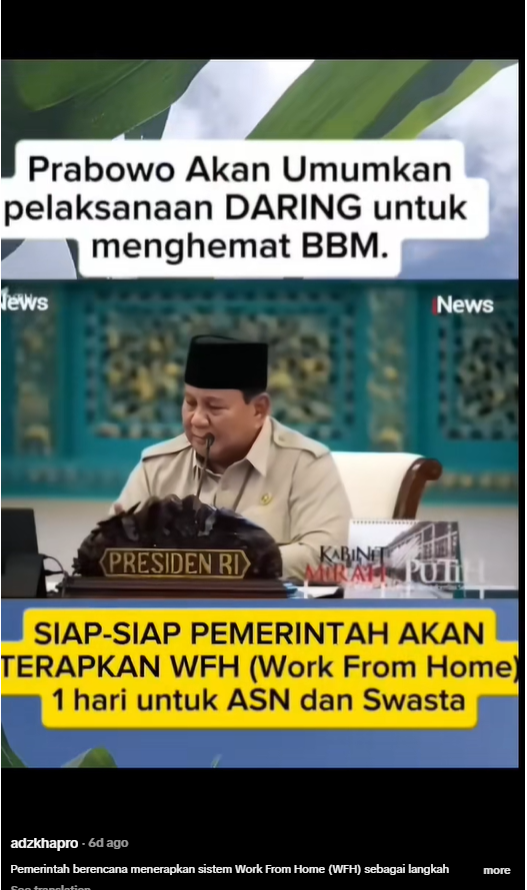
Picture 2. Total engagement, talk volume, applause, and audience size.Picture 3. One of the highest-engagement posts related to the one-day WFH policy for civil servants and the private sector.
A TikTok upload by the account @Adzkhapro (65,623 followers), featuring a clip of President Prabowo Subianto announcing the one-day WFH policy, became the content that drew the most public attention. It recorded 4,434,892 views, 65,840 likes, 16,328 comments, and 43,080 shares.
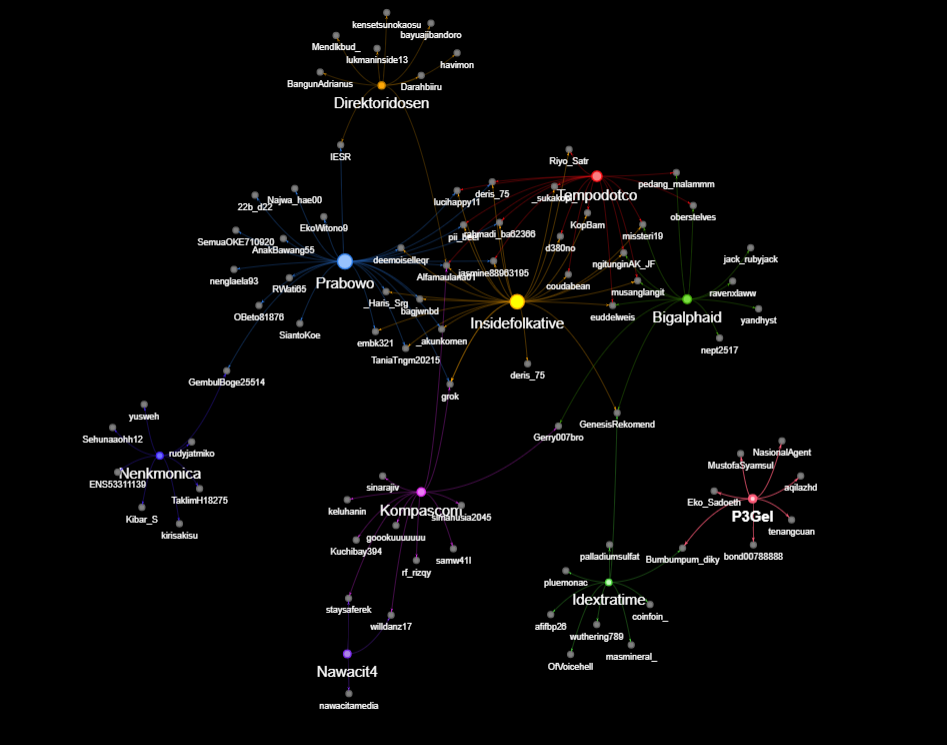
Referring to the social network analysis in the Socindex social media monitoring tool, several accounts became central points of attention when netizens discussed this issue. These included the President of Indonesia (Prabowo Subianto), advocacy-related accounts (Direktoridosen), media accounts (Kompas.com and Tempo.com), accounts such as insidefolkative, bigalphaid, and idxtratime, as well as news aggregator accounts such as P3Gel. These accounts uploaded content about the one-day WFH policy for civil servants and received significant interaction from netizens.
Picture 4. Social network formed around discussion of the one-day WFH policy.
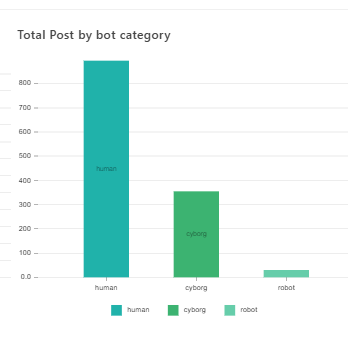
The virality of the conversation on social media appeared to be largely organic and not driven by robots or bots, with human users dominating the conversation overall.
Picture 5. Assessment of the issue’s level of organic activity.
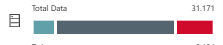
Netizens held mixed perceptions of the policy. Out of a total of 31,171 data points, there were 6,167 negative sentiments (red), 4,005 positive sentiments (dark green), and 20,756 neutral sentiments (gray). Most netizens responded neutrally, as they were still trying to understand the impact and the practical design of the policy.
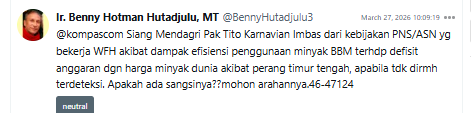
Picture 6. Sentiment distribution among netizens.Picture 7. Netizens are still trying to understand the form of the one-day WFH policy.
From the comment samples above, it is clear that netizens still do not fully understand what the one-day WFH policy will actually look like, how it will work, whether it can genuinely save energy, and whether it will truly be enforced properly.
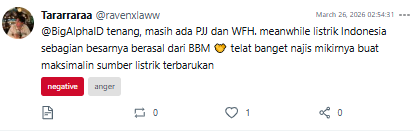
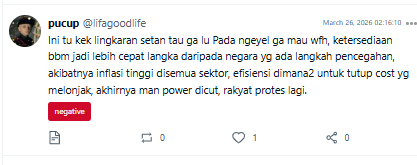
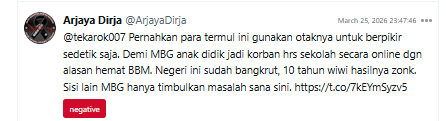
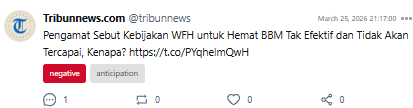
The one-day WFH policy also intersects with other government policies, such as MBG (Free Nutritious Meals), which many netizens view as controversial. As a result, uncertainty around the WFH policy has in some cases shifted into negative sentiment, especially because many netizens doubt the Indonesian government’s ability to genuinely enforce the policy.
Picture 8. Netizens doubt the government’s ability to enforce the one-day WFH policy.
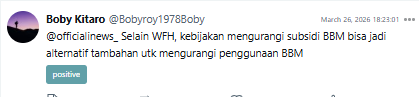
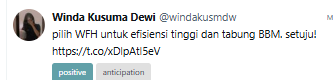
Even so, positive narratives about the policy do exist. Some netizens believe that fuel consumption will decline and budget efficiency will be achieved as planned. Others also believe that additional policy innovations will continue to be explored to reduce public dependence on fuel.
Picture 9. Positive sentiment surrounding the one-day WFH policy.
Popular Figures and the Direction of Policy Framing
In public discussion surrounding the proposed implementation of one day of WFH per week, several government figures emerged as the main actors shaping the policy’s framing. Their dominance reflects that the narrative remains centered on energy policy and efficiency, especially the relationship between mobility and fuel consumption.
From the executive branch, Airlangga Hartarto (Coordinating Minister for Economic Affairs) appeared as one of the dominant figures linking the WFH policy to energy savings and national economic efficiency. His statements positioned WFH as a strategic step to reduce public mobility, particularly during periods of intense activity, thereby potentially reducing fuel consumption.
Another major figure, Prabowo Subianto (President of Indonesia), appeared as the key decision-maker whose stance serves as a major reference point for the direction of the policy. His presence in the public conversation was more closely associated with the policy approval process, making the framing focus on national-level policymaking and its strategic implications for energy management.
Meanwhile, Purbaya Yudhi Sadewa (Minister of Finance, as stated in the document) emphasized the potential fuel savings from implementing WFH. The narrative built around him focused on estimated energy efficiency, reinforcing the framing that this policy is a tactical step to suppress energy demand.
On the other hand, Prasetyo Hadi (Minister of State Secretariat of Indonesia) was more often associated with the implementation aspect of the policy, particularly the possibility that WFH would not be applied evenly in the private sector. This statement triggered discussion about limitations in cross-sector implementation and the policy’s potential impact on economic activity.
Likewise, Khofifah Indar Parawansa (Governor of East Java) represented the perspective of regional governments in responding to the discourse. Her presence in public conversation shows that the WFH issue is not seen solely as a central government policy, but also as one that relates to the readiness of regional governments to adjust administrative activity and public mobility.
Overall, the dominance of government figures in the conversation shows that the framing of the WFH discourse is still centered on energy efficiency and macro-level policy. At the same time, the different statements made by each figure have also led to further discussion on implementation readiness and the policy’s potential impact on economic circulation.
Public Response
Several observers argue that the policy still has urgency from an energy-efficiency standpoint. A study by the Institute for Essential Services Reform states that a one-day-per-week WFH policy is an appropriate emergency measure to reduce energy consumption, particularly in the transportation sector, amid uncertainty in global energy supplies. However, the policy is also seen as needing to be accompanied by a more comprehensive package of energy policies if the crisis continues for a longer period. This indicates that WFH is being positioned as a short-term energy-efficiency instrument that responds to the situation.
1. The effectiveness of fuel savings is questioned
Observers argue that a one-day-per-week WFH policy may not necessarily be effective in reducing fuel consumption because workers may still engage in activities outside the home. In fact, the policy could turn into “work from everywhere,” which would not reduce mobility at all. Source:cna.id
2. It risks hurting certain sectors of the economy and could create a “long weekend” loophole
Economists argue that the WFH policy could become a double-edged sword. While it is intended to save energy, it could also reduce revenues for MSMEs and sectors that depend on worker mobility. Observers also warn that one day of WFH could be used as an extra holiday, making the energy-saving benefits less than optimal. Source:trenasia.com
Epilogue
The discourse around implementing one day of WFH per week for civil servants after Eid reflects a domestic policy response to global geopolitical dynamics, especially growing uncertainty in energy supply due to conflict in the Middle East. In this context, WFH is not positioned merely as an energy-efficiency policy, but also as a risk-mitigation step to reduce pressure on fuel consumption amid potential volatility in global oil prices.
However, the discussion that has emerged also shows that the policy brings uneven economic consequences. Reduced office activity could shift daily consumption patterns and affect both the transportation sector and MSMEs that depend on worker mobility. This raises questions about the effectiveness of WFH as a policy instrument, especially if the energy-saving benefits are not proportional to the potential slowdown in micro-level economic activity. Without being accompanied by more comprehensive supporting measures, the policy risks becoming a short-term solution that simply transfers pressure from the energy sector to certain parts of the economy.
When geopolitical tensions surge—such as in a scenario of US–Iran escalation—business risks often appear long before operational disruptions become visible….
The government’s decision to appoint personnel from the Nutrition Fulfillment Service Unit (SPPG) as Government Employees with Work Agreements (PPPK),…