Michael Kusuma Head Of Investor Relations Sampoerna Agro
“Binokular makes it easier for us to obtain up-to-date information and news. Its monitoring reports are comprehensive and customizable, and features like news archive searching are very useful. The range of services allows personnel with high mobility to access the website, newsletters, and SMS alerts.”
Arif Haryanto Corporate Communication Department, PT Angkasa Pura I (Persero)
“Binokular is a smart solution! Monitoring media spread across 13 regions in central to eastern Indonesia, where Angkasa Pura I airports are located, becomes easy and fast with Binokular. The accuracy and relevance of the captured news are commendable. Binokular’s comprehensive and user-friendly web service makes news documentation searches easier. Binokular also helps us respond quickly to any negative news with its SMS alert service. Kudos to all these innovations, Binokular!”
Miranti Hadisusilo Corporate Secretary & Legal Director, PT Matahari Department Store Tbk
“Binokular has been incredibly helpful for our media monitoring, covering news related to our company, industry, and competitors. Up-to-date information is essential for market analysis, allowing us to respond quickly when necessary.”
Eko Harmonsyah Director of Strategic Planning and Public Relations, Bank Indonesia
“Media monitoring has become easier with Binokular. The necessary information can be searched quickly and accurately using its search engine. The interface is also quite user-friendly. But most importantly, the responsive and proactive service from the Binokular team is extremely helpful.”)
The government’s decision to appoint personnel from the Nutrition Fulfillment Service Unit (SPPG) as Government Employees with Work Agreements (PPPK), effective February 1, 2026, immediately triggered public debate. This policy has been presented as a strategic move to ensure the sustainability of the Free Nutritious Meals Program (MBG)—aimed at maintaining service stability, operational control, and accountability in program delivery.
Behind the narrative of accelerating public service, however, the move to convert SPPG personnel into PPPK opens a broader controversy. The core issue is not merely a change in employment status, but a fundamental question in civil service reform: the consistency of the merit system, fairness in cross-sector recruitment, long-term fiscal discipline, and the reasonable limits of creating state personnel based on priority-program needs.
In public policy literature, this pattern—where staffing is driven by the needs of a priority program—is often described as program-based staffing: employment design shaped by program continuity rather than the long-term structural needs of the civil service. In this framework, personnel function as instruments to support sectoral policy, not as part of a permanent bureaucratic architecture designed meritocratically and across sectors.
Media Timeline and News Dynamics
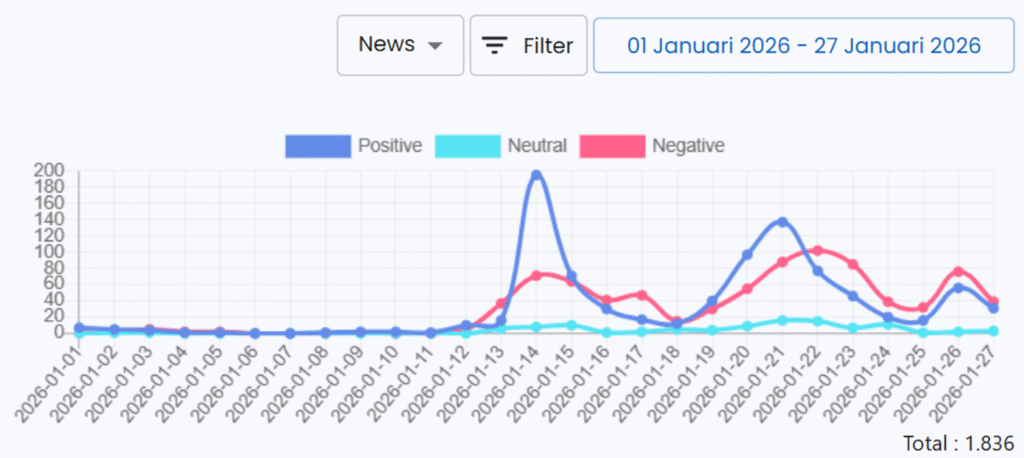
Picture 1. A timeline chart showing media coverage of the topic “Appointment of SPPG as PPPK” (source: Newstensity).
Newstensity recorded 1,836 mass-media articles discussing “Appointment of SPPG as PPPK” during January 1–27, 2026. Coverage peaked on January 14, 2026, coinciding with the national spread of reports on the National Nutrition Agency’s (BGN) announcement regarding the plan to appoint 32,000 core SPPG employees as PPPK effective February 1, 2026. After the peak, volume remained relatively high, driven by political attention, parliamentary criticism, and public responses to the policy’s implications.
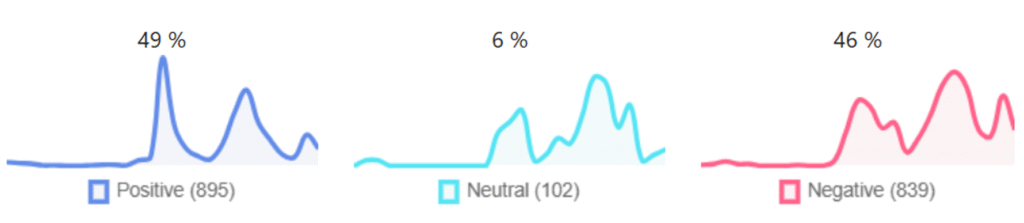
Picture 2. A line chart visualizing daily coverage trends for the same topic (source: Newstensity).
In sentiment terms, positive coverage accounted for 49% (895 articles). This category was dominated by informative and institutional reporting—technical explanations of the PPPK scheme, official statements from the Ministry of Administrative and Bureaucratic Reform (PANRB), BGN, and the National Civil Service Agency (BKN), and chronological reporting of the mass appointment date. In this context, “positive” sentiment largely reflected administrative legitimacy and media acceptance of the policy, rather than normative public endorsement.
Neutral sentiment formed only 6% (102 articles), mostly consisting of supplementary reports with minimal interpretation, brief policy summaries without enriched perspectives, and cross-party quotations without emphasis on either conflict or defense of the policy.
By contrast, negative sentiment represented a significant 46% (839 articles). Critical coverage focused on potential deviations from the merit system, policy imbalance compared with other sectors, and concerns over fiscal implications and the precedent of creating state personnel tied to priority programs.
This composition suggests that public discourse is not dominated by emotional polarization, but by a contest of narratives—between the state’s official explanations and structural critiques of the direction of civil service reform.
Picture 3. Social media conversation statistics about “Appointment of SPPG as PPPK” (source: Socindex). Socindex monitoring indicates substantial public engagement in social media discussions. Over January 1–27, 2026, there were 15,588 conversations, with total engagement exceeding 25 million interactions and an estimated reach of more than 52 million accounts.
The discussion intensity is reinforced by a high “applause” indicator reaching 921,861, with a stronger surge from mid-monitoring period onward as government statements emerged, parliament responded, and comparisons spread between this policy and the fate of honorary workers in other sectors.
Social media dynamics show the issue is widely understood as a symbol of policy inequality and the trajectory of civil service reform—not merely a technocratic decision.
Key Figures and Policy Framing Direction
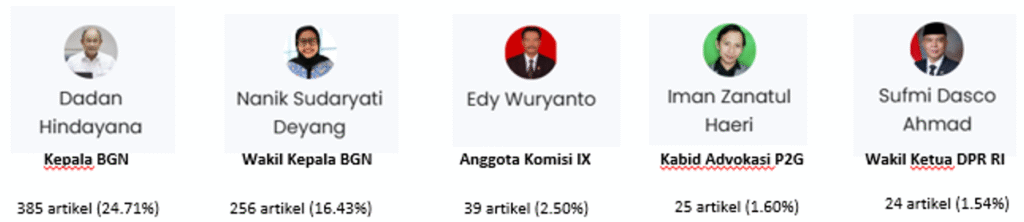
Picture 4. A visualization of prominent figures/entities in the issue (source: Newstensity).
Within this public discourse, five main figures emerged as the most dominant entities in mass-media exposure.
From the executive branch, BGN Head Dadan Hindayana was the most prominent, appearing in 385 articles (about 24.71% of total exposure). He functioned as the central authority framing the policy as operational necessity for MBG continuity. His institutional position provided strong legitimacy to present the decision as an instrument for quality control and program accountability.
BGN Deputy Head Nanik Sudaryati Deyang followed with 256 articles (about 16.43% exposure). Her statements emphasized implementation details, SPPG role division, and assurances that PPPK appointments would be selective and limited—reinforcing the perception of a measured administrative step.
Legislative figures such as Edy Wuryanto and Sufmi Dasco Ahmad appeared as representations of parliamentary oversight, raising caution around fiscal implications, program governance, and consistency with civil service reform.
Meanwhile, Iman Zanatul Haeri, Head of Advocacy at P2G, represented civil society’s critical voice—particularly by contrasting this policy with the unresolved status of honorary teachers.
The government’s dominance in early framing then triggered a deeper question: does the accelerated appointment remain aligned with the normative principles of state recruitment—especially the merit system that underpins civil service reform?
Merit System Under Scrutiny: Is This a Special Route Into the Civil Service?
Indonesia’s civil service law places the merit system as the foundation for recruitment: selection for state personnel—both permanent (PNS) and contract-based (PPPK)—should ideally be open, competitive, and competence-based.
Criticism arises when the appointment of SPPG personnel as PPPK is implemented collectively without a national selection mechanism comparable to other sectors. Gerry Katon Mahendra, a Public Administration lecturer at Universitas ‘Aisyiyah Yogyakarta, argued that the plan may blur merit-system principles and harm fairness if not preceded by rigorous assessment that also considers cross-sector urgency—such as the status uncertainty faced by honorary teachers. Without clear and professional regulation, such a policy could reduce the credibility of civil service recruitment and weaken public trust in bureaucratic quality.
Mass Appointment on February 1, 2026: Public Criticism of the Policy
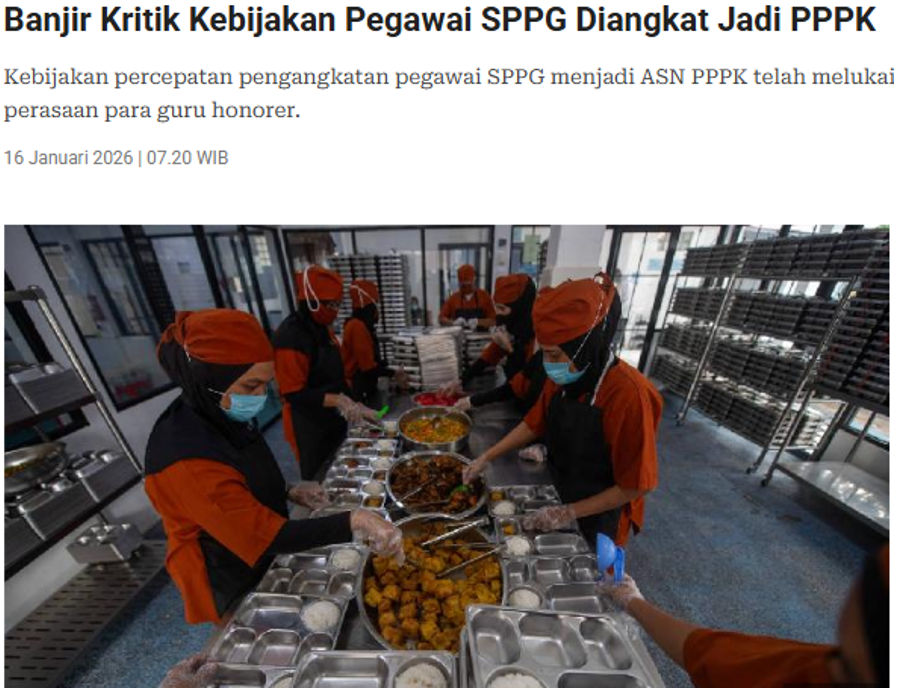
Picture 5. An illustration/photo referenced from tempo.co.
Media coverage and public responses to the plan to appoint SPPG employees as PPPK on February 1, 2026 show a broad spectrum of criticism—from parliament, professional organizations, to civil society. The objections do not come from a single group; they reflect cross-sector unease about the direction of national staffing policy:
Edy Wuryanto (House of Representatives Commission IX) considered the policy unfair to honorary teachers and health workers who have served for years but still lack PPPK certainty. He warned it could become a negative precedent if long-standing honorary status issues are not addressed with equal seriousness.
Sonny T. Danaparamita criticized the use of a presidential regulation (Perpres) route as unfair to long-serving honorary workers, arguing it creates a fast track for newer employees while thousands who have served for decades remain without certainty.
Teacher organizations also criticized the policy. PGRI Kapuas Hulu rejected the appointment of SPPG employees as PPPK and questioned fairness for honorary teachers and health workers who still face lengthy processes without clear outcomes.
Protest actions emerged as well: thousands of madrasah teachers in Tasikmalaya City reportedly demonstrated, condemning a decision perceived as prioritizing SPPG appointments over long-serving honorary teachers without permanent status.
These criticisms show the policy is widely perceived through the lens of cross-sector inequality—especially when compared with the unresolved fate of honorary teachers and health workers.
Inequality Compared With Honorary Teachers and Health Workers
Picture 6. An illustration/photo referenced from klikpendidikan.id.
The controversy becomes sharper when contrasted with realities in other sectors. Many honorary teachers and health workers—after years, even decades, of service—still lack PPPK certainty, while the government’s policy provides immediate clarity for SPPG personnel whose service duration is perceived as relatively shorter. Many see this as a policy-priority imbalance, raising a major question about the direction of civil service reform: is the apparatus being built based on long-term institutional needs, or simply as a response to the urgency of priority programs?
Government Claim: Selective and Limited
Responding to criticism, the government through BGN stressed that the PPPK appointment for SPPG is selective and limited, and does not apply to all personnel involved in MBG. BGN Deputy Head Nanik Sudaryati Deyang explained that only “core” employees considered strategic for SPPG operations would be appointed.
The three key roles identified are: Head of SPPG, Nutritionist, and Accountant. Other personnel—such as daily operational workers, volunteers, or other program supporters—are excluded from the PPPK scheme because they are not classified as state employees.
Even so, this explanation has not fully eased cross-sector criticism.
Policy Consequences: When the Civil Service Becomes Attached to a Program
Normalizing the appointment of SPPG personnel as PPPK may create significant consequences:
Blurred boundaries between regulator and public-service operator, as state-employee status becomes tied to a specific program rather than structural needs.
Locked-in long-term routine expenditure, as PPPK adds permanent fiscal obligations.
A shift in the civil service role toward propping up sectoral programs, potentially weakening institutional meritocracy.
This is not only about MBG—it is a serious test for the direction of Indonesia’s civil service reform.
Epilogue: When Data Speaks, Policy Gets Tested
The media patterns captured by Newstensity and Socindex show that appointing SPPG as PPPK is not merely a technocratic issue, but a contested arena of policy narratives. High coverage volume, sentiment composition that is nearly balanced between administrative legitimacy and structural criticism, and executive dominance in early framing indicate the state’s effort to build functional justification for the decision.
At the same time, strong voices from parliament, academia, and civil society reflect resistance to potential deviations from the merit system and cross-sector staffing fairness.
In this context, February 1, 2026 is no longer just an administrative marker, but a policy symbol: will the state treat civil service reform as a consistent long-term institutional agenda, or allow priority-program logic to shape a new precedent in staffing governance? The data suggests the public has not fully rejected the policy’s goals—but is questioning how the state is executing them. This is where the appointment of SPPG as PPPK becomes a serious test: not only for MBG sustainability, but for the credibility of Indonesia’s civil service reform itself.
When geopolitical tensions surge—such as in a scenario of US–Iran escalation—business risks often appear long before operational disruptions become visible….
The Indonesian government, through the Ministry of Communication, Information, and Digital Affairs (Komdigi), has officially temporarily blocked the use of…