

Downgrade Lifestyle: Indonesia’s Real Economic Signal
What Is “Downgrade Lifestyle” and Why Is It Trending on Threads? Since early September 2026, the term “downgrade lifestyle” has…
-
binomedia
- October 9, 2026

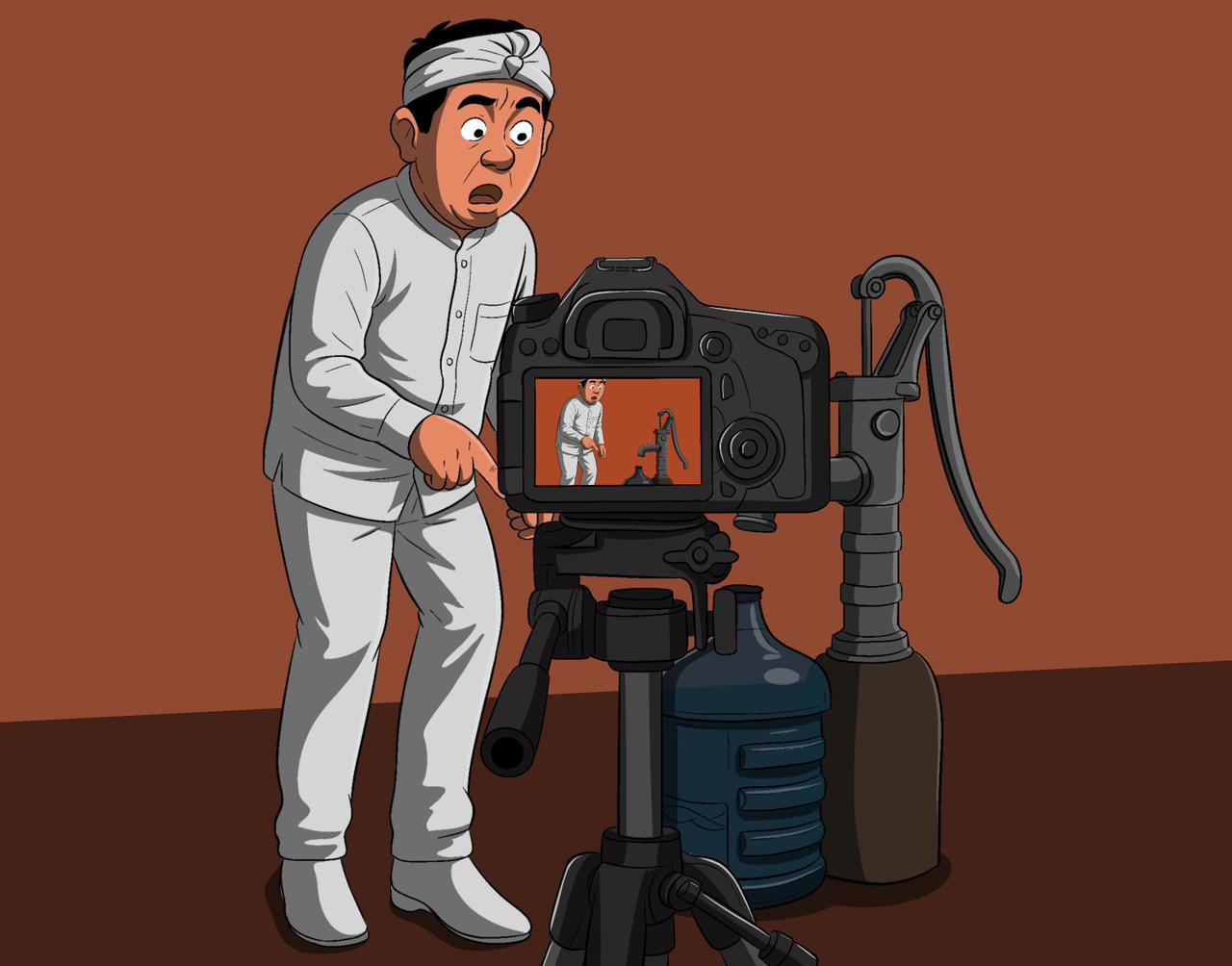
Driving his Mercedes-Benz E-Class E300 Coupe, West Java Governor Dedi Mulyadi visited the Danone Aqua plant in Darmaga Village, Cisalak District, Subang. That afternoon (22 October), he was allegedly following up on a truck accident involving an Aqua delivery vehicle that had crashed into five other cars on the Bandung–Subang highway, killing three people and injuring seven — all of them guests returning from a wedding procession.
As usual, Dedi or KDM (Kang Dedi Mulyadi) arrived in his signature white attire and traditional iket Sunda, accompanied by his government staff and his ever-present social-media team that records his visits for YouTube content.
Upon arrival, KDM immediately questioned the truck driver about the vehicle’s registration, license, tonnage, and inspection permits. Shortly after, two representatives from Aqua escorted him inside the factory to inspect production areas, including the company’s water source — and this is where the controversy began.
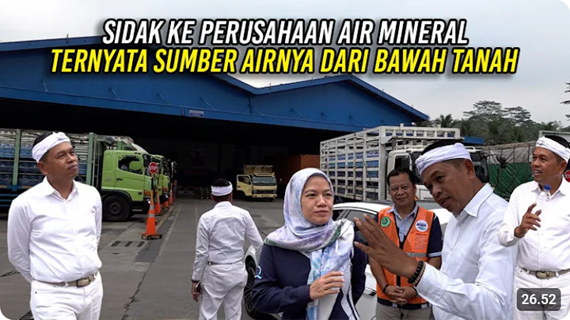
KDM’s team uploaded the video on his YouTube channel Kang Dedi Mulyadi Channel the same day (22 October 2025).
In the clip, Dedi directly asked Aqua’s staff about the origin of its water:
“Do you take the water from the river?”
“From underground, Sir.”
“Oh, I thought it was surface water — from a river or spring. So, it’s categorized as a deep well?”
This short exchange quickly went viral, drawing 1.9 million views in just five days (by 27 October 2025). The video’s thumbnail — focusing on the phrase “underground water” — shifted attention away from the truck-accident probe and ignited public confusion about Aqua’s product origin.
Viewers questioned whether Aqua’s so-called “mountain spring water” truly came from natural springs, accusing the brand of misleading consumers.
Within hours of the video’s spread, Danone Aqua released an official statement titled “The Facts Behind Aqua’s Water Sources.” The clarification addressed five key issues: water sources, taxes, groundwater-use permits (SIPA), environmental management, and social contribution.
Aqua stated that it uses 19 mountain-spring sources across Indonesia, each selected through strict scientific criteria — nine technical requirements, five evaluation stages, and at least one year of research before approval. However, Aqua did not disclose the exact locations of those sources.
The company further explained that its water is drawn from deep aquifers (60–140 meters) naturally protected by impermeable rock layers, ensuring purity and sustainability. The extraction sites are near the bottling facilities and are closely monitored under SIPA permits by the Ministry of Energy and Mineral Resources (ESDM).
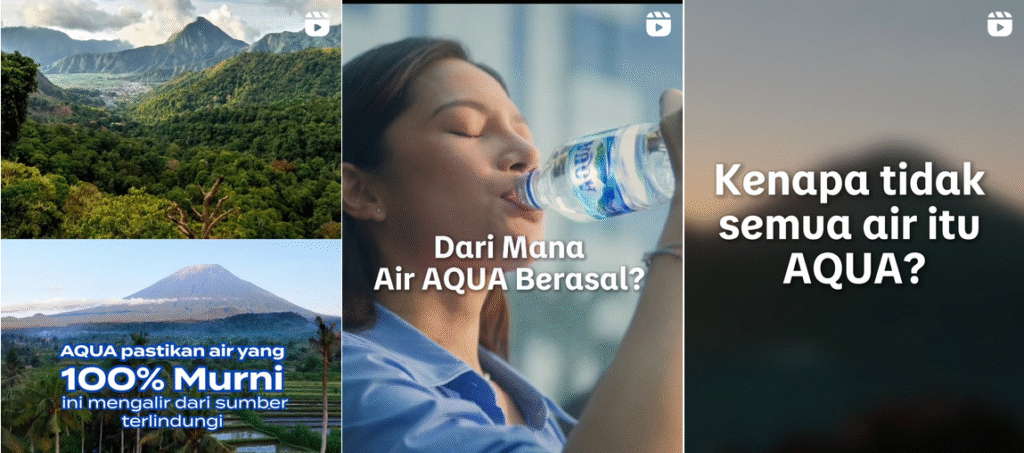
To combat misinformation, Aqua also published clarification content on its official Instagram accounts @sehataqua and @aqualestari, emphasizing that it only uses water from mountain aquifers, not from surface rivers or shallow wells.
Despite these efforts, public skepticism remained high, and Aqua’s clarification posts were flooded with negative comments, forcing the company to temporarily disable comment sections on @sehataqua.
Two leading hydrogeology experts backed Aqua’s claims:
According to them, public misunderstanding stemmed from equating mountain water with surface springs often depicted in advertising and packaging — the same misinterpretation KDM voiced in his viral video.
KDM’s factory visit appeared more confrontational than communicative. On camera, he accused Aqua of damaging roads with heavy trucks and bad labor practices, while aggressively questioning employees in front of his filming crew.
The result: Aqua was branded as negligent (for the accident) and deceptive (for allegedly misrepresenting its water source). Social-media data confirmed this snowball effect:
Using Socindex, the combined keywords “Aqua” and “Dedi Mulyadi” generated:
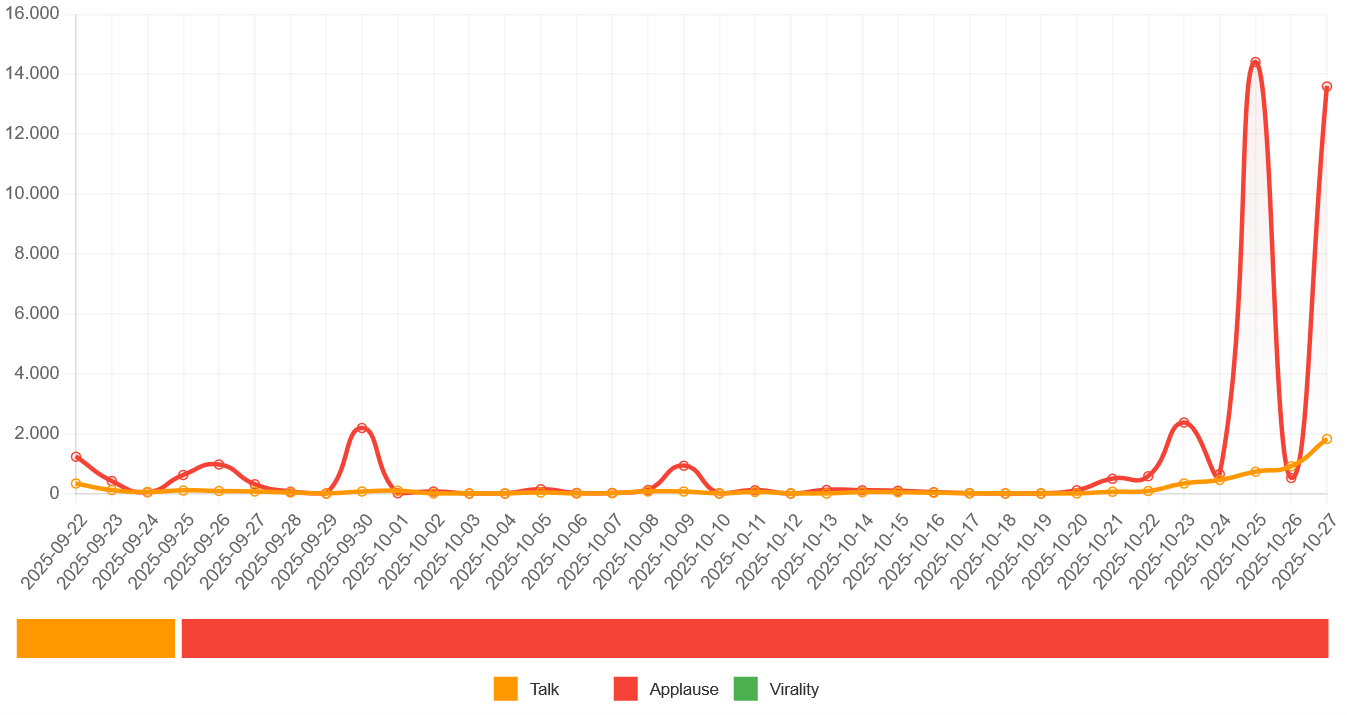
The surge peaked between 22–23 October 2025, right after KDM’s upload.
On YouTube, the momentum persisted longer as multiple channels re-uploaded or reacted to the original video, further amplifying its reach.
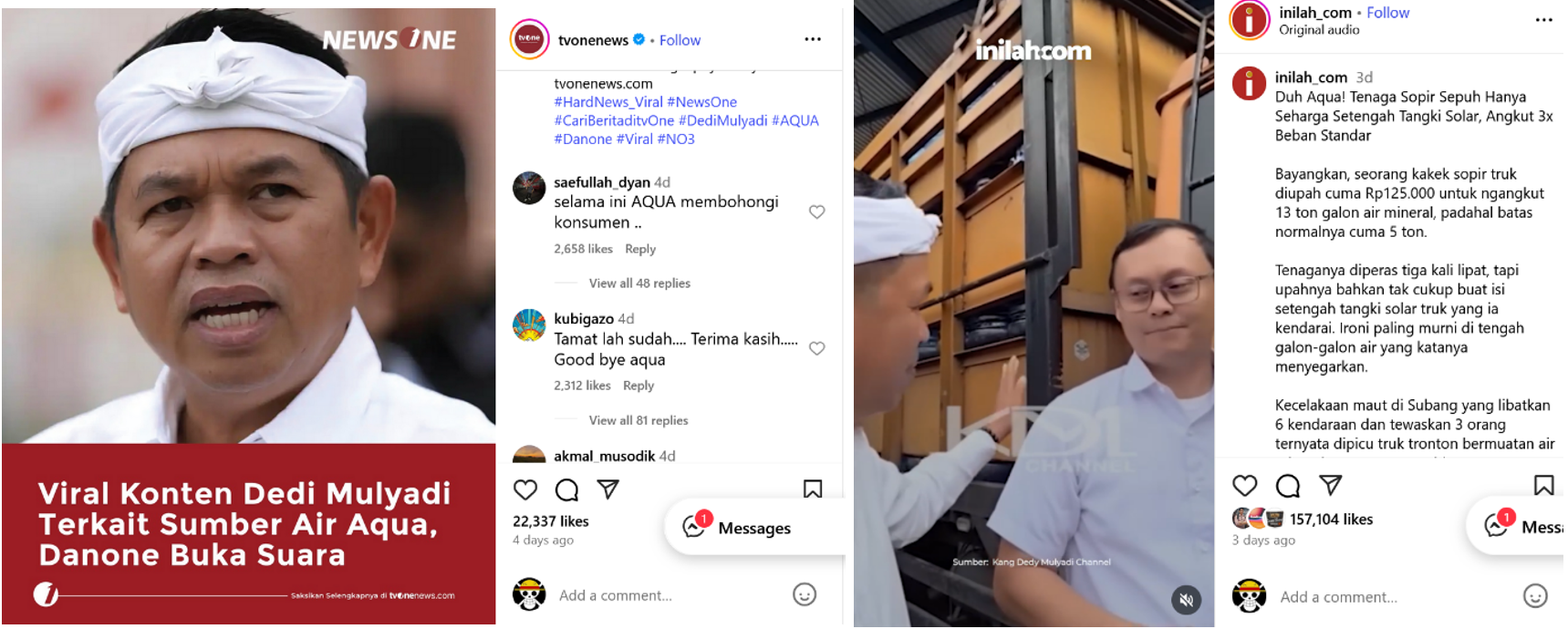
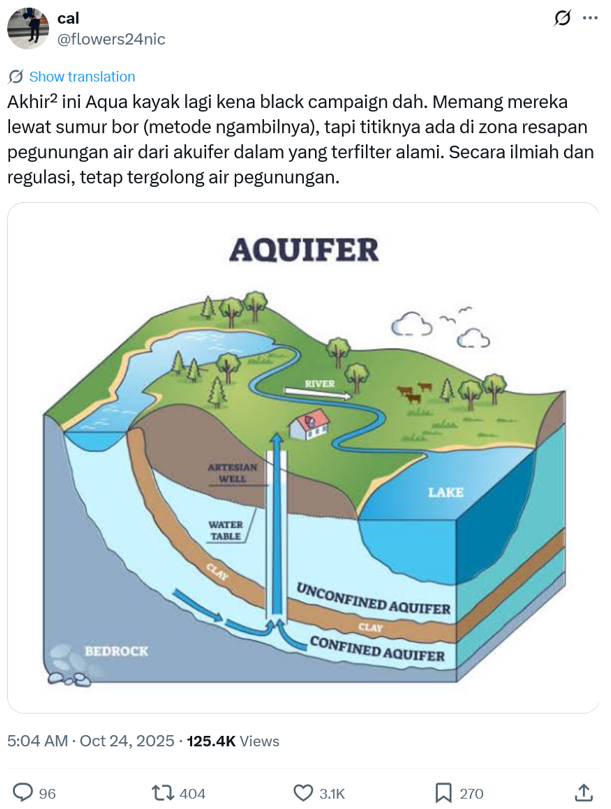
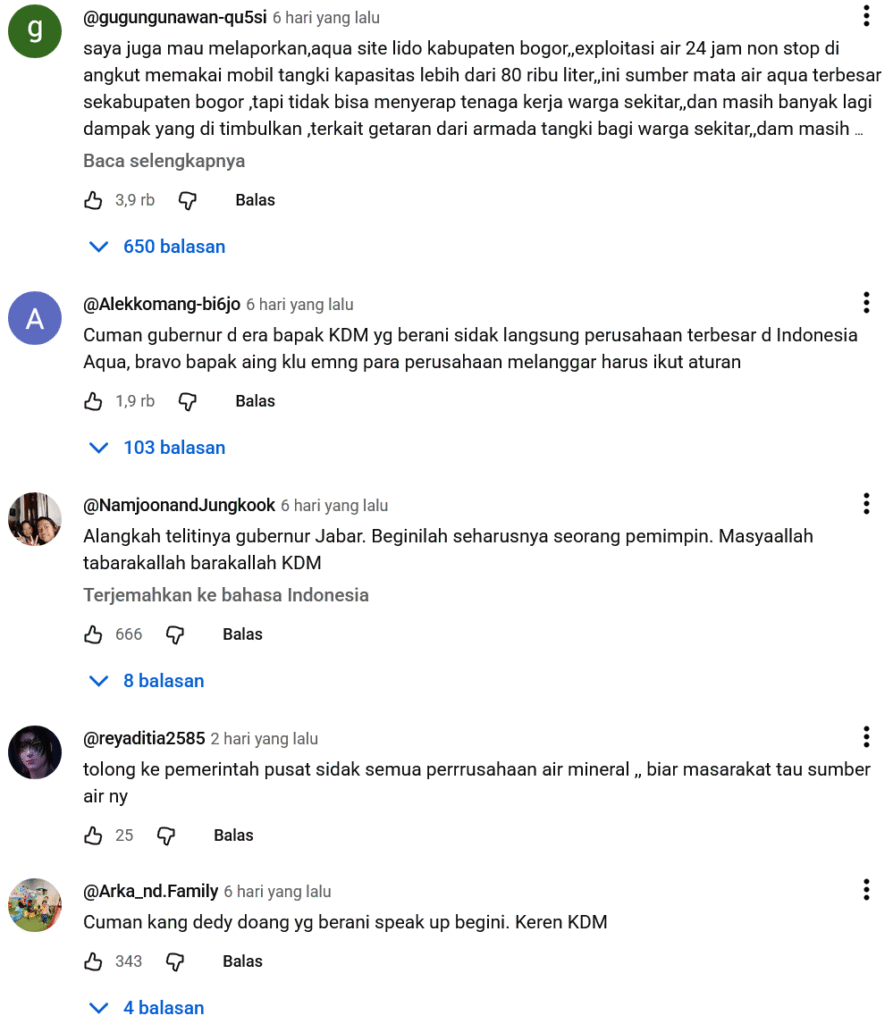
In the same period (22–27 October 2025), Newstensity detected 1,075 news articles mentioning Aqua. Thorough verification showed:
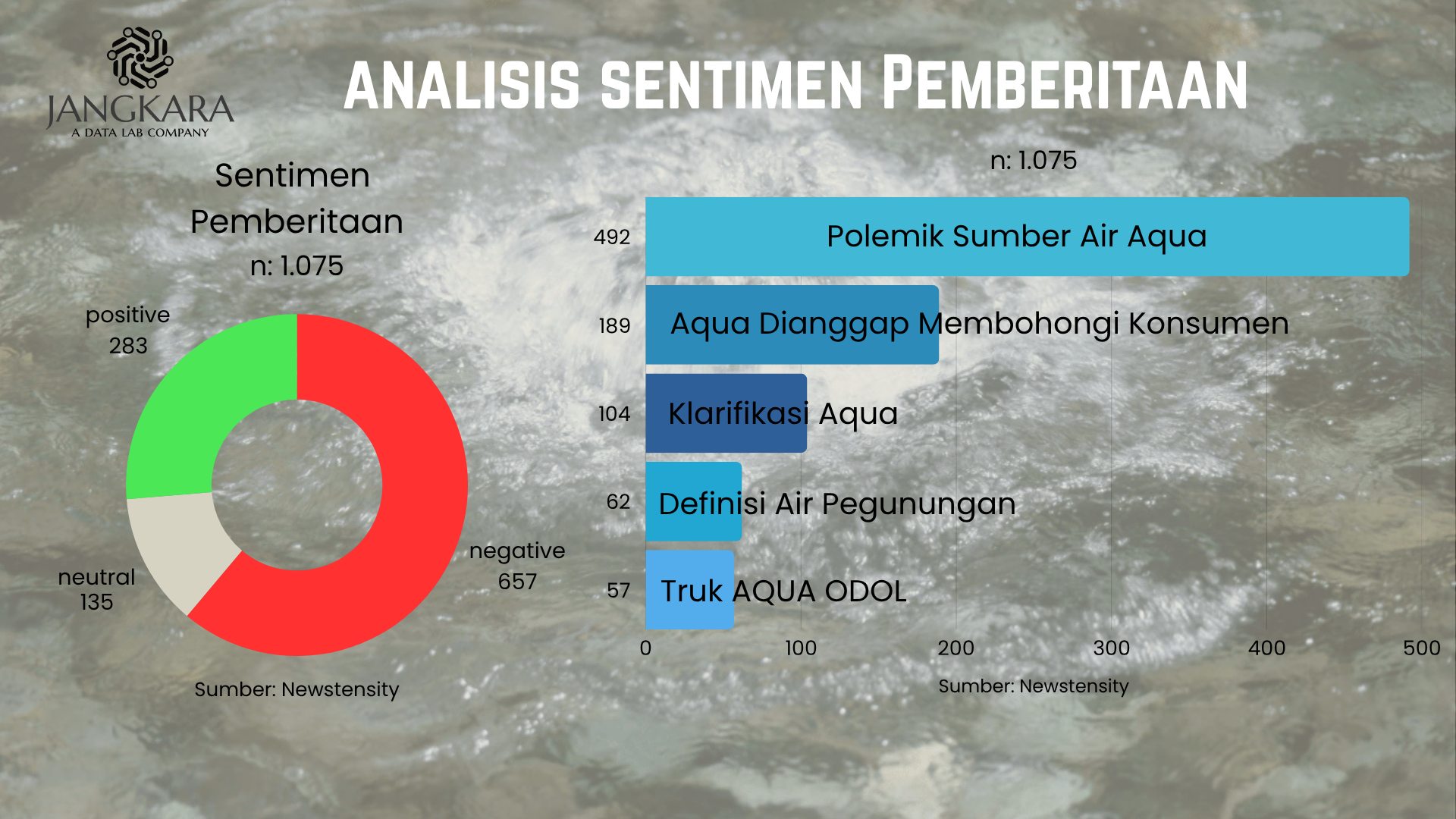
Most negative stories recycled the “deep well vs mountain spring” narrative from KDM’s video without cross-checking Aqua’s clarification. Even established media adopted consumer-protection angles, accusing Aqua of misleading advertising.
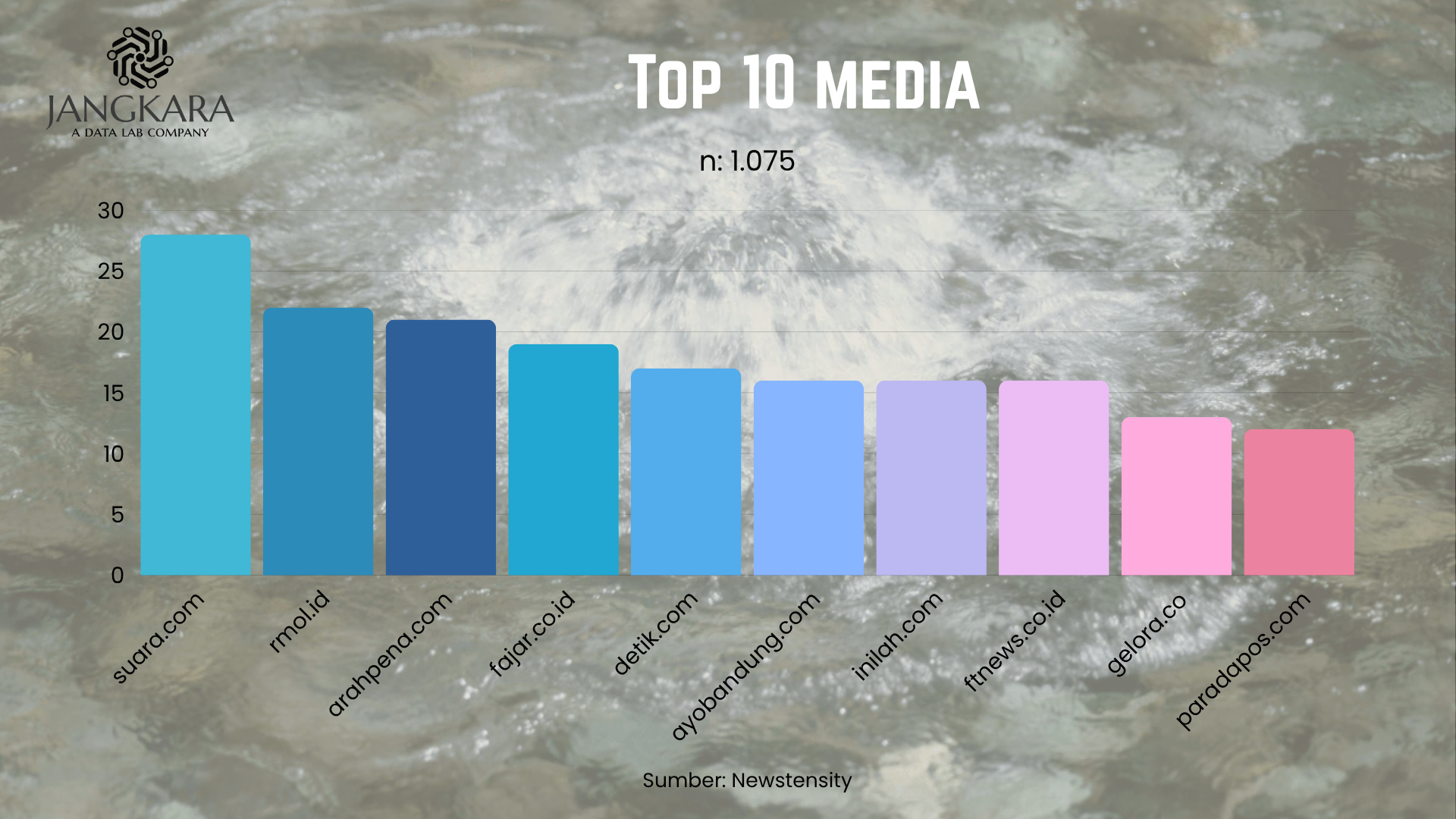
Interestingly, tier-two and tier-three outlets (arahpena.com, ftnews.co.id, paradapos.com) dominated coverage, while only Suara.com and Detik.com represented tier-one media — showing how smaller newsrooms amplified social-media hype faster than legacy outlets.
A brief visit and one viral video were enough to undermine decades of brand reputation. Despite Aqua’s scientific clarifications and expert backing, the damage had been done.
KDM’s case illustrates how a public official’s content can unintentionally ignite misinformation and create real corporate crises. If the Governor’s goal was public education, his execution was deeply flawed: mentioning a specific brand on camera blurred ethical boundaries and triggered nationwide backlash.
The lingering question remains — how can public officials avoid repeating such mistakes?
Every post, every video, every “spontaneous inspection” by a figure of authority carries consequences that extend far beyond views, likes, or followers.
What Is “Downgrade Lifestyle” and Why Is It Trending on Threads? Since early September 2026, the term “downgrade lifestyle” has…

binomedia

You can no longer tell AI astroturfing from genuine public opinion by reading the text. Generative AI writes as fluently…
binomedia

Who controls money in the blockchain era? When Bitcoin launched in 2008, the answer sounded simple: no single party, because…
binomedia

The debate over whether AI development should slow down is no longer theoretical. In September 2026, the CEOs of the…
binomedia

AI brand visibility is how often, how accurately, and in what context your brand appears in answers from AI-powered search…
binomedia

The DTSEN social assistance decile controversy in 2026 is not merely about inaccurate data. Media monitoring and digital conversation analysis…
binomedia
Indonesia’s gross domestic product (GDP) grew by 5.29 percent in the second quarter of 2026. This figure exceeded the median…
binomedia

Artificial intelligence (AI) is transforming education faster than most education systems can respond. Machines can now search for information, summarize…
binomedia

One Event, Two Market Moves On Monday, August 10, 2026, Indonesia’s rupiah closed 0.79% higher at IDR 17,755 per US…
binomedia

On Thursday, July 30, 2026, Indonesian President Prabowo Subianto announced a “cleanest city” competition. The top five cities would win…
binomedia