

Downgrade Lifestyle: Indonesia’s Real Economic Signal
What Is “Downgrade Lifestyle” and Why Is It Trending on Threads? Since early September 2026, the term “downgrade lifestyle” has…
-
binomedia
- October 9, 2026

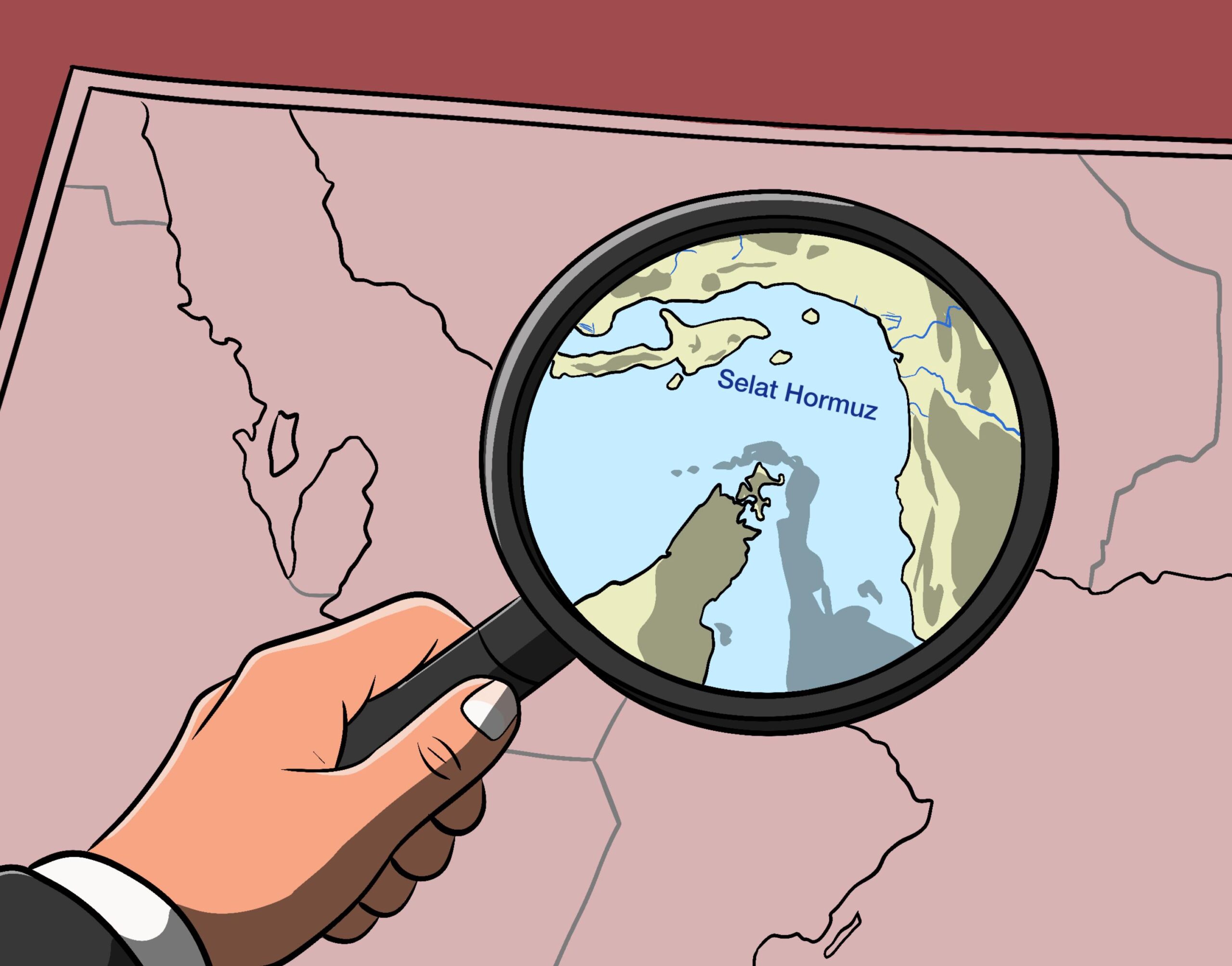
After discussing the geopolitical playbook in the previous article, the question now becomes more concrete: how have companies responded and adapted since the US–Iran conflict began to escalate.
When geopolitical tensions surge, business risks usually emerge long before operational disruptions become visible on the surface. The crisis in the Strait of Hormuz shows that crisis communication is not truly tested when an official statement is released, but when disruptions begin to spread into operations and stakeholder expectations start to collide.
In situations like this, every message delivered by a company no longer stands alone. It is immediately interpreted as an indicator of preparedness: whether the company is still in control of the situation or beginning to lose direction.
So far, geopolitical risk has often been treated as an anticipatory scenario. However, developments in the Strait of Hormuz have turned it into a concrete operational reality. As one of the world’s most vital energy distribution routes, any disruption there carries broad implications, ranging from delayed distribution to declining market confidence.
Because of that, crisis communication is no longer just about delivering information. It is also about managing how the situation is understood by the public.
In a geopolitical crisis, the issue is not only what happens, but also how the event is interpreted by different parties. Operational disruptions such as supply delays or rising costs can still be explained. But when narratives spread faster than official clarification, reputational risk can increase significantly.
This shows that a geopolitical crisis communication plan must be understood as a decision-making system. Companies need to determine when to speak, who should receive the message first, and how communication approaches should differ for each stakeholder group.
In that sense, crisis communication becomes a strategic process, not merely an administrative one.
Corporate responses to the Strait of Hormuz crisis show that communication strategies are heavily shaped by the type of exposure a company faces.
Chandra Asri demonstrated an approach focused on protecting its contractual position. The force majeure signal it conveyed was a step that made sense from both a legal and business perspective. However, without proper clarification, the term could be interpreted as an indication of a broader operational breakdown. In this context, communication functions to maintain a balance between legal protection and perceptual stability.
Garuda Indonesia adopted a more targeted and selective approach in responding to the situation. Based on a CNN Indonesia report, the airline temporarily suspended flights to and from Doha starting February 28 as an anticipatory step.
From this move, Garuda’s communication approach becomes clear. The airline did not merely announce a flight suspension. It also sought to control market perception so that the public would not assume its entire operational network had been affected.
In other words, Garuda did not just acknowledge disruption. It actively limited the scope of the issue within its messaging. This strategy is relevant because in the aviation industry, uncertainty often has a greater impact than negative information that is delivered clearly and in a focused manner.
Pertamina faced broader pressure because of its connection to public interest. Therefore, its communication did not only emphasize operational aspects, but also security, supply continuity, and mitigation measures. The role of communication here is to maintain stable public perception so that disruptions do not grow into broader public anxiety.
Meanwhile, Wilmar Cahaya Indonesia adopted a more market-oriented approach. Its communication focused on transparency regarding cost pressures, pricing dynamics, and the impact on global supply chains. This approach reflects the importance of openness in maintaining investor confidence, especially in highly uncertain situations.
From these various responses, one conclusion becomes clear: there is no universal crisis communication approach.
Communication strategies always follow the most dominant risk character. Companies facing contractual pressure need to reassure business partners. Companies serving public needs must maintain a sense of safety among the public. Companies exposed to market perception need to manage investor expectations.
A common mistake is reducing all this complexity into one general statement, even though each stakeholder group has different information needs.
In practice, companies often treat operational impact and reputational impact as if they were the same thing. In reality, both have different characteristics.
Operational impact is measurable, such as distribution delays or rising costs. Reputational impact, on the other hand, is shaped by public perception of a company’s preparedness and credibility.
A company may remain operationally stable while still suffering a loss of trust because of poor communication. Therefore, a crisis communication plan must be able to manage both dimensions at the same time.
In the context of a geopolitical crisis, companies not only need to deliver messages. They also need to understand how those messages are being received by the public.
This is where media intelligence such as Binokular becomes strategically important. For companies, monitoring is no longer just about collecting clippings. Effective monitoring helps detect when an issue shifts from the operational sphere into the reputational sphere.
That allows companies to adjust their communication strategies in a more responsive and targeted way.
The Strait of Hormuz crisis offers an important lesson: corporate preparedness is not determined by how often a company communicates, but by its ability to read the situation and respond appropriately.
The responses shown by companies such as Chandra Asri, Pertamina, and Wilmar reflect that communication strategy must be aligned with the specific risk profile each company faces.
In the end, a geopolitical crisis communication plan is not merely a template for official statements. It is a strategic system that enables companies to maintain operational stability while also preserving public trust.

What Is “Downgrade Lifestyle” and Why Is It Trending on Threads? Since early September 2026, the term “downgrade lifestyle” has…

binomedia

You can no longer tell AI astroturfing from genuine public opinion by reading the text. Generative AI writes as fluently…
binomedia

Who controls money in the blockchain era? When Bitcoin launched in 2008, the answer sounded simple: no single party, because…
binomedia

The debate over whether AI development should slow down is no longer theoretical. In September 2026, the CEOs of the…
binomedia

AI brand visibility is how often, how accurately, and in what context your brand appears in answers from AI-powered search…
binomedia

The DTSEN social assistance decile controversy in 2026 is not merely about inaccurate data. Media monitoring and digital conversation analysis…
binomedia

Indonesia’s gross domestic product (GDP) grew by 5.29 percent in the second quarter of 2026. This figure exceeded the median…
binomedia

Artificial intelligence (AI) is transforming education faster than most education systems can respond. Machines can now search for information, summarize…
binomedia

One Event, Two Market Moves On Monday, August 10, 2026, Indonesia’s rupiah closed 0.79% higher at IDR 17,755 per US…
binomedia

On Thursday, July 30, 2026, Indonesian President Prabowo Subianto announced a “cleanest city” competition. The top five cities would win…
binomedia