

Downgrade Lifestyle: Indonesia’s Real Economic Signal
What Is “Downgrade Lifestyle” and Why Is It Trending on Threads? Since early September 2026, the term “downgrade lifestyle” has…
-
binomedia
- October 9, 2026

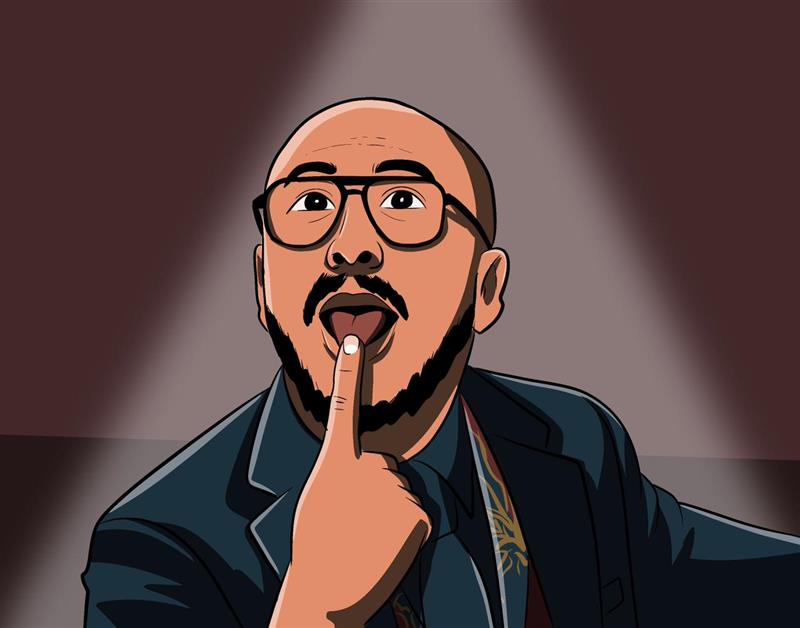
Freedom of opinion and expression is a constitutional right protected by law. Today, the public’s channel for voicing disappointment toward institutions and public officials is no longer limited to the streets, as in conventional demonstrations. It has moved into a more “intellectual” space and is increasingly packaged as entertainment. This is the phenomenon reflected in Pandji Pragiwaksono’s stand-up comedy special show titled Mens Rea.
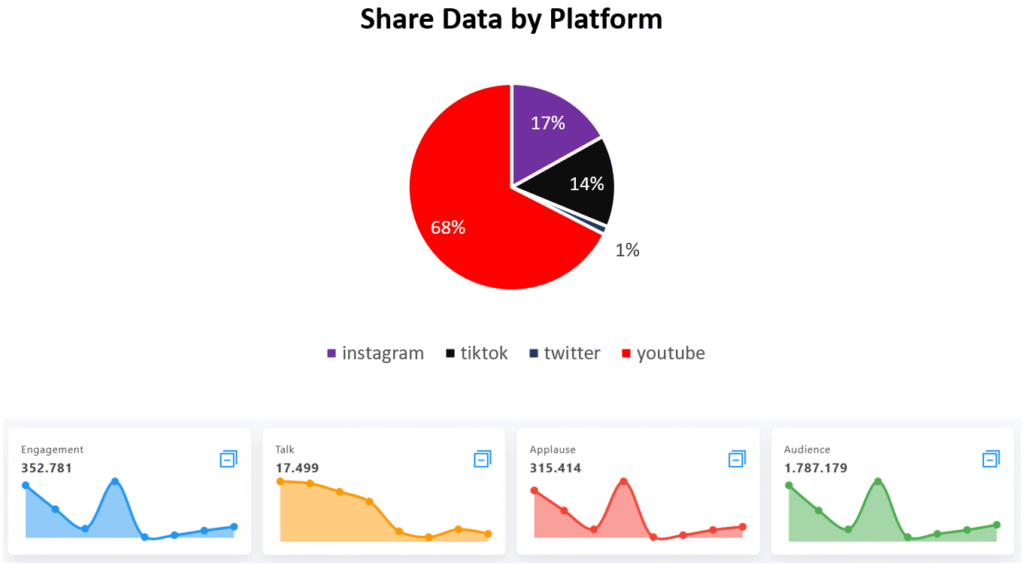
Mens Rea did not only resonate inside Indonesia Arena; its noise and echo continued across social media. Between 13–20 January 2026, there were 17,499 conversations related to Mens Rea flooding platforms such as X, Instagram, YouTube, and TikTok.
Pandji’s comedy became a trigger for diverse public discussions containing social criticism of everyday societal phenomena and the current state order. Binokular’s social-media network mapping illustrates that dynamic.
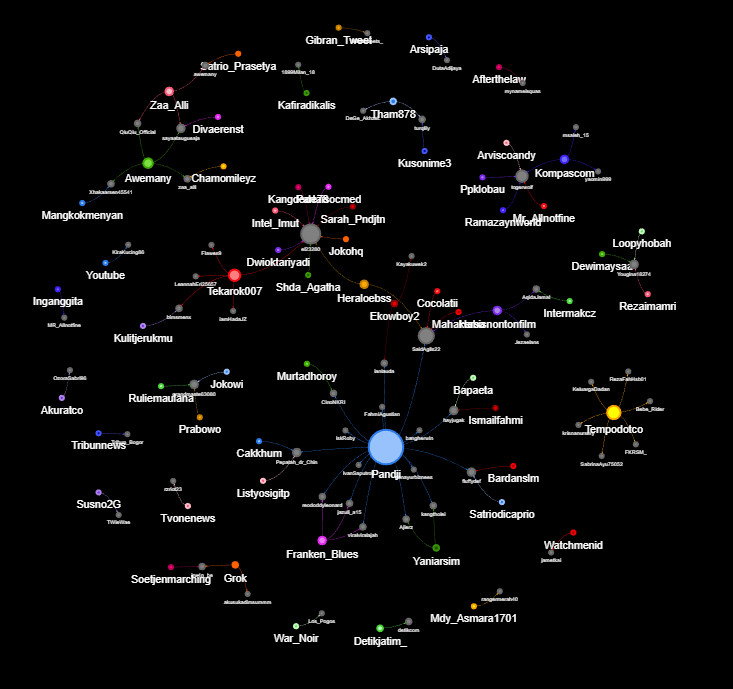
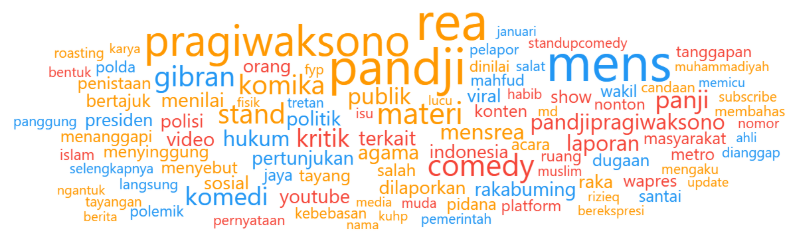
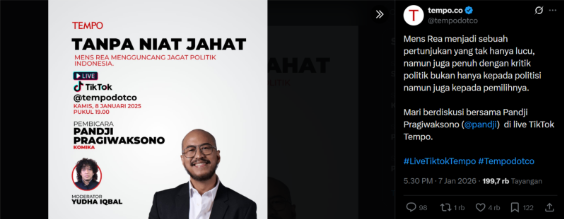
The terms “Pandji” and “Mens Rea” functioned like an epicenter for describing today’s citizen unrest on social media. Pandji’s criticism did not only target the government, but also mass organizations, social life, and society itself. Themes such as the public’s shaky democratic literacy—resulting in officials perceived as incompetent, polarization, the erosion of democratic substance, and choosing leaders based on popularity—were the “ingredients” Pandji used to “cook” issues in the show. A similar narrative had previously been raised by Tempo in an online discussion via TikTok @tempoco on Thursday, 8 January 2025.
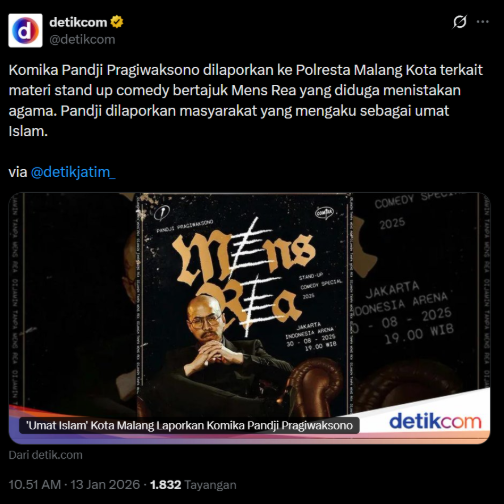
Mens Rea is now also available via digital streaming on Netflix. After the special became accessible for streaming, many “clippers” reposted punchline snippets from Pandji’s material across social platforms. A short clip containing only a punchline cannot fully represent the context of the topic being discussed, which is seen as increasing the likelihood of offense. That sense of offense led to reports being filed against the comedian to the police.
As of the time this article was written, there were 3 Police Reports (criminal complaints) and 2 public complaints related to Mens Rea content. One of the most attention-grabbing reports alleged that Pandji had committed a criminal act by insulting religion.
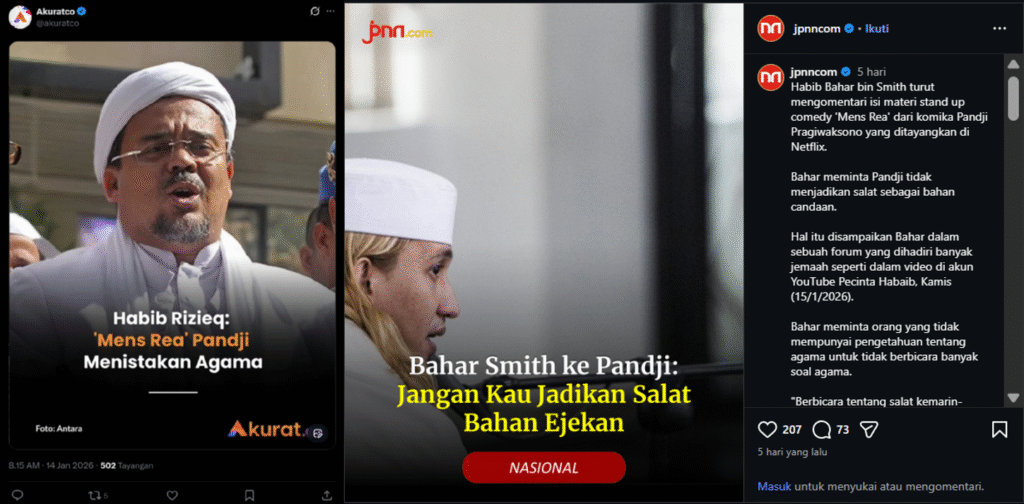
In line with those accusations, religious figures such as Habib Rizieq Shihab and Bahar bin Smith also highlighted parts of Mens Rea that touched on prayer, calling it religious blasphemy. Habib Rizieq demanded that Pandji apologize and urged Netflix to remove the segment considered to be about prayer.
The controversy did not stop online. A protest movement reportedly emerged urging Kemkomdigi to halt the Netflix streaming of Mens Rea.
Debate over potential criminal liability also surfaced in the part of Mens Rea where Pandji criticized Gibran Rakabuming Raka. As the Vice President, Gibran is seen by some as a state symbol whose honor is legally protected from insult or humiliation. Social timelines split: many defended Pandji under freedom of expression, while supporters of Gibran argued it crossed into insult—especially because the material was framed not only as performance critique, but also referenced a physical trait (Gibran’s eyes, described as “sleepy”).
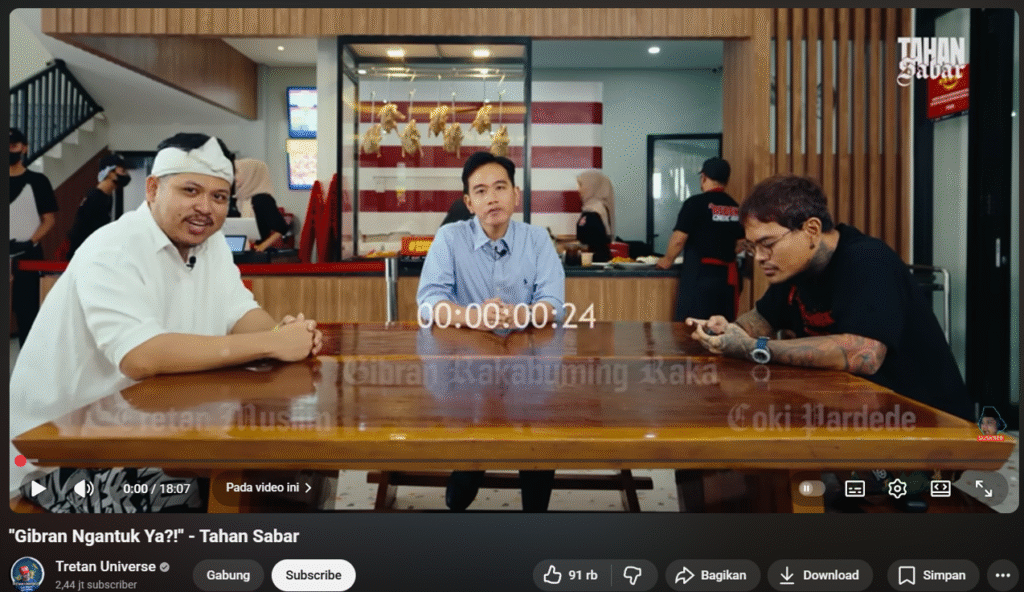
This debate was even aired by national TV station TvOne, featuring Irma Chaniago, who claimed Pandji’s comedy contained body shaming. In response, Gibran—on a podcast with stand-up comedians Tretan Muslim and Coki Pardede—said he personally was not offended. He even congratulated Pandji because Mens Rea reached the top list on Netflix.
Following the uproar around Mens Rea on social media, Pandji is now dealing with a legal process. However, that does not automatically mean he is guilty. According to Professor Mahfud MD, the Mens Rea stand-up material cannot be criminalized; he emphasized that calling someone “sleepy” is not a criminal offense. In his podcast, Mahfud outlined several reasons Pandji should not be charged:
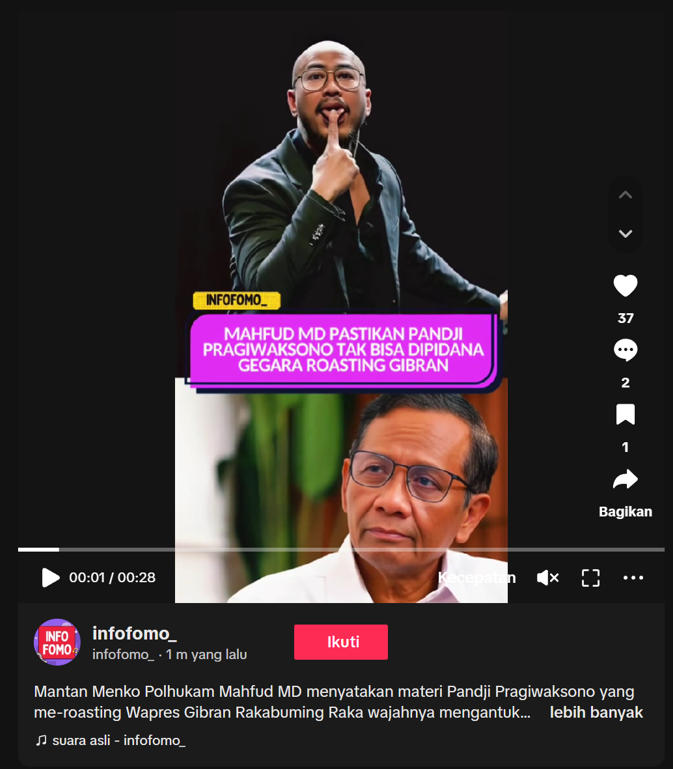
A similar tone came from Habiburokhman, Chair of DPR Commission III, who said the government guarantees there will be no criminalization of critics, including Pandji. DPR Commission III member Safaruddin (quoted by inilahcom) argued Mens Rea would likely be difficult to prosecute under the latest procedural standards because both the new KUHAP and KUHP emphasize that defamation cases can proceed only if the complaint is filed directly by the party who feels harmed. Therefore, reports filed by parties without standing as victims should not continue to criminal prosecution.
Reports alleging Pandji committed a criminal offense were also seen as procedurally flawed because the evidence included a copied recording suspected to have been taken from Netflix—raising piracy concerns for a digital work. Criminal-law expert Abdul Fickar Hadjar suggested Netflix could potentially report the reporting party, if the flash drive said to contain Mens Rea evidence was obtained unlawfully.
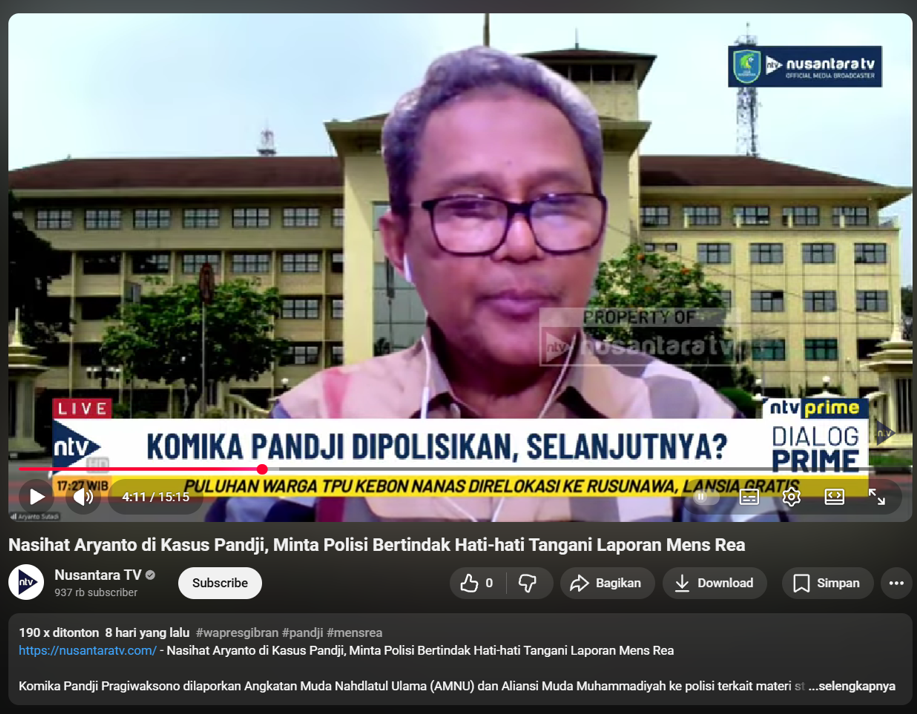
On the other hand, Aryanto Sutadi, Legal Expert Adviser to the Chief of the Indonesian National Police, stated that reporting Mens Rea is a “risk” of freedom of expression. He stressed that police—having received multiple reports—should conduct a transparent, thorough investigation before deciding whether criminal elements are met, so the outcome becomes clear and binding.
Mens Rea, as a highly phenomenal special show that has generated massive public discussion, should be read as a wake-up call. Freedom of opinion and expression—both in public spaces and digital spaces—must be protected in a democracy, with responsibility. Criticism of government institutions, public officials, political, social, and economic conditions, and even society itself should continue to be voiced.
Law, as the “rules of the game” for expression, must not become a weapon to silence critical voices. Criticizing does not mean hating; criticizing means we still care about the direction of governance and social life around us. Delivering criticism through comedy is a smart move—slipping messages inside a chain of laughter.

What Is “Downgrade Lifestyle” and Why Is It Trending on Threads? Since early September 2026, the term “downgrade lifestyle” has…

binomedia

You can no longer tell AI astroturfing from genuine public opinion by reading the text. Generative AI writes as fluently…
binomedia

Who controls money in the blockchain era? When Bitcoin launched in 2008, the answer sounded simple: no single party, because…
binomedia

The debate over whether AI development should slow down is no longer theoretical. In September 2026, the CEOs of the…
binomedia

AI brand visibility is how often, how accurately, and in what context your brand appears in answers from AI-powered search…
binomedia
The DTSEN social assistance decile controversy in 2026 is not merely about inaccurate data. Media monitoring and digital conversation analysis…
binomedia
Indonesia’s gross domestic product (GDP) grew by 5.29 percent in the second quarter of 2026. This figure exceeded the median…
binomedia
Artificial intelligence (AI) is transforming education faster than most education systems can respond. Machines can now search for information, summarize…
binomedia
One Event, Two Market Moves On Monday, August 10, 2026, Indonesia’s rupiah closed 0.79% higher at IDR 17,755 per US…
binomedia
On Thursday, July 30, 2026, Indonesian President Prabowo Subianto announced a “cleanest city” competition. The top five cities would win…
binomedia