

Downgrade Lifestyle: Indonesia’s Real Economic Signal
What Is “Downgrade Lifestyle” and Why Is It Trending on Threads? Since early September 2026, the term “downgrade lifestyle” has…
-
binomedia
- October 9, 2026

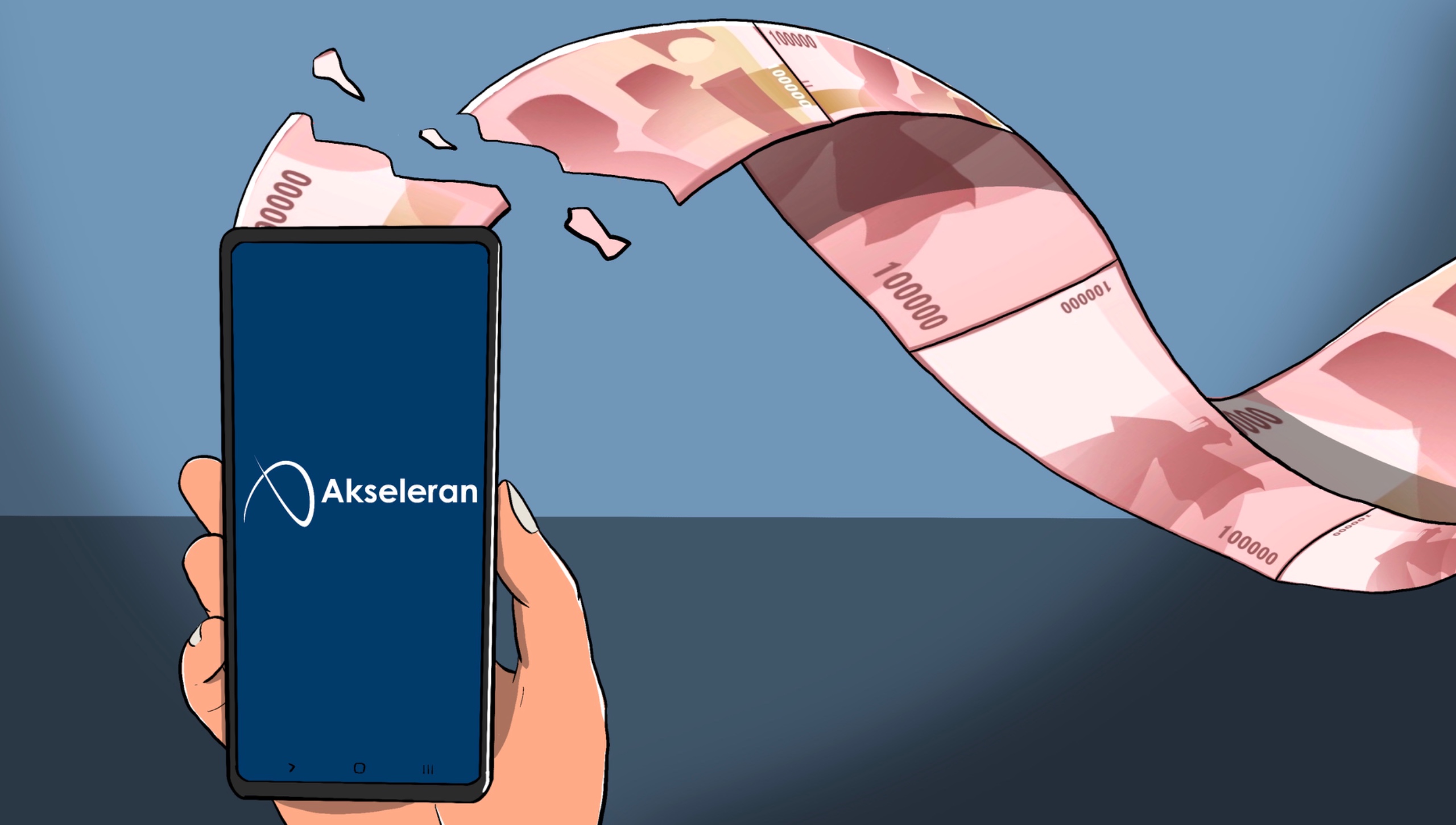
Indonesia’s long “fintech-lending winter” has claimed another major player. Peer-to-peer (P2P) platform PT Akseleran Keuangan Inklusif Indonesia – better known as Akseleran – is struggling to repay lenders after six corporate borrowers defaulted on a combined Rp 178.27 billion (about US$10.8 million).
The setback places Akseleran alongside troubled rivals Crowde, Tanifund, KoinP2P and the now-liquidated pioneer Investree, deepening public anxiety over the health of Indonesia’s fast-growing P2P sector.
Akseleran disclosed on March 3, 2025 that simultaneous defaults had hit six affiliated borrowers:
| Borrower | Sector | Outstanding loan (Rp billion) |
|---|---|---|
| PT PDB | Defense-equipment supplier | 42.30 |
| PT EFI | EPC contractor | 46.55 |
| PT PPD | Sand & gravel supplier | 59.04 |
| PT CPM | Interior contractor | 9.58 |
| PT ABA | Construction firm | 15.54 |
| PT IBW | Furniture manufacturer | 5.25 |
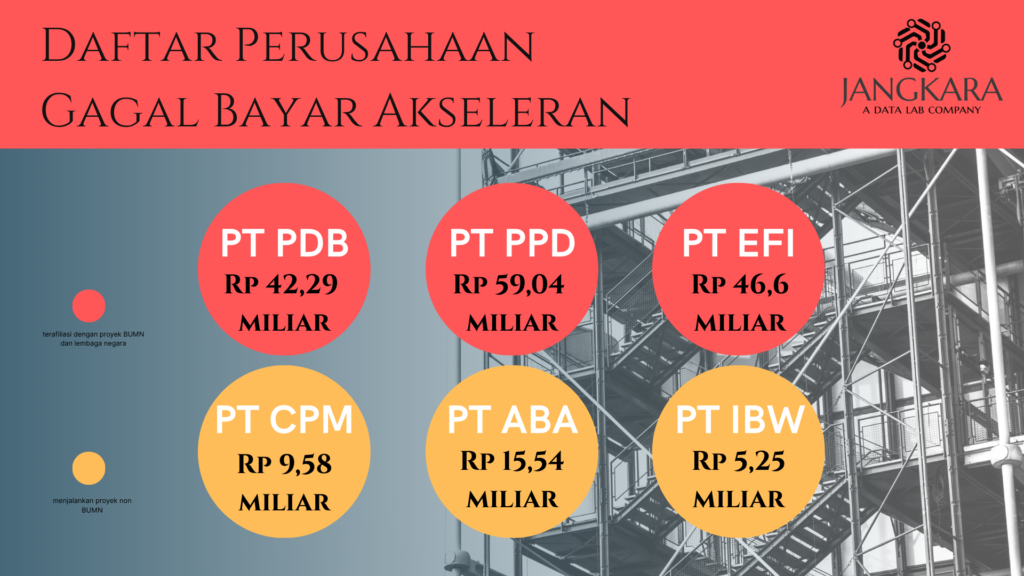
Several defaulters were subcontractors on state-owned-enterprise (SOE) projects and blame late government payments for their cash-flow crunch. PT EFI, for instance, cites delayed retention money on a fertilizer-plant EPC job in Aceh, while PT PPD says its contract on the Semarang–Demak toll road was terminated before it could be paid for materials already supplied. Akseleran has begun legal action in the latter case.
As of March 2025, the Financial Services Authority (OJK) listed 97 licensed fintech-lending firms; 19 showed dangerously high 90-day default ratios (TWP90).
High-profile collapses include:
Investree – License revoked Oct 21 2024; co-founder Adrian Gunadi named fraud suspect; liquidation approved Mar 14 2025.
Tanifund – Liquidated after default wave in early 2024.
Crowde & KoinP2P – Facing police reports over alleged fund misuse and borrower fraud.
All cases share one trait: cascading borrower arrears that stranded lenders’ principal and interest. In Investree’s saga, super-lenders who placed up to Rp 1 billion each were left in limbo.
Although defaults began in March, the story stayed largely within investor circles until mid-June. One retail lender, @anitacarolina612, posted TikTok videos lamenting Rp 472 million stuck across five bad loans.
Unlike some peers, Akseleran kept communication channels open – meeting investors, hosting Zoom briefings and outlining an insurance back-stop that covers 75–99 percent of loan principal (subject to policy limits). Even so, with TKB90 (the industry’s on-time repayment metric) slumping to 44.85 percent by June 23, liquidity remains “dangerous,” analysts say.
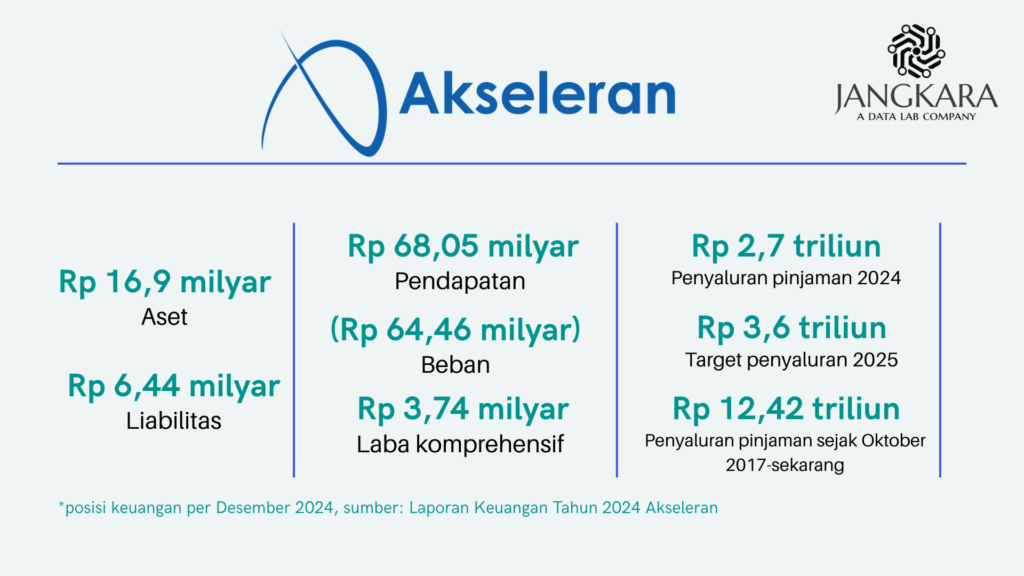
Akseleran had posted its first annual profit (Rp 3.74 billion) in 2024 and kept TWP90 below 1 percent—until the six defaults shattered the streak.
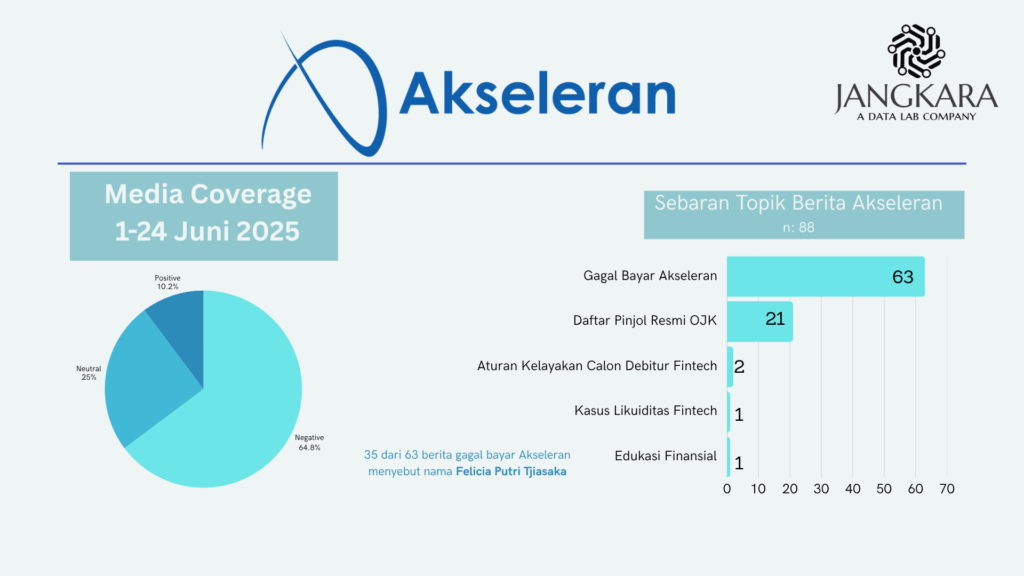
The crisis exploded on June 20 when finance influencer Felicia Putri Tjiasaka uploaded a tearful TikTok apology for previously endorsing P2P lending – including Akseleran – without highlighting the risks. The video drew almost one million views, 993 comments and 1,100 shares in a day.

Media-monitoring tool Newstensity recorded 88 Akseleran articles between June 1–24; coverage spiked after Felicia’s post and peaked at 17 stories on June 21. Of 63 default-related pieces, more than half mentioned Felicia, showing how a single influencer can drive mainstream attention.
For now, Akseleran says it is pursuing repayments, activating insurance claims and negotiating with borrowers. Retail lenders can only wait.
Indonesia’s P2P industry, once hailed for democratizing credit, risks losing public trust. Without swift reforms and transparent crisis handling, the nation’s vast fintech opportunity may, indeed, wither in an extended winter.
Writer: Khoirul Rifai (jangkara.id), Ilustrator: Aan K. Riyadi

What Is “Downgrade Lifestyle” and Why Is It Trending on Threads? Since early September 2026, the term “downgrade lifestyle” has…

binomedia

You can no longer tell AI astroturfing from genuine public opinion by reading the text. Generative AI writes as fluently…
binomedia

Who controls money in the blockchain era? When Bitcoin launched in 2008, the answer sounded simple: no single party, because…
binomedia

The debate over whether AI development should slow down is no longer theoretical. In September 2026, the CEOs of the…
binomedia

AI brand visibility is how often, how accurately, and in what context your brand appears in answers from AI-powered search…
binomedia

The DTSEN social assistance decile controversy in 2026 is not merely about inaccurate data. Media monitoring and digital conversation analysis…
binomedia

Indonesia’s gross domestic product (GDP) grew by 5.29 percent in the second quarter of 2026. This figure exceeded the median…
binomedia

Artificial intelligence (AI) is transforming education faster than most education systems can respond. Machines can now search for information, summarize…
binomedia

One Event, Two Market Moves On Monday, August 10, 2026, Indonesia’s rupiah closed 0.79% higher at IDR 17,755 per US…
binomedia

On Thursday, July 30, 2026, Indonesian President Prabowo Subianto announced a “cleanest city” competition. The top five cities would win…
binomedia