On Tuesday, 24 June 2025, Indonesia’s Attorney General’s Office (AGO) signed a memorandum of understanding with the country’s four largest telecom operators—PT Telekomunikasi Indonesia Tbk, PT Telekomunikasi Selular (Telkomsel), PT Indosat Tbk, and PT XL Smart Telecom Sejahtera Tbk. According to Deputy Attorney General for Intelligence Reda Manthovani, the agreement aims to strengthen criminal investigations by granting the AGO access to telecommunications data, including call-detail records and, when necessary, wiretaps.
Yet the MoU has drawn fierce public scrutiny over accountability, transparency, and its legal basis. Critics fear unchecked surveillance powers, mass monitoring, and the absence of a comprehensive wiretap statute.
House of Representatives Speaker Puan Maharani cautioned that, while law-enforcement efficiency matters, the AGO must still respect Indonesians’ constitutional right to data privacy. She urged a balance between investigative needs and civil liberties, warning that technological advances must never become tools for arbitrary state surveillance.
Strategic Cooperation or Privacy Risk?
AGO officials say the MoU will help trace fugitives, gather sensitive evidence, and corroborate cases—activities they argue are authorized by Law No. 11/2021 amending the 2004 Prosecution Law (Article 30B).
The Civil-Society Coalition—including Raksha Initiatives, Centra Initiative, Imparsial, and ICJR—counters that any telecom interception without explicit statutory safeguards violates both Article 40 of the 1999 Telecommunications Law and Article 28G (1) of the 1945 Constitution, which protect privacy.
-
Wahyudi Djafar (Raksha Initiatives) notes that lawful wiretaps require a court order, strict time limits, controlled access to data, and clear evidentiary rules—none of which appear in the MoU.
-
The coalition therefore urges the AGO to nullify the agreement, arguing that its purpose (“causa”) violates public-order clauses under Article 1320 of the Civil Code.
Lack of a Dedicated Wiretapping Law
Indonesia still has no single wiretap act; provisions are scattered across more than a dozen statutes (Telecommunications, Electronic Information and Transactions, Corruption Eradication Commission, etc.). The Constitutional Court has twice ordered lawmakers to enact a dedicated wiretap law (Decisions No. 5/PUU-VIII/2010 and No. 20/PUU-XIV/2016). A draft bill has languished in Parliament since 2017.
Commission III member Nasir Djamil stresses that Article 30C of the 2021 Prosecution Law allows AGO wiretaps only after a specific wiretap statute is in force—meaning the MoU should not be implemented yet. The Prosecutorial Commission (Komjak) likewise presses for fast-tracking the bill and, in the meantime, urges the AGO to adopt strict internal SOPs and oversight.
AGO’s Response
AGO spokesperson Harli Siregar insists the agreement is lawful, citing Article 31 (3) of the Electronic Information and Transactions Law. He says data requests are made solely for urgent investigations—typically when chasing fugitives—and are preceded by a legal review, rejecting claims of indiscriminate mass surveillance.
Media Coverage
Using the Newstensity monitoring platform, Jangkara Data Lab recorded 457 news items on the MoU between 24 June and 2 July 2025. Coverage was modest on the signing day but spiked on 27 June after statements from the Speaker of the House, MPs, and digital-rights activists.

Graphic 1 – News timeline, 24 June–2 July 2025: Volume peaks on 27 June.
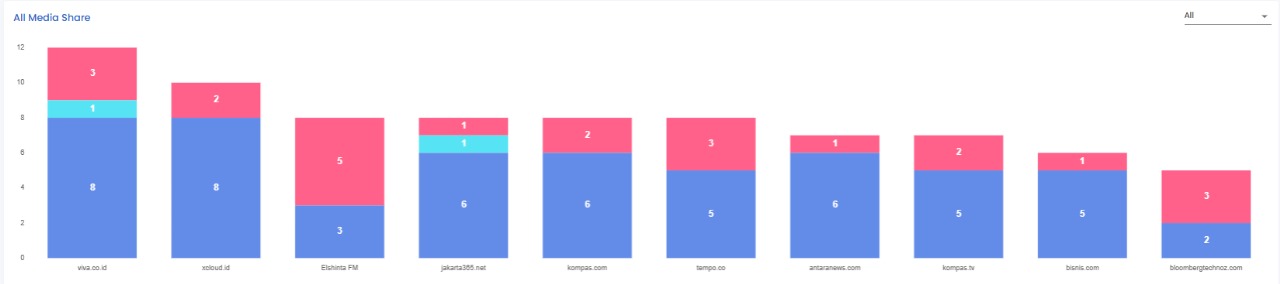
Graphic 2 – Top outlets: Viva.co.id leads with 12 stories, followed by Elshinta FM, Jakarta365.net, and Kompas.com (8 each).

Graphic 3 – Most-mentioned figures: Deputy AG for Intelligence Reda Manthovani tops citations, followed by Speaker Puan Maharani and AGO spokesperson Harli Siregar.
Social-Media Pulse
Unlike mainstream media, X (formerly Twitter) showed only 159 posts on the topic over the same period, generating 731 engagements and a potential reach of 32 million accounts. Activity peaked on 27 June, mirroring the news cycle. Negative sentiment dominated, with users decrying privacy risks and legal gaps; positive sentiment largely praised Speaker Puan’s warnings to the AGO.
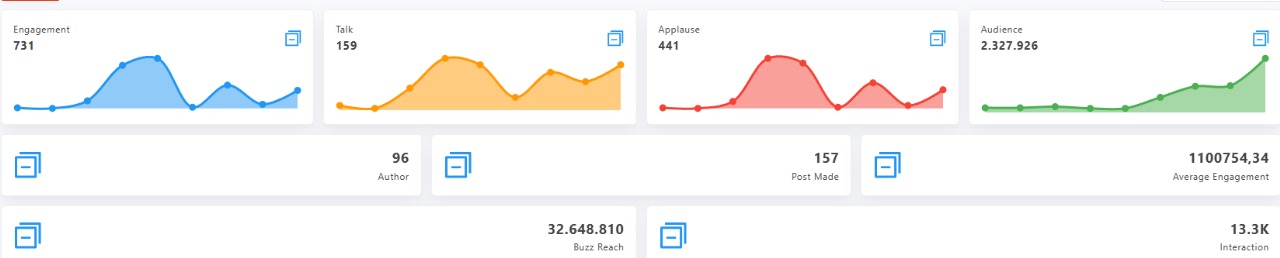
Graphic 4 – X statistics overview.
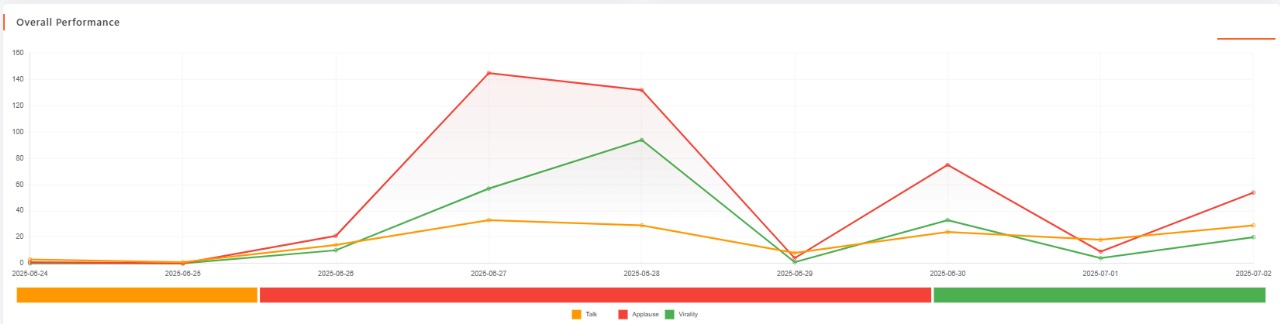
Graphic 5 – Conversation timeline: spike on 27 June.
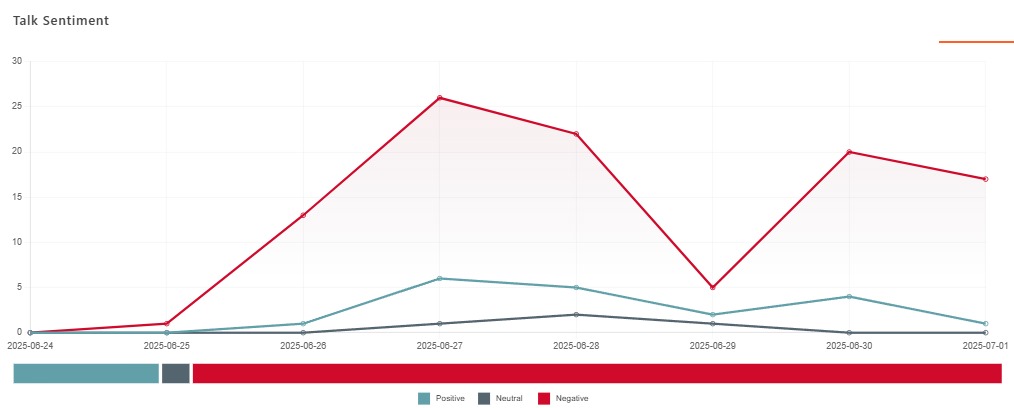
Graphic 6 – Sentiment breakdown: rising negative posts from 25–27 June.
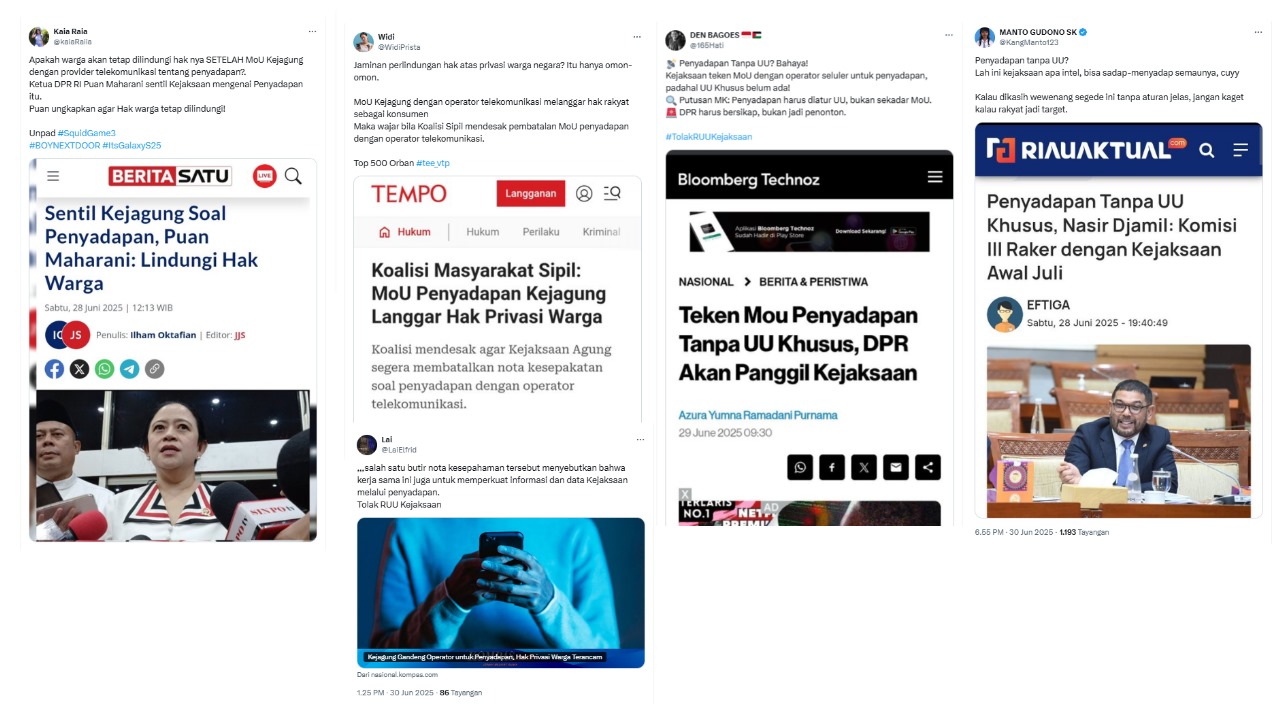
Image 1 – Screenshot of critical X post accusing the MoU of endangering personal data.
Epilogue
The AGO–telecom cooperation is designed to bolster law enforcement, yet without a robust legal framework it risks undermining constitutional privacy rights. The stalled Wiretapping Bill underscores the state’s weak commitment to data protection. Comprehensive legislation should be a prerequisite—not an afterthought—before any interception regime proceeds. Until such safeguards exist, wiretaps conducted in the name of justice warrant close, critical scrutiny.
Writer: Catur Noviantoro (jangkara.id), Ilustrator: Aan K. Riyadi